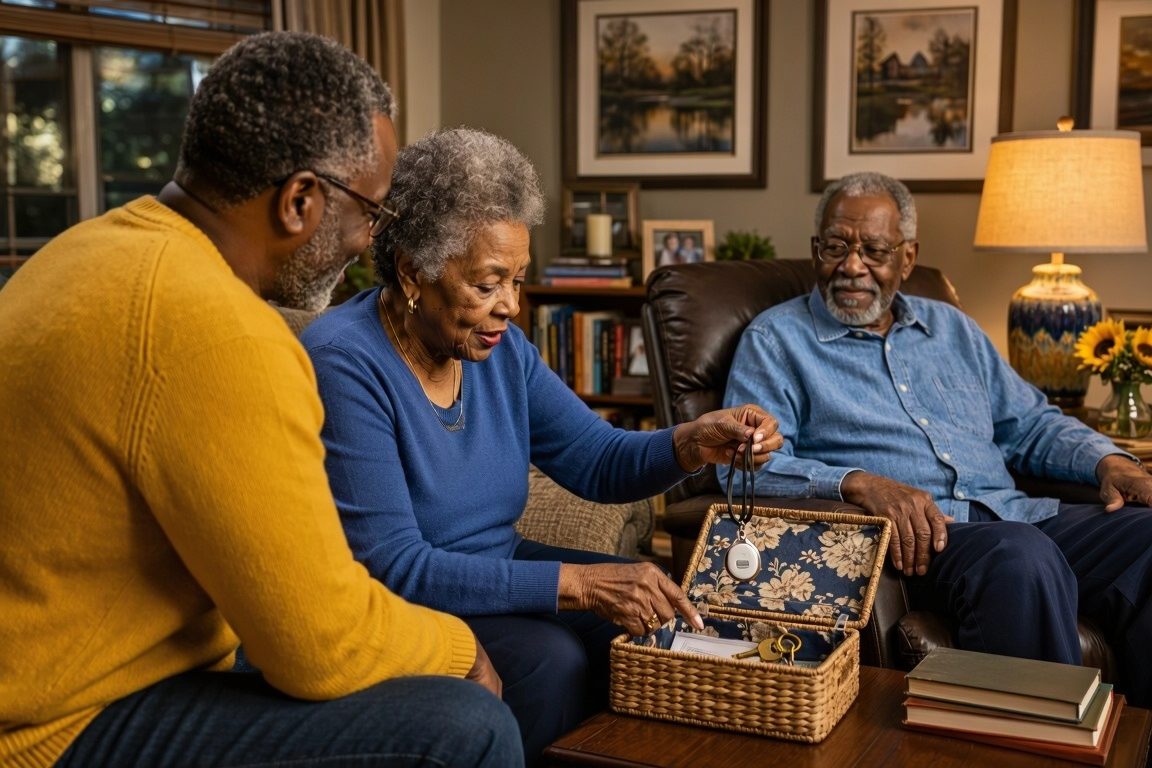
Step by step
What not to do
- Do not assume your partner will remember to call 911. Even if they have used a phone before, stress and confusion can erase that skill.Instead, build a system that does not rely on their action.
- Do not keep emergency information only in a safe or locked drawer. First responders will look on the refrigerator first. Keep the folder there, in plain sight.
- Do not wait until you feel unwell to set up a check-in system. By then it may be too late. Start today, even if you feel healthy.
- Do not rely solely on a medical alert pendant if you have a history of falls or seizures. Add a visual signal and a daily check-in as backups.
- Do not forget to tell your backup person exactly what to do. Vague requests like ‘help if something happens’ lead to confusion. Give them a written script: ‘Call 911, come to the house, use the spare key, read the refrigerator folder.’
- Do not neglect your own health checkups. Caregivers often skip their own doctor visits. Regular checkups can catch problems early and reduce the chance of sudden incapacitation.
Key points
- You cannot rely on your partner with dementia to call for help. Build a system that works without their action.
- A bright window card and a daily check-in call are simple, low-tech backups that can save lives.
- Keep an emergency folder on the refrigerator with medications, doctor contacts, and a note about your partner’s dementia.
- Wear a medical alert pendant with fall detection, and tell the monitoring service about your partner’s condition.
- Identify a backup caregiver or emergency respite facility now, before you need it.
- Review and update your plan every three months, especially as your partner’s dementia progresses.
Videos
 Dementia Emergency PlanningThis video directly addresses the fear of being hospitalized or evacuated and gives concrete steps for setting up a backup plan, including who to ask and what to prepare.
 Dementia Emergency Preparedness: How to make sure your loved one stays safe in an emergencyThis video covers building an emergency kit with dementia-specific items and the importance of having the Alzheimer’s Association 24-hour helpline handy during a crisis.
 106. 10 Strategies to combat caregiver stressThis video emphasizes the importance of the caregiver’s own health and stress management, which directly reduces the risk of sudden incapacitation.
 Sue Ryan, The Founder & Inspirationalist of Sue Ryan SolutionsSue Ryan offers insights on planning for the unexpected and building a care team, which is essential for the ‘incapacitated caregiver’ scenario.
2 more videos
 Curious Conversations about Brain ChangeThis conversation explores how to prepare for slower emergencies (like power outages) and the importance of having a plan that accounts for the person with dementia’s changing abilities.
 149. Replay: 10 Strategies to combat caregiver stress from the Alzheimer’s AssociationThis replay reinforces the need for respite care and building a support network, both critical when the primary caregiver is suddenly unavailable.
Background
Why This Fear Is So Common, and So Real
As a spouse caregiver, you are likely the only person who knows your partner’s daily routine, medications, and needs. If you have a sudden medical event, a stroke, a fall, a heart attack, you may be unable to call 911 or even speak. Your partner, living with dementia, may not understand what is happening, may not remember how to use a phone, or may become frightened and confused. This is a scenario that many caregivers dread but few prepare for, because it feels overwhelming. Yet the risk is real: caregivers often neglect their own health, and a sudden crisis can leave both of you stranded. The good news is that you can design a system that works even when you cannot.
The Core Problem: No One Knows You Need Help
In a typical emergency, you would call 911 or a neighbor. But if you are incapacitated and your care partner cannot communicate, the emergency goes unnoticed. Your partner may wander away, become agitated, or simply sit beside you, not understanding that you need urgent care. The key is to create external triggers that alert others, neighbors, family, emergency services, without relying on your partner’s ability to act. This means using technology, pre-arranged check-ins, and visible signals that say ‘help is needed here.’ Planning now turns a potential tragedy into a managed event.
Practical tools
6
The ‘Help Needed’ Window Card
Create a bright red or orange 8.5x11 card with large black letters: ‘CALL 911 – CAREGIVER INCAPACITATED – DEMENTIA PATIENT INSIDE.’ Tape it to the inside of a front window that faces the street. Teach a neighbor to look for it if they don’t see you by 10 AM. This is a zero-tech, always-on signal.
Daily Check-In Script for Your Backup Person
Write down exactly what your backup person should say when they call you each morning: ‘Hi [your name], just checking in. If you don’t respond within 30 minutes, I will call 911 and come to your home. I have your spare key. I will read the refrigerator folder.’ Practice this once so they feel confident.
Refrigerator Emergency Folder Template
Use a bright red plastic sleeve. On the cover, write: ‘EMERGENCY – READ FIRST – CAREGIVER MAY BE UNABLE TO SPEAK.’ Inside, include:
Medical Alert Pendant with Fall Detection
Choose a system like Medical Guardian or Life Alert that includes automatic fall detection. When you sign up, tell the representative: ‘I live with a person who has dementia. If I fall and don’t respond, please send EMS to my home immediately. Do not call my home phone because my partner may not answer.’
Smart Camera with Remote Access
Install a simple indoor camera (like Wyze or Ring) in the living room, pointed at the couch or chair where you usually sit. Give access to a trusted family member. If you miss a check-in, they can look at the camera to see if you are on the floor. This avoids a false alarm and speeds up help.
Emergency Respite Care Contact List
Research 2-3 memory care facilities or adult day centers within 20 miles that accept emergency respite. Call them now and ask: ‘
’ Write their names, numbers, and notes in your folder. This gives you a concrete option if you are hospitalized.
Different situations
If your partner is in the late stage of dementia and bedbound or non-verbal
Your partner cannot move to get help or even signal distress. You must rely entirely on external systems. Add a bed alarm or pressure pad that alerts a neighbor if you get up and fall. Also, consider a wearable GPS tracker for yourself so your location is known if you wander after a fall. The backup caregiver should be someone trained in basic personal care (bathing, turning, feeding) because your partner may need full assistance.
If your partner has Lewy body dementia with hallucinations or paranoia
Your partner may become frightened by strangers, including first responders. In your emergency folder, add a note: ‘My partner has Lewy body dementia and may be paranoid. Please approach slowly, speak calmly, and do not touch them suddenly. Show your badge or ID from a distance.’ Also, practice the ‘silent drill’ with a familiar neighbor first, not a stranger, to reduce fear.
If you are a solo spouse caregiver with no nearby family or friends
You must build a professional backup network. Hire a paid caregiver for 2-4 hours a week now, so they become familiar to your partner. In an emergency, that person can be called to stay overnight. Also, contact your local Area Agency on Aging and ask about ‘emergency respite vouchers’ or ‘caregiver crisis funds.’ Keep their number in your folder. Consider a medical alert system that also has a GPS feature so you can be found if you fall outside the home.
If your partner has a history of wandering or agitation
Add a door alarm that sounds when the front door opens, and connect it to a smart speaker that calls your backup person. In your emergency folder, include a recent photo of your partner and a note: ‘If found wandering, approach calmly and say [partner’s name], let’s go home. Do not argue. Call this number.’ Also, enroll in a wandering response program like MedicAlert + Alzheimer’s Association Safe Return.
If you have a chronic health condition that increases your risk of sudden incapacitation (e.g., heart disease, diabetes, epilepsy)
Wear your medical alert pendant at all times, even in the shower. Program your phone’s lock screen with your medical condition and the note: ‘I am the caregiver for a person with dementia. If I am unresponsive, call 911 and check the refrigerator folder.’ Also, tell your primary care doctor about your caregiving role and ask if there are any additional precautions you should take.
For the doctor
4
- Ask your doctor: ‘Given my health conditions, what is my risk of sudden incapacitation? Should I have a medical alert system with fall detection?’
- Ask your doctor: ‘Are there any medications I take that could increase my risk of falls or confusion? Should I adjust them?’
- Ask your doctor: ‘If I am hospitalized, what is the best way to ensure my partner with dementia gets immediate care? Can the hospital social worker help arrange respite?’
- Ask your doctor: ‘Should I have a home health aide or nurse visit regularly to monitor my own health and reduce my risk of a crisis?’