
Step by step
What not to do
- Do NOT say: 'You are home. You've lived here for 20 years.' Why it backfires: It invalidates their reality and increases anxiety.Instead, validate the feeling: 'You're missing home. I know that feeling.'
- Do NOT argue with logic or provide long explanations. Why it backfires: Their brain cannot process complex reasoning, and it leads to more confusion and agitation.Instead, keep your responses short, simple, and focused on feelings.
- Do NOT ask open-ended questions like 'What do you miss about home?' Why it backfires: This requires too much cognitive effort and can overwhelm them.Instead, ask simple yes/no or either/or questions.
- Do NOT get frustrated or raise your voice. Why it backfires: Your stress will amplify their stress. They will sense your tension and feel even less safe.Instead, use a calm, gentle tone and slow your movements.
- Do NOT try to 'prove' they are wrong by showing them photos or pointing out familiar objects. Why it backfires: Their brain cannot integrate that evidence, and it feels like an attack.Instead, meet them in their emotional reality.
- Do NOT let them wander outside unsupervised if they are determined to leave. Why it backfires: Safety is the priority.Instead, use redirection, the 'drive around the block' technique, or call for help if needed.
Key points
- The phrase 'I want to go home' is about a feeling of safety and comfort, not a physical location. Never argue or correct.
- Always validate the feeling first: 'You're missing home. That must be hard.' Then redirect to a comforting activity.
- Use simple, closed-ended questions to uncover the unmet need (tired, hungry, lonely, in pain).
- Therapeutic fibbing is a kind, effective tool. A harmless white lie can ease anxiety without causing harm.
- Create a 'calm space' and a 'comfort kit' to have ready when the feeling arises.
- Your calm, gentle presence is the most powerful medicine. Take care of yourself so you can be that anchor for them.
Videos
 Why Do Dementia Patients Want To Go Home?Explains the emotional root of the behavior and why correction fails.
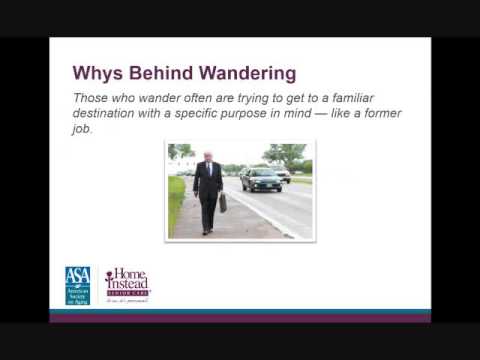 Alzheimer's and Wandering - Professional Caregiver WebinarCovers safety strategies for when the person tries to leave, including wandering prevention.
 5 simple ways to improve difficult dementia behaviors starting todayOffers quick, practical techniques that can be applied to the 'I want to go home' scenario.
 "I WANT TO GO HOME!" dementia challengeA real-time demonstration of how to handle the phrase with validation and redirection.
2 more videos


Background
What's really happening when they say 'I want to go home'
When a person with dementia says 'I want to go home,' they are not making a factual statement about a location. They are expressing a deep, often overwhelming feeling of being lost, unsafe, or disconnected. Home is our sanctuary, our safe haven, the place where we feel known and loved. Their brain can no longer make sense of the present surroundings, so it reaches for the most comforting memory it can find: home. This is not a lie or a manipulation; it is their best attempt to communicate a profound sense of unease. As one expert explains, 'They are feeling something that they don't want to be feeling. So, they want to leave to find the comforting feeling of home'. The feeling might be fear, boredom, hunger, loneliness, or simply the sense that 'I don't belong here.' Your job is not to argue about geography, but to help them feel safe and comforted right where they are.
Why telling them 'you are home' makes things worse
It is a natural instinct to correct a false statement. But when you say 'You are home, you've lived here for 20 years,' you are asking their damaged brain to accept a reality it cannot process. This often triggers more anxiety, confusion, and even agitation. They may start packing bags, trying to leave, or become tearful and angry. The reason is simple: their brain is living in a different time and place. Telling them they are wrong invalidates their feelings and makes them feel even more lost. As one care expert notes, 'Refrain from correcting the person... that might just escalate the situation and make it worse'. Instead, the goal is to validate the feeling and redirect to a sense of safety. You are not lying; you are meeting them where they are emotionally.
The feeling behind the words: safety, comfort, and connection
The phrase 'I want to go home' is almost always a signal that an unmet need exists. It could be a physical need, they are tired, hungry, need the bathroom, or are in pain. It could be an emotional need, they miss someone, feel abandoned, or are overwhelmed by the environment. As one source explains, 'What does home mean? Are they looking for a place? Are they looking for a feeling? Home is a feeling and it's a place'. When you can identify the root need, you can address it directly. For example, if they are tired, a nap might help. If they miss their mother, you can talk about her. If they are overstimulated, a quiet room can work wonders. The key is to stop focusing on the words and start focusing on the person.
Practical tools
6
The 'Validation + Redirect' Script
A simple two-step phrase to use in the moment. Step 1: 'You want to go home. You must really miss it.' (Validation). Step 2: 'Let's sit here and look at this photo album together. I'd love to hear about your home.' (Redirect). Practice this until it becomes automatic.
The 'Comfort Kit'
A small bag or box with items that evoke comfort:
When they say 'I want to go home,' bring out the kit and say: 'I brought some things that remind me of home. Let's look at them together.'
The 'Go for a Drive' Strategy
If they are insistent, say: 'Okay, let's go home. Let's get in the car.' Drive a short, familiar route (5-10 minutes). Stop for a treat or just enjoy the ride. Then return to the house and say: 'We're home now. Let's go inside and have some tea.' This can reset their sense of place.
The 'What About Home?' Question
When they say 'I want to go home,' ask gently: 'What about home do you need right now?' This helps you identify the specific unmet need, tiredness, hunger, missing someone, or feeling unsafe. Then you can address that need directly.
The 'Packing Bag' Technique
If they are packing to leave, do not stop them. Instead, help them pack a small bag with a few items. Then say: 'Good, you're all set. Let's have a snack first, and then we'll go.' Often, the act of packing satisfies the urge, and they forget about leaving. Later, you can quietly unpack the bag.
The 'Calm Space' Setup
Designate a corner of a room with
When the 'I want to go home' feeling is strong, guide them there and say: 'This is your special spot. Let's sit here for a while.'
Different situations
Early-stage vs. moderate-stage dementia
In early-stage, they may have some insight and can be gently reminded: 'I know this isn't your childhood home, but you are safe here with me. Let's make a cup of tea.' In moderate-stage, validation and redirection work better. Avoid any logical explanation. Use therapeutic fibbing more freely.
Lewy body dementia or Parkinson's dementia
These individuals may have more visual hallucinations or paranoia. The 'I want to go home' may be triggered by seeing something frightening in the environment. First, check for visual disturbances. Reduce clutter and dim harsh lights. Use validation: 'I can see you're scared. Let's go to a quieter room where you'll feel safe.'
Spouse vs. adult child caregiver
A spouse may feel more personally rejected ('Don't you remember our home?'). An adult child may feel guilty ('I'm not taking good enough care of them'). Both need to remember: this is the disease talking, not the person. Practice self-compassion. Use the same techniques, but also give yourself permission to step away for a moment if you feel overwhelmed.
In a facility (memory care or nursing home)
The 'I want to go home' is very common here. Do not say 'This is your home now.' Instead, validate: 'You miss your old home. Tell me about it.' Then redirect to a facility activity or a visit to a familiar spot (a garden, a lounge). Staff can use the 'go for a walk' technique: 'Let's go see the garden. It's beautiful today.'
When the person is in their own home but still says it
This is especially confusing for caregivers. Remember: they are not talking about the physical house. They are talking about a feeling of safety from a different time. Use the 'What about home do you need?' question. Often, they are tired, hungry, or missing a deceased loved one. Address that need directly.
For the doctor
4
- If the 'I want to go home' behavior is accompanied by severe agitation, aggression, or attempts to leave the house that put them in danger, discuss with your doctor whether a medication adjustment or a referral to a behavioral specialist is appropriate.
- If the behavior is new or has suddenly escalated, rule out a urinary tract infection (UTI) or other medical issue. UTIs can cause sudden confusion and agitation in people with dementia. Ask their doctor about a urine test.
- If the person is at risk of wandering and getting lost, discuss safety measures with their clinician, such as GPS tracking devices, door alarms, or a MedicAlert® + Alzheimer's Association Safe Return® program.
- If you are feeling overwhelmed, burned out, or unable to cope, talk to your doctor about caregiver support resources, respite care, or counseling. Your well-being is essential to their care.