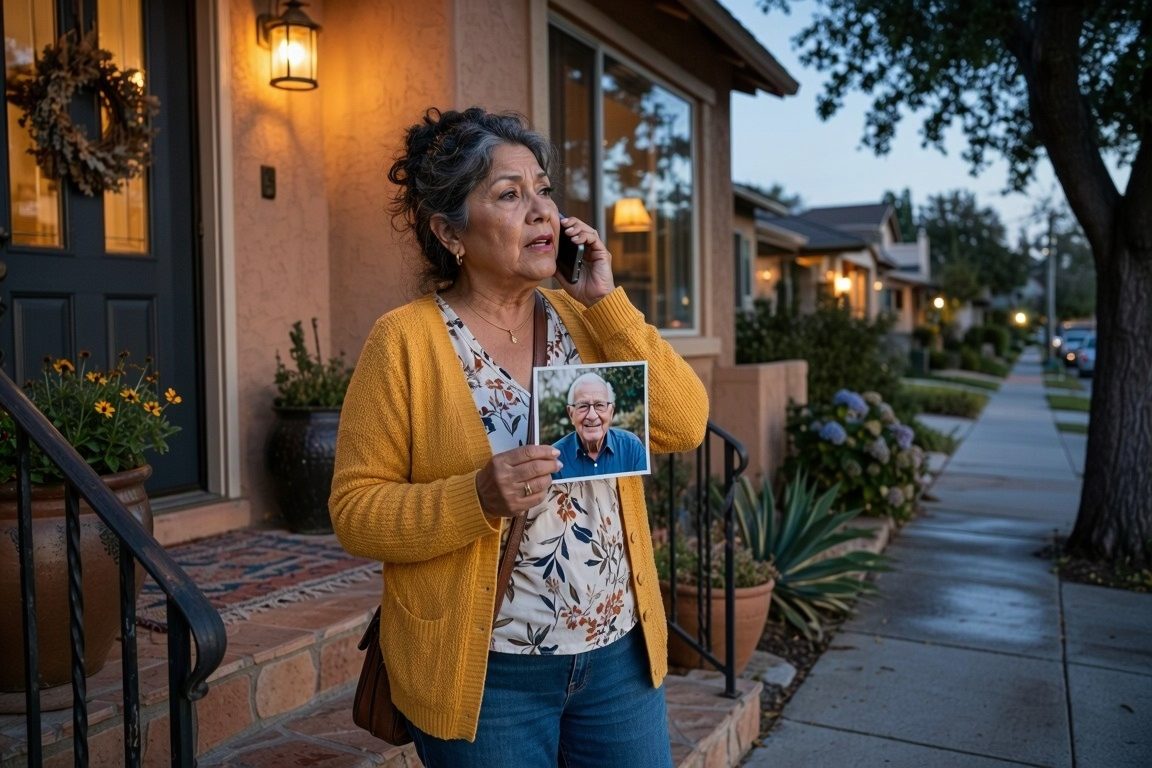
What not to do
- Do not panic or waste time debating who is at fault.
- Do not assume they are hiding in the home without thoroughly checking all spaces.
- Do not delay calling law enforcement based on a hope they will return on their own.
- Do not overlook the need for scent-preserving evidence (avoid washing clothes or cleaning the area).
- Do not leave the house unattended; someone must remain at the home base.
Key points
- Time is critical: most wanderers are found within a mile of home. Act fast but stay calm.
- Always check the entire house and immediate yard first before expanding the search.
- Call 911 within 15 minutes of realizing they are missing. Lead with 'dementia' and 'missing.'
- Have a prepared emergency packet with a photo, medical info, and emergency contacts ready to hand to law enforcement.
- Never scold or punish after they are found. They were acting on a need, not defiance.
- Prevention is key: use GPS trackers, enroll in Safe Return, and build a neighbor notification network before a crisis.
Videos
 Dementia Wandering: Prevention + What to Do If They Go Missing | Dr. Khushboo VermaThis video provides a clear, step-by-step plan for what to do in the first 15 minutes, including how to check the house and when to call 911.
 Courageous Conversation with Dale Dawson from Law EnforcementHear directly from a law enforcement officer about what information they need from you and how to communicate effectively during a wandering emergency.
 Alzheimer's and Wandering - Professional Caregiver WebinarThis webinar covers both prevention and response, including how to create a wandering safety plan and what to do if your loved one has access to a car.
 KNOW WHAT TO DO if your loved one wanders away: Make a dementia wandering safety planA practical guide to creating a personalized wandering safety plan, including a checklist of items to have ready and who to call.
2 more videos
 Dementia Emergency Preparedness: How to make sure your loved one stays safe in an emergencyFocuses on broader emergency preparedness, including natural disasters, but includes crucial tips for wandering response and communication with first responders.
 Things Not To Say To Your Loved Ones Who Need CareHelps you understand the emotional experience of your loved one during and after a wandering episode, so you can respond with compassion instead of frustration.
Background
Why Wandering Happens and What It Feels Like for Your Loved One
Wandering isn't random or defiant. For a person living with dementia, it often stems from an unmet need. They might be looking for a familiar place, like a childhood home or a store they remember. They could be feeling lost, even in their own house, because nothing looks familiar anymore. Sometimes it's a physical need, they need the bathroom, they're hungry, or they're simply restless and need to move. The key is that to them, they are not lost; they are on a purposeful journey that makes perfect sense in their reality. This is why calling their name or telling them to stop often doesn't work, they don't see themselves as needing help.
The First Moments: Why Speed and a Calm Mind Matter
Time is your most critical resource. Research shows that most people who wander are found within about a mile of where they started, often within the first few hours. The faster you act, the smaller the search area and the higher the chance of a safe return. Your job in these first minutes is to shift from panic to a systematic search. You are the detective, the coordinator, and the calm anchor. Every second you spend organizing your thoughts and actions is a second that brings your loved one closer to being found.
Practical tools
3
Recent Photo
A clear, current photograph of your loved one from their shoulders up, in good lighting, to share with police and search teams.
Emergency Contact List
A pre-written list of family members, neighbors, and local services (police, senior helpline) with phone numbers.
Medical and Behavioral Notes
A brief written summary of their dementia stage, wandering triggers (e.g., sundowning, looking for a lost relative), and past locations or routines they fixate on.
Different situations
If your loved one uses a walker, cane, or wheelchair
They likely cannot travel far on foot, but they can still get into dangerous situations like falling or getting stuck. Check the immediate area first, including uneven ground, curbs, and stairs. If they are in a wheelchair, check for ramps and accessible paths. Also, make sure their mobility aid has an ID tag with your contact information.
If you live in a rural area or near water, woods, or cliffs
The search area is much larger and more hazardous. Call 911 immediately after checking the house (within 5-10 minutes). Tell the dispatcher about the specific dangers: 'We live near a pond/woods/cliff.' Do not attempt to search these areas alone. Wait for trained search and rescue teams.
If your loved one has a history of driving wandering
This is a high-risk situation. Check if the car is gone. If it is, call 911 immediately and provide the vehicle description and license plate. Also call family members who live along common routes. They may have driven to a familiar location like an old workplace or a store that no longer exists. Do not assume they will stay local.
If you are caring for your loved one alone (no other family nearby)
You cannot search and stay at home at the same time. Call a trusted neighbor or friend to come stay at the house while you search. If no one is available, call 911 first and then search while waiting for help. Consider installing a video doorbell or security camera so you can check the house remotely.
If your loved one is in a memory care facility or assisted living
If they wander from the facility, immediately notify the staff and the facility's security. They should have a protocol in place. Ask for the facility's emergency plan and who will coordinate with law enforcement. Do not leave the facility yourself unless directed by staff, as you may miss updates. If the facility is unresponsive, call 911 yourself.
For the doctor
4
- Ask your doctor: 'Given my loved one's specific dementia type (e.g., Lewy body, vascular, Alzheimer's), are there any particular wandering triggers or patterns I should watch for?'
- Ask your doctor: 'Are there any medications that might increase restlessness or wandering behavior, and are there alternatives we could consider?'
- Ask your doctor: 'At what point should we consider a locked memory care unit or additional supervision for safety?'
- Ask your doctor: 'If my loved one has diabetes or another condition, what should I tell first responders about their medical needs if they are found disoriented?'