Step by step
What not to do
- Do not downplay symptoms to protect feelings; the neurologist needs an honest account.
- Do not skip basic blood work – treatable conditions (e.g., B12 deficiency, thyroid disease) can mimic or worsen cognitive decline.
- Do not expect a diagnosis at the first visit; multiple appointments and tests are typically needed.
- Do not ignore depression, sleep apnea, hearing/vision loss, or chronic pain – address them in parallel as they can worsen cognition.
Key points
- A neurologist is a medical specialist trained to diagnose and treat disorders of the brain and nervous system, including dementia.
- The diagnostic process typically includes a neurological exam, cognitive testing, brain scans, and blood work, all of which work together to provide a complete picture.
- Cognitive tests are standardized, meaning your loved one's results are compared to a healthy population of the same age and education level.
- Be prepared for the first appointment: bring a symptom timeline, a complete medication list, and be ready to share your observations honestly.
- Do not expect an immediate diagnosis; the process can take weeks or months as tests are completed and results are analyzed.
- You are your loved one's best advocate. Ask questions, seek second opinions if needed, and use tools like a medical binder to stay organized.
Videos
 Dementia Test Scores What You Need To KnowThis video explains how to interpret the scores from common cognitive tests, which can help you understand what the neurologist is looking for and reduce anxiety about the results.
 How Do People Get Tested For Dementia?This video walks through the entire testing process from start to finish, giving you a clear roadmap of what to expect during the diagnostic journey.
 Optimal Dementia Care Path: From Early Diagnosis to the Right SupportThis video discusses the ideal care pathway, including the role of the neurologist and how to coordinate care after a diagnosis is made.
 Alzheimer's & Dementia Starter Kit Part 1This video is a great starting point for new caregivers, covering the basics of what dementia is and how to begin the diagnostic process.
2 more videos
 Waiting Months for a Dementia Specialist? Do These 8 Things Now | Dr. Khushboo VermaThis video offers practical advice on what to do while you are waiting for your neurologist appointment, including addressing other health issues that can affect cognition.
 A Courageous Conversation: Regarding clinical research value, opportunities, and realities.This video discusses the role of clinical research in dementia diagnosis and treatment, which can help you have informed conversations with your neurologist about trial options.
Background
What Is a Neurologist and Why Do You Need One?
A neurologist is a medical doctor who has completed years of extra training focused on the brain, spinal cord, and nerves. Think of them as the specialist for the body's entire 'electrical system.' They are experts in diagnosing and managing conditions like Alzheimer's disease, Parkinson's disease, stroke, multiple sclerosis, and many others. When your loved one is showing signs of memory loss, confusion, or changes in behavior, a neurologist is the right doctor to lead the investigation. They are different from a neurosurgeon, who performs surgery; neurologists focus on diagnosis and non-surgical treatment, though they often work closely with surgeons when needed.
The Neurological Exam: The First Step
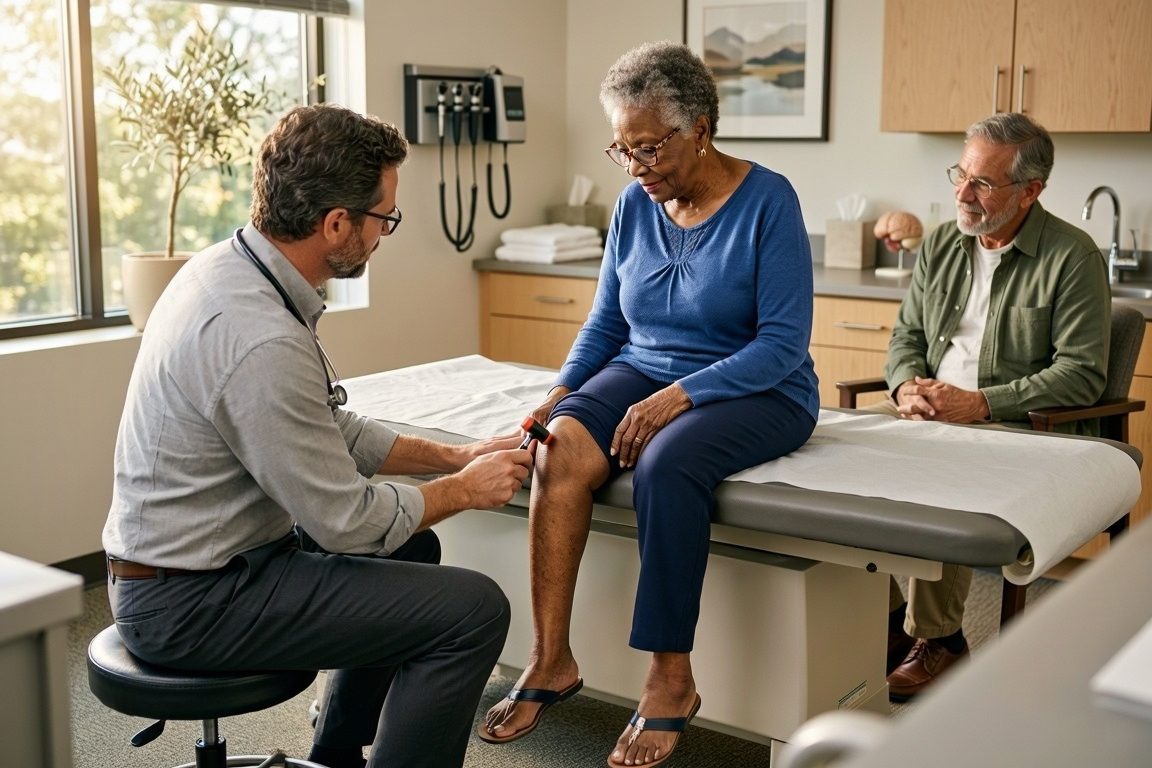
The first test a neurologist will likely perform is a neurological exam, sometimes called a 'neuro exam.' This is not a single test but a series of simple checks that can take anywhere from a few minutes to over an hour. The doctor will ask about your loved one's symptoms and medical history. Then they will ask them to do things like follow a finger with their eyes, touch their nose, walk in a straight line, or squeeze the doctor's hand. They will also check reflexes, muscle strength, sensation, and coordination. This exam helps the neurologist see how well different parts of the nervous system are working and can point them toward what might be wrong.
Cognitive Testing: Measuring Thinking Skills
Beyond the physical exam, the neurologist will use cognitive tests to measure thinking skills like memory, attention, language, and problem-solving. These can be short 'screening' tests done right in the office, or they can be much longer, more detailed assessments. The key thing to understand is that these tests are 'standardized.' This means they have been given to thousands of people without any cognitive problems to create a 'normal' baseline. Your loved one's scores are then compared to that baseline. This helps the doctor see if their performance is typical for their age and education level, or if there is a significant decline that needs further investigation.
Advanced Testing: Scans, Labs, and More
To get a complete picture, the neurologist will often order additional tests. Brain scans like MRI or CT scans can show the structure of the brain and rule out things like tumors, strokes, or bleeding. Blood work is essential to check for other medical conditions that can mimic dementia, such as vitamin deficiencies, thyroid problems, or infections. In some cases, a lumbar puncture (spinal tap) may be done to analyze the fluid around the brain and spinal cord for markers of Alzheimer's disease. A newer test is a skin biopsy, which can look for abnormal proteins associated with certain dementias like Lewy body disease. All of these pieces fit together like a puzzle to give the doctor the most accurate diagnosis possible.
Practical tools
4
Symptom Timeline Worksheet
A three-column table (Date / Symptom / Specific Example) to record observations with concrete details (e.g., 'March 2024 – forgot to take medication, found pills in sink'). Bring to every neurologist visit.
Medication List Template
A printable form (from AARP or a pharmacy) listing all drugs, vitamins, supplements, doses, frequencies, and prescribing doctors. Keep copies in your wallet and the patient's medical folder.
Three Questions for the Neurologist
Ask at each appointment:
Write down answers.
Caregiver Letter
A one-page letter describing observed symptoms with specific examples, delivered or mailed to the neurologist's office a few days before the appointment. Useful when the patient is not comfortable with you speaking openly.
Different situations
For Lewy body dementia (LBD)
People with LBD can have extreme sensitivity to antipsychotic medications, which can be life-threatening. Make sure the neurologist knows about any history of hallucinations or movement issues. Also, the skin biopsy test is particularly relevant for LBD, as it can detect the abnormal protein (alpha-synuclein) in the skin. Ask specifically if this test is available.
For early-stage Alzheimer's disease
In early stages, the focus is on accurate diagnosis and planning. The neurologist may order an amyloid PET scan or a lumbar puncture to look for amyloid plaques. These tests are not always covered by insurance, so ask about costs. Also, consider asking about clinical trials for new treatments, as early-stage patients are often eligible.
For a spouse caregiver vs. an adult child
A spouse may be more hesitant to share difficult symptoms out of loyalty or fear. An adult child may be more objective but may not have the same daily insight. Both perspectives are valuable. If you are an adult child, try to attend appointments with the spouse to provide a fuller picture. If you are a spouse, consider bringing a trusted friend or family member to help you remember what the doctor says.
For a patient in a facility (nursing home or assisted living)
The facility staff can be a great source of information. Ask the nurse or care manager to provide a written report of any changes in behavior, falls, or medication issues. The neurologist may need to do a telemedicine visit if the patient cannot travel. Make sure the facility has a private space and a reliable internet connection for the appointment.
For patients on Medicaid or with limited insurance
Some advanced tests like PET scans or neuropsychological evaluations may not be covered. Ask the neurologist's office about financial assistance programs or sliding-scale fees. Also, ask if there are less expensive alternatives, such as a standard MRI instead of a PET scan, or a shorter cognitive screening instead of a full neuropsych eval. Do not let cost stop you from asking; there are often options.
For the doctor
5
- Ask your neurologist: 'Given my loved one's specific symptoms and history, which diagnostic tests do you recommend and why? Are there any risks or side effects I should know about?'
- Ask your neurologist: 'Are there any medications my loved one is currently taking that could be causing or worsening their cognitive symptoms? Should we consider adjusting or stopping any of them?'
- Ask your neurologist: 'If a lumbar puncture is recommended, what is the risk of a post-procedure headache, and how is it managed? Are there any alternatives?'
- Ask your neurologist: 'My loved one has [specific condition, e.g., heart disease, diabetes, kidney problems]. How might this affect the safety or accuracy of the tests you are recommending?'
- Ask your neurologist: 'What are the next steps if the test results are inconclusive? Should we consider a second opinion or a referral to a specialist center?'