Step by step
What not to do
- Do not rush your loved one or try to hurry them through the process. Rushing increases their confusion and anxiety.Instead, allow ample time for each step and use a patient, unhurried manner.
- Do not argue or use logic to explain why they need the scan. Reasoning is not effective when the brain is affected by dementia. Arguing will only escalate their distress.Instead, validate their feelings and redirect their attention to something comforting.
- Do not surprise them with the details of the procedure at the last minute. Surprises trigger a knee-jerk reaction of fear.Instead, prepare them with simple, reassuring information ahead of time and repeat it calmly as needed.
- Do not show your own frustration or anxiety. Your loved one will pick up on your emotions and become more agitated.Instead, take a few deep breaths, put your frustrations aside, and focus on being a calm, steady presence.
- Do not ignore signs of physical discomfort, such as needing the bathroom, being thirsty, or being too cold. Unmet physical needs can worsen anxiety. Before the scan, check the basics: have they used the bathroom? Are they comfortable? Are they hungry or thirsty?
Key points
- Your calm presence is the most powerful tool to reduce your loved one's anxiety during a PET scan.
- Prepare ahead by calling the imaging center, packing a comfort kit, and using simple, reassuring language.
- Avoid surprises, arguments, and rushing; these will increase agitation.
- Use distraction and redirection with familiar objects or a small snack instead of logic or reasoning.
- Validate your loved one's feelings ('I see you are worried') rather than correcting or contradicting them.
- After the scan, offer immediate comfort and a positive reward to create a good association.
Videos
 Dementia and Anxiety: What you can doProvides general strategies for managing anxiety in dementia, which can be applied to the scan situation.
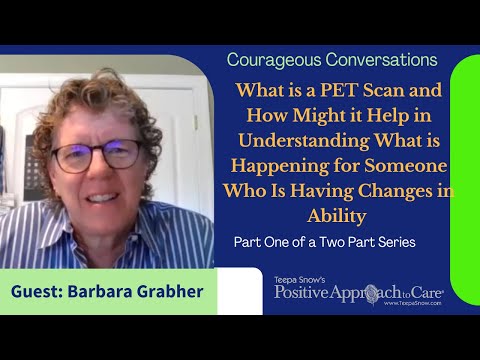 Courageous Conversation with Barbara Grabher from Life Molecular ImagingDirectly discusses PET imaging for dementia, explaining what the scan is and how to prepare, reducing the fear factor.
 When a Loved One with Dementia is Screaming or CryingOffers techniques for calming severe agitation, which may be useful if your loved one becomes very distressed during the scan.
 Loving a husband with dementiaProvides a personal perspective on supporting a spouse through medical procedures and daily challenges.

Background
Why the scan itself can cause anxiety
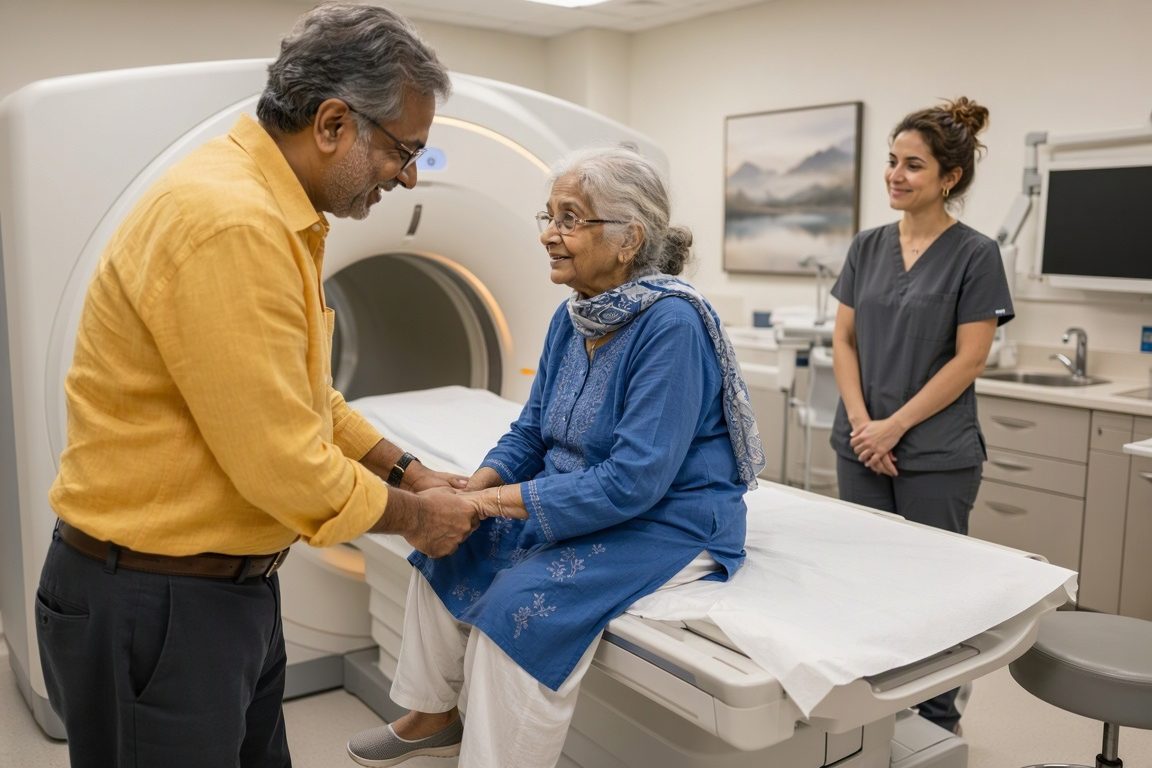
For a person living with dementia, a PET scan involves many elements that can feel threatening or confusing. The machine is large and unfamiliar, the room is often cold and clinical, and the procedure requires lying still for a period of time. Your loved one may not understand why they are there or what is expected of them. They may feel their personal space is being invaded, especially when a stranger (the technologist) comes close to insert an IV or position them on the table. The source passages explain that confusion and difficulty understanding are common reasons people with dementia feel anxious. When they cannot make sense of what is happening, their brain interprets the situation as a threat, and anxiety rises.
How your own feelings affect the situation
Your loved one will pick up on your emotions, even if you try to hide them. If you are feeling frustrated, rushed, or anxious yourself, they will sense that and their own anxiety will increase. The source material emphasizes that people with dementia have lost the ability to reason, so they rely heavily on emotional cues from those around them. Maintaining a calm demeanor, using a soft voice, and avoiding sudden movements are essential. Your calm presence is the single most powerful tool you have to help them feel safe. Taking a few deep breaths before you enter the imaging center can make a real difference.
The importance of preparation and reducing surprises
Surprises are especially difficult for someone with dementia. When they are surprised, their immediate reaction is often fear or agitation, which is the last thing you want when they need to lie still in a scanner. The source passages note that knowing what to expect and reducing the fear factor can help the person get a good scan. Preparation means talking through the steps beforehand in simple, reassuring terms, and also preparing the environment to be as calm as possible. This includes avoiding caffeine before the scan (as it can worsen anxiety), keeping the waiting area quiet, and making sure your loved one has used the bathroom and is comfortable before the procedure begins.
Practical tools
5
Simple script for explaining the scan
Use these exact words: 'We are going to a special place where they take pictures of your brain. It helps the doctor know how to help you. You will lie on a soft bed, and a camera will take pictures. I will be right there with you the whole time. It will be okay.' Repeat this script calmly as many times as needed.
Comfort kit for the waiting room
Pack a small bag with:
The source material suggests that looking through familiar photos can be soothing and divert attention from anxiety.
Pre-appointment checklist for the caregiver
Before the day of the scan:
Calming phrases to use during the scan
Say these in a soft, gentle voice: 'You are doing so well.' 'I am right here.' 'Just breathe with me.' 'Almost done, you are amazing.' 'We will get ice cream after this.' Avoid phrases that sound like commands, such as 'You have to stay still' or 'Don't move.' Instead, use positive, reassuring language.
Post-scan reward plan
Plan a small, enjoyable activity for after the scan, such as going to a favorite café, taking a short walk in a park, or listening to calming music at home. The source material emphasizes that having something to look forward to can reduce anxiety before the procedure and provide a positive association afterward.
Different situations
Lewy body dementia (LBD) or Parkinson's disease dementia
People with LBD are often more sensitive to medications and may have visual hallucinations. Before the scan, discuss with the clinician whether any pre-scan sedation is safe, as some medications can worsen symptoms. During the scan, be extra vigilant about hallucinations: if your loved one says they see something scary, validate their feeling ('I see you are worried') and redirect to a comforting object or your voice. Avoid arguing about whether the hallucination is real.
Late-stage dementia
In late stages, your loved one may have difficulty understanding language and may not be able to follow instructions. Focus entirely on non-verbal comfort: gentle touch, a calm tone of voice, and your presence. The scan may need to be rescheduled if agitation is severe. Discuss with the clinician whether sedation is an option, but be aware of the risks. The goal is to minimize distress, not to force the scan.
Spouse vs. adult child caregiver
A spouse may feel more comfortable using intimate touch and familiar routines (e.g., holding hands, using pet names). An adult child may need to be more careful about respecting boundaries, especially if the relationship is strained. In both cases, the key is to be the calm, familiar presence. If the adult child feels anxious, they should practice deep breathing before entering the room. The source material reminds us that the caregiver's anxiety can make the situation worse.
In a facility (e.g., nursing home or assisted living)
Coordinate with facility staff to ensure they are aware of the appointment and can help prepare your loved one. Ask a staff member who knows your loved one well to accompany you if possible. The facility may have a transport service that is familiar with dementia patients. Ensure the transport team is briefed on the need for a calm, unhurried approach. Bring a familiar item from the resident's room, like a favorite blanket or photo, to the imaging center.
Medicaid or insurance concerns
FDG-PET scans are sometimes covered by Medicare for certain indications, but amyloid PET scans are often not covered and can be expensive. Before scheduling, discuss with the clinician whether the scan is medically necessary and what insurance will cover. If cost is a barrier, ask about research studies or clinical trials that may offer the scan at no cost. The source material notes that for people under Medicare age, the scan may need to be paid out of pocket. Do not let financial stress increase your anxiety in front of your loved one; handle these conversations separately.
For the doctor
5
- Ask the doctor: 'Is there any medication that can be given before the scan to help my loved one stay calm, and what are the risks?'
- Ask the doctor: 'Given my loved one's specific dementia type, are there any special precautions we need to take for the FDG or PET scan?'
- Ask the doctor: 'What is the exact purpose of this scan for my loved one, and how will the results change their care plan?'
- Ask the doctor: 'If my loved one becomes too agitated to complete the scan, what are our options? Should we try again another day, or are there alternative tests?'
- Ask the doctor: 'Are there any dietary or medication adjustments needed before the scan (e.g., fasting, avoiding caffeine, holding certain medications)?'