Step by step
What not to do
- Don't assume that no obvious stroke symptoms means no risk, silent strokes and TIAs can damage the brain without dramatic warning signs. If the doctor recommends brain imaging, don't skip it.
- Don't stop or change blood pressure, cholesterol, or diabetes medications without the doctor's approval, even if numbers look good. Stopping suddenly can cause dangerous rebounds in blood pressure or blood sugar.
- Don't overlook mood changes like depression, withdrawal, or persistent anxiety. Treating them with therapy or medication can improve quality of life and may help slow cognitive decline.
- Don't overhaul everything at once. Pick one or two small changes to start with, a vegetable at dinner, a 5-minute walk after meals, and build from there.
- Don't assume that all memory loss follows the same gradual pattern as Alzheimer's. Vascular dementia often progresses in sudden 'stepwise' drops after a stroke or TIA, followed by partial recovery.
Key points
- Vascular dementia is caused by reduced blood flow to the brain, often from stroke, high blood pressure, diabetes, or other heart-related conditions.
- Many risk factors are modifiable, controlling blood pressure, cholesterol, blood sugar, quitting smoking, and staying active can slow progression.
- The disease often progresses in a stepwise pattern, with sudden drops after strokes or TIAs, followed by partial recovery.
- What's good for the heart is good for the brain, heart-healthy lifestyle changes benefit both.
- Early diagnosis and aggressive management of risk factors give the best chance to preserve cognitive function and quality of life.
- Caregivers should monitor for sudden changes and seek emergency care if stroke symptoms appear.
Videos
 Vascular DementiaThis video provides a clear, caregiver-friendly explanation of what vascular dementia is, what causes it, and the main risk factors. It's a great starting point for understanding the condition.
 What Are The Behavioral Symptoms Of Vascular Dementia?This video focuses on the behavioral changes that often accompany vascular dementia, such as mood swings, anxiety, and depression. Understanding these helps caregivers respond with patience and appropriate strategies.
 What Is Dementia?A general overview of dementia that helps distinguish vascular dementia from other types. Useful for building foundational knowledge.
 What is Dementia?Another introductory video that explains dementia in simple terms, helpful for family members who are new to the topic.
2 more videos
 Alzheimer's Disease vs DementiaThis video clarifies the difference between Alzheimer's disease and dementia, which is important because vascular dementia is often confused with Alzheimer's. Understanding the distinction guides better care decisions.
 Diagnosis and Management of Vascular Dementia | Stephen Chen, MD | UCLAMDChatA detailed medical lecture from a UCLA specialist that covers diagnosis, risk factors, and management strategies. Excellent for caregivers who want in-depth, expert information.
Background
What Is Vascular Dementia and Why Does It Happen?
Vascular dementia is not a single disease but a group of conditions caused by problems with blood flow to the brain. Unlike Alzheimer's disease, which involves abnormal protein deposits, vascular dementia happens when blood vessels in the brain are damaged and can't deliver enough oxygen and nutrients. This damage can come from a major stroke, a series of tiny 'silent' strokes (called transient ischemic attacks or TIAs), or from long-term conditions like high blood pressure and diabetes that slowly wear down the blood vessels. The result is that brain cells in affected areas stop working properly, leading to changes in thinking, memory, judgment, and even mood or behavior.
The Key Risk Factors: What Increases the Chances?
The risk factors for vascular dementia are essentially the same as those for heart disease and stroke. They include high blood pressure, high cholesterol, diabetes, smoking, obesity, and physical inactivity. Age is the biggest non-modifiable risk factor, the older we get, the higher our risk. Other factors like a history of stroke or TIA, heart disease, and even conditions like atrial fibrillation (irregular heartbeat) can increase risk. It's important to know that many of these risk factors are modifiable, meaning you and your loved one can take steps to reduce them. As one expert put it, 'What's good for the heart is good for the brain.'
How Vascular Dementia Progresses: A Stepwise Pattern
Unlike Alzheimer's disease, which tends to progress gradually and steadily, vascular dementia often follows a 'stepwise' pattern. Your loved one may be doing fine, then suddenly have a stroke or TIA that causes a noticeable drop in cognitive function. They may recover somewhat, but then another event causes another drop. This pattern can be confusing and distressing for caregivers. It's also common for people to have 'mixed dementia', a combination of vascular dementia and Alzheimer's, which can make the course of the illness more complex and faster. Understanding this pattern helps you anticipate changes and plan care accordingly.
Practical tools
4
The 'Know Your Numbers' Card
Create a small laminated card listing your loved one's target numbers:
Keep it in their wallet or on the fridge, and ask the doctor to update the targets at each visit.
Medication Management Station
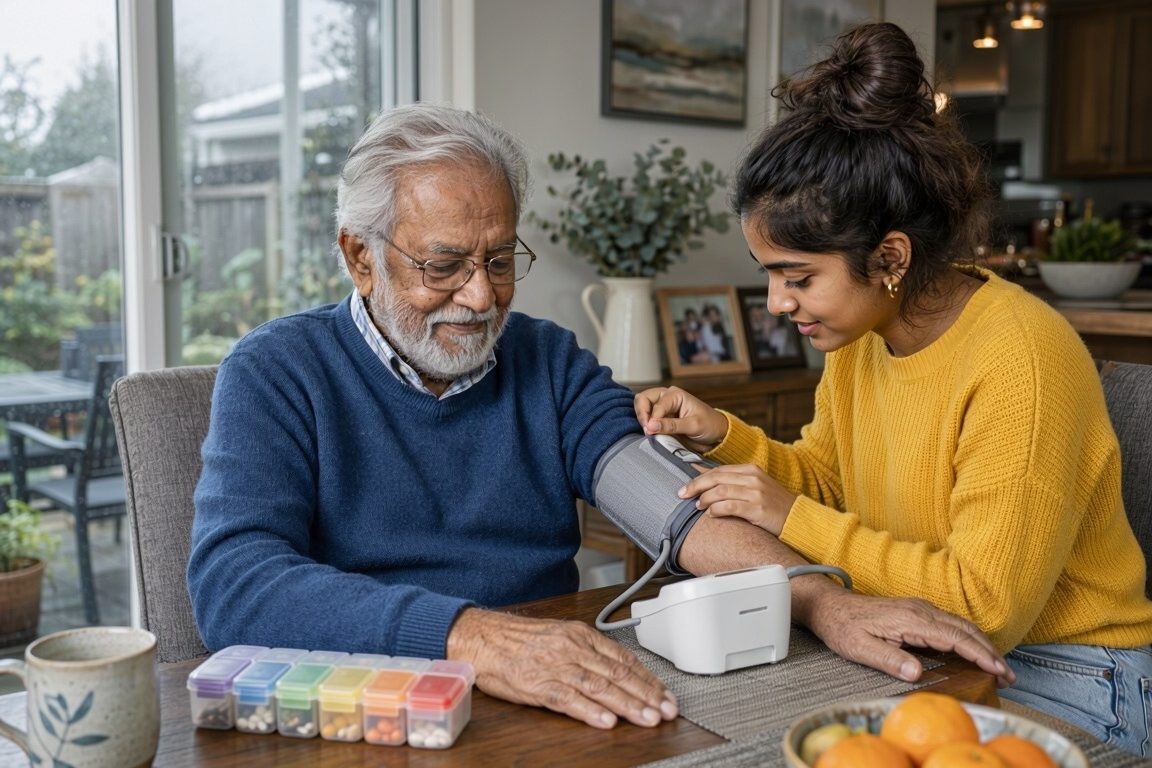
Set up a dedicated kitchen spot with a weekly pill organizer (look for AM/PM compartments), a small clock, and a notepad for questions. Use a smartphone app like Medisafe or simple phone alarms as dose reminders, and post a current list of all medications with doses and times.
The 'Brain-Healthy' Grocery List Template
Print a pre-made list that includes leafy greens (spinach, kale), berries (blueberries, strawberries), fatty fish (salmon, sardines), nuts (walnuts, almonds), whole grains (oatmeal, quinoa), and healthy oils (olive oil). Cross items off as you shop.
Stroke FAST Reference Card
Print a small card for the fridge and wallet that lists the FAST warning signs: Face drooping, Arm weakness, Speech difficulty, Time to call 911, plus a checkbox for sudden confusion, severe headache, or trouble walking.
Different situations
For someone with mixed dementia (vascular + Alzheimer's)
The progression may be faster and more unpredictable. You'll need to monitor for both gradual decline (Alzheimer's pattern) and sudden stepwise drops (vascular pattern). Work closely with a neurologist who can adjust medications for both conditions. Consider a geriatric psychiatrist for mood and behavior changes. The lifestyle changes (diet, exercise, blood pressure control) are even more critical because they can slow both types of damage.
For a spouse caregiver vs. an adult child caregiver
Spouse caregivers often live with the person and may need to adjust their own lifestyle too, this can be a bonding opportunity. Adult children may need to coordinate care from a distance. If you're a long-distance caregiver, hire a local geriatric care manager to help monitor risk factors and attend doctor appointments. Use video calls to check in on medication adherence and mood. Both roles benefit from joining a caregiver support group.
For someone in the early stage of vascular dementia
Focus on prevention and education. The person can still participate in decision-making about their care. Encourage them to create advance directives and a healthcare power of attorney. Use the 'Know Your Numbers' card together. Start the lifestyle changes now, while they can still engage. This is the best time to build healthy habits that will slow progression.
For someone with a history of stroke or TIA
The risk of another stroke is high. Ensure they are on appropriate antiplatelet or anticoagulant medications as prescribed (e.g., aspirin, clopidogrel, warfarin). Monitor for new stroke symptoms daily: sudden numbness, confusion, trouble speaking, dizziness, or severe headache. Keep a list of emergency contacts and the nearest stroke center. Consider a home blood pressure monitor to check readings daily.
For someone living in a facility (assisted living or nursing home)
Advocate for the facility to monitor blood pressure, blood sugar, and medication adherence. Ask for a written care plan that includes daily physical activity (even if just walking the hall) and a heart-healthy menu. Visit often and engage in social activities together. If the facility has a nurse, ask them to track any sudden cognitive changes and report them to the doctor immediately.
Common questions
1
What are the risk factors for vascular cognitive impairment?
High blood pressure, high cholesterol, diabetes, and smoking are key risk factors that you can actively manage with your loved one's doctor to help protect their brain.
For the doctor
6
- Ask the doctor: 'What are the specific blood pressure and blood sugar targets for my loved one, given their age and other health conditions?'
- Ask the doctor: 'Should my loved one be on a blood thinner or antiplatelet medication to prevent future strokes? What are the risks and benefits?'
- Ask the doctor: 'Are there any medications that could be causing or worsening cognitive symptoms? Can we review the current medication list for potential side effects?'
- Ask the doctor: 'What type of brain imaging (MRI or CT) would be most helpful to assess vascular damage, and how often should it be repeated?'
- Ask the doctor: 'If my loved one has diabetes, what is the best way to manage blood sugar to protect the brain without causing dangerous lows?'
- Ask the doctor: 'Are there any clinical trials or new treatments for vascular dementia that my loved one might be eligible for?'