Step by step
What not to do
- Do not use regular television as a substitute for Zinnia TV; fast cuts, loud commercials, and complex plots often increase agitation.
- Do not force your loved one to watch during a severe agitation episode; offer gently and try again later if they walk away.
- Do not expect Zinnia TV to work instantly every time; finding the right videos usually requires repeated, patient experimentation.
- Do not use it as a babysitter or leave your loved one alone with it for long stretches; stay nearby to share the calm.
- Do not use Zinnia TV if your loved one experiences visual hallucinations triggered by screens, especially in Lewy body dementia; check with their doctor first.
Key points
- Zinnia TV is a research-backed tool that uses simple, plot-free videos to reduce agitation and support daily routines like toileting and medication.
- Use videos proactively, start them about 30 minutes before sundowning or before a daily task to prevent agitation, not just during a crisis.
- Daily use of daily living videos helps normalize activities and reduces stress for the person with dementia, according to research.
- Pair Zinnia TV with a calm, warm voice and your presence. The video is a tool, not a replacement for human connection.
- Personalize the content: experiment with different channels (nature, daily living, music) to find what your loved one responds to best.
- If your loved one has Lewy body dementia or hallucinations, consult their doctor before using any screen-based intervention.
Videos
 The Surprising Way to Reduce Dementia AgitationThis video explains the research behind Zinnia TV and how it can reduce agitation. It is a good starting point for caregivers who want to understand the science.
 Uniting for Better Dementia Care = Seni + Dementia LiveThis video shows how Zinnia TV can be used in combination with other tools (like incontinence products) to improve care. It offers practical tips for daily living.
 Listen to what Teepa Snow has to say about Memory Lane TVTeepa Snow is a well-known dementia care expert. Her endorsement of a similar platform (Memory Lane TV) reinforces the value of specialized video content for dementia care.
 Zinnia Dementia Caregiver Support Webinar: Self-Care Toolkit and Self-CompassionThis webinar focuses on caregiver self-care, which is essential when using any tool. It reminds you that taking care of yourself helps you care for your loved one.
2 more videos
 An Interactive and Media Collection for people living with dementia & their care partnersThis video gives an overview of how Zinnia TV works and how to set it up. It is a practical demonstration for caregivers who are new to the platform.
 What Can A Dementia Patient Take To Help Them Sleep?This video discusses sleep issues in dementia, which often go hand-in-hand with agitation. It offers non-pharmacological strategies that can complement Zinnia TV use.
Background
What Is Zinnia TV and How Does It Work?
Zinnia TV is a streaming app you can use on a connected TV, tablet, or smartphone. Unlike regular television, which often has fast-moving plots, loud sounds, or confusing commercials, Zinnia TV's content is deliberately simple and calming. The videos show beautiful footage of people doing everyday activities, like getting dressed, using the toilet, or taking medication, without any storyline to follow. This is important because a person with dementia may struggle to follow a plot, and regular TV can actually increase agitation or confusion. Zinnia TV was developed and tested in research settings, including a study at the University of British Columbia, where it was used in hospitals and long-term care. The research focused on three main uses: reducing agitation, creating moments of joy, and helping with adherence to daily living tasks.
Why Does Zinnia TV Help with Agitation?
Agitation in dementia often comes from feeling overwhelmed, confused, or anxious. The brain can no longer filter out background noise or process complex information easily. Zinnia TV works by providing a calm, predictable visual experience that does not demand anything from the viewer. The videos are designed to be engaging without being overstimulating, which can help redirect the person's attention away from whatever is causing their distress. The research found that watching these videos can ease agitation, especially when used proactively, for example, starting a video about 30 minutes before sundowning typically begins. This is similar to how music therapy has been shown to improve symptoms of agitation and aggression when used for 30 minutes at least three times a week. By giving the brain a soothing focus, Zinnia TV can help prevent the escalation of agitation.
How Can Zinnia TV Help with Daily Tasks Like Toileting and Medication?
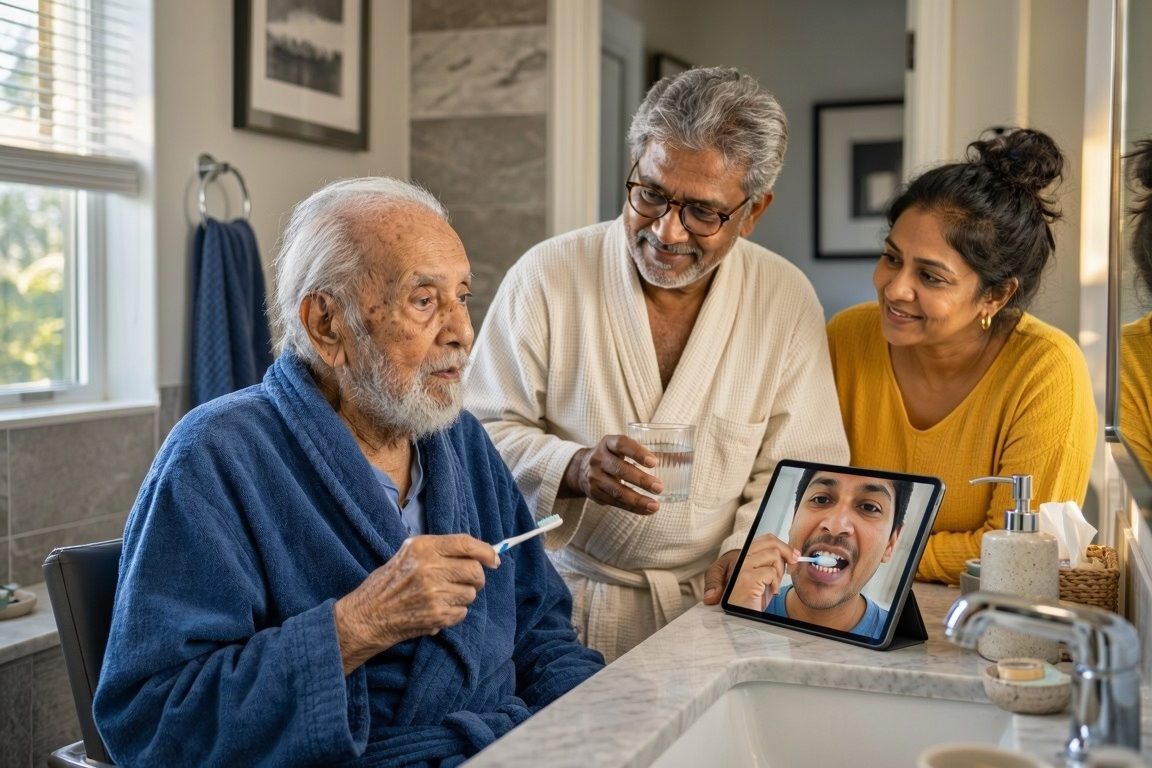
One of the biggest challenges in dementia care is getting a loved one to cooperate with daily routines like toileting, showering, or taking medication. Often, the person may feel anxious, embarrassed, or simply not understand why they need to do something. Zinnia TV has a dedicated channel of 'daily living videos' that show other people calmly doing these activities. By watching someone else use the toilet or take medication, the person with dementia sees that the activity is normal and safe. The research showed that when these videos are watched on a daily basis, they help normalize the activity and take some of the stress away. You can use the video right before you start the task, for example, play the 'let's take medication' video while you are getting the pills ready, then say, 'Look, it's time for us to do that too.' This can reduce resistance and make the routine feel less like a battle.
Practical tools
5
The 'Let's Watch Together' Script
Use a calm lead-in for daily tasks: 'I have a video to show you about [task]. Let's watch it together, and then we will do it.' Assumed cooperation reduces resistance.
Daily Video-Routine Schedule
A written or digital list pairing each part of the day with a specific Zinnia video (e.g., 7:30 AM 'Let's Get Dressed,' 12:00 PM 'Let's Eat,' 6:00 PM calming nature video). Post it and check off items for predictability.
Weighted Blanket for Restless Watching
If your loved one fidgets or cannot settle while watching, drape a weighted blanket over their lap or shoulders. The gentle pressure can help them sink into the video and reduce restlessness.
Jubilee TV for Remote and Facility Care
A device and service that schedules Zinnia videos automatically on your loved one's TV and adds a video-calling screen. Useful for long-distance caregivers or keeping routines consistent in assisted living.
'Go-To' Comfort Video List
After a few weeks, write down the 2 or 3 Zinnia videos that most reliably calm your loved one. Keep the list by the remote or as a phone note for quick access during sudden agitation.
Different situations
Frontotemporal Dementia (FTD)
People with FTD may have more pronounced changes in behavior, including apathy or disinhibition. They might not respond to daily living videos in the same way as someone with Alzheimer's. Try using Zinnia TV's nature or music channels to create a calming atmosphere. If they are resistant to watching, do not force it. Instead, play the video in the background while you engage in a simple activity together, like folding laundry. Also, be aware that some people with FTD may have aphasia (trouble with language), so videos with minimal talking may work better.
Late-Stage Dementia
In late-stage dementia, the person may have limited mobility and may be bed-bound. Use Zinnia TV on a tablet or a TV positioned where they can see it easily. Choose very simple, slow-moving videos with gentle music and no narration. You can also use the videos as a background for sensory stimulation, for example, play a beach video while you gently stroke their arm with a soft cloth. The goal is not to engage them in a task but to provide a calming presence. Watch for any signs of distress (turning away, grimacing) and stop the video if it seems to bother them.
Family Caregiver vs. Professional Caregiver
Family caregivers often have the advantage of knowing their loved one's history and preferences. Use this to choose videos that match their past interests, for example, if they loved gardening, use the nature channel. Professional caregivers in a facility may need to use Zinnia TV with multiple residents. In that case, schedule group viewing times for calming videos, and use the daily living videos one-on-one during care routines. The research showed Zinnia TV was effective in both long-term care and acute care settings, so it can be adapted for group or individual use.
In a Facility (Assisted Living or Nursing Home)
If your loved one is in a facility, talk to the staff about using Zinnia TV. You can set it up on their personal TV or tablet. Ask the staff to play a daily living video before toileting or medication rounds. You can also schedule videos to play at specific times using Jubilee TV. Be aware that some facilities may have restrictions on personal devices, so check first. If possible, visit during a time when the video is playing to see how your loved one responds, and share that feedback with the staff.
Lewy Body Dementia (LBD)
People with LBD are more prone to visual hallucinations and may be sensitive to screen flicker or bright lights. Start with a very short video (2-3 minutes) and watch for any signs of distress or increased confusion. If they seem to enjoy it, gradually increase the time. Avoid videos with rapid scene changes or bright flashing colors. If hallucinations worsen after watching, stop using Zinnia TV and consult their doctor. Some people with LBD may do better with audio-only content or very simple, static images.
For the doctor
5
- If your loved one has a history of seizures or epilepsy, ask their doctor if watching videos could trigger a seizure.
- If your loved one is on medications that affect alertness or mood, ask the doctor if using Zinnia TV could interact with those medications or if the timing of videos should be adjusted.
- If your loved one has vision problems (like cataracts or macular degeneration), ask their eye doctor or primary care provider if the screen brightness or video content is appropriate.
- If your loved one has a diagnosis of Lewy body dementia and experiences visual hallucinations, ask the doctor if screen-based interventions are safe or if alternative calming strategies (like music) should be used instead.
- If agitation or resistance to daily tasks persists despite using Zinnia TV, ask the doctor if there might be an underlying medical cause (like a urinary tract infection, pain, or medication side effect) that needs to be addressed.