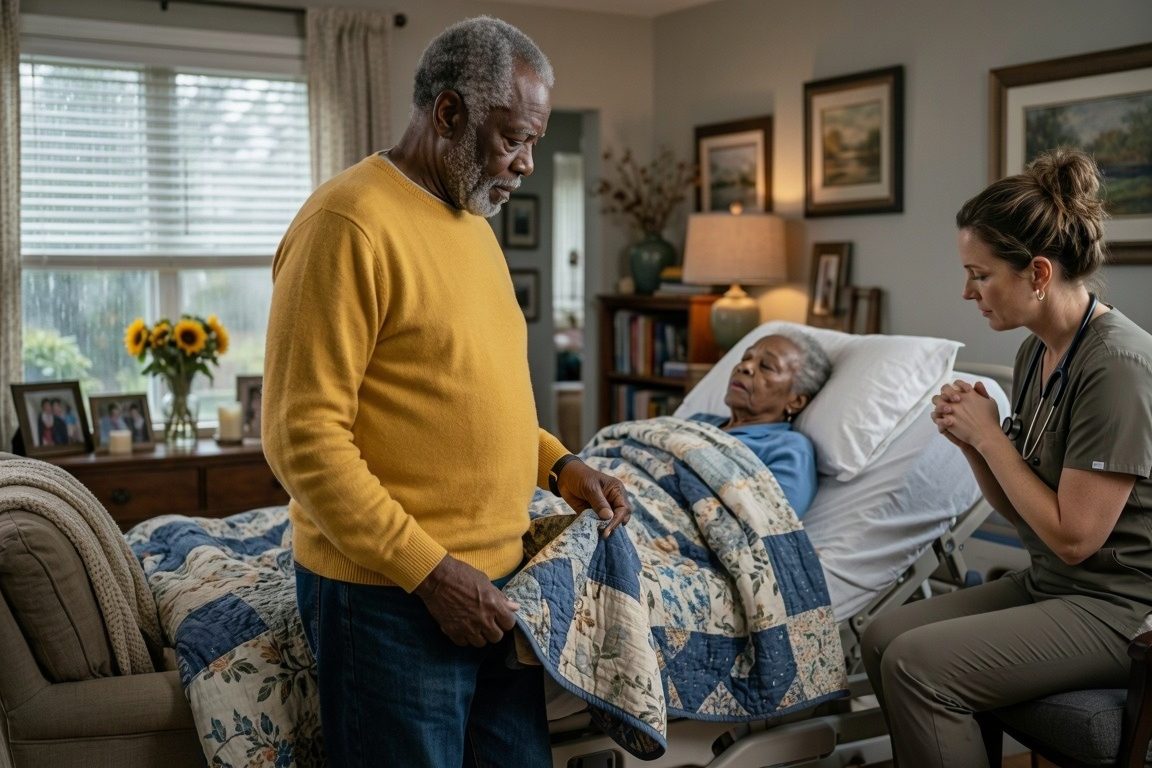
Step by step
What not to do
- Do not force feed or use a feeding tube: the body is shutting down and no longer needs nutrition. Feeding tubes can cause infections and discomfort without improving survival.
- Do not call 911 or rush to the hospital unless there is a sudden severe injury or uncontrollable bleeding. Hospitals may push aggressive treatments causing distress; stay home with hospice support.
- Do not push for IV fluids: they can cause swelling, fluid in lungs, and discomfort without extending life meaningfully. Let hospice guide hydration decisions.
- Do not try to wake or force the person to respond: they are conserving energy. Trying to rouse them causes confusion; your quiet presence is enough.
- Do not ignore signs of pain because they cannot speak: use non-verbal cues. Ask hospice for a pain assessment tool and medication; untreated pain worsens agitation and suffering.
- Do not isolate yourself: caregivers often burn out from handling everything alone. Reach out to hospice social workers, support groups, or a therapist.
Key points
- Dementia is a terminal illness; death is natural and often occurs when the brain stops signaling the body to eat, drink, or breathe.
- In the final stage, comfort care is the priority. Stop forcing food or drink and focus on pain management, mouth care, and a calm environment.
- Hospice is a vital resource. It provides medications, equipment, and emotional support for both the patient and the caregiver.
- Do not call 911 or rush to the hospital unless there is a sudden, severe injury. Hospitals can cause more harm than good at this stage.
- Look for non-verbal signs of pain (grimacing, restlessness) and ask the clinician for appropriate medications.
- Take care of yourself. Grief, guilt, and exhaustion are normal. Reach out for support from hospice, friends, or a counselor.
Videos
 How does someone die from DementiaThis video from a hospice nurse explains the two main causes of death in dementia: the natural stopping of eating/drinking and infections like aspiration pneumonia. It provides a clear, compassionate overview.
 How Alzheimer’s Actually Leads to Death (and What Helps)This video focuses on the very last phase of Alzheimer's, including how the body shuts down and what caregivers can do to help. It offers practical advice for comfort care.
 What Are The Stages Of Alzheimer's?This video breaks down the seven stages of Alzheimer's, helping you understand where your loved one is in the progression. Useful for recognizing when end-stage has begun.
 What are the different stages of dementia? The 3 stage and 7 stage models explainedThis video explains both the three-stage and seven-stage models of dementia, providing a framework for understanding the disease's progression and what to expect at the end.

Background
What Actually Causes Death in Dementia?
People often wonder what someone with dementia actually dies from. In many cases, it is not a sudden event but a slow, gradual decline. The disease itself causes the brain to stop signaling the body to perform basic functions like eating, drinking, and even breathing. As one hospice nurse explains, the most common path is that the person eventually stops eating and drinking, which leads to a natural death from the disease itself. This is not starvation in the usual sense; it is the brain no longer telling the body it needs fuel. The person simply loses the drive to eat or drink, and the body begins to shut down peacefully.
Another common cause is an infection, especially aspiration pneumonia. This happens when a person has trouble swallowing, and food or liquid goes into the lungs instead of the stomach. The infection can then spread, and the person may decline rapidly. In either case, the underlying cause is the dementia, which has weakened the body's ability to fight off illness or maintain basic life functions. The key is to recognize that dementia is a terminal illness, and at the end stage, aggressive treatments are unlikely to reverse the course. Instead, the focus should be on comfort and quality of life.
The Final Stages: What to Expect
In the very last stage of dementia, the person is often bedridden and requires 24-hour care. They may lose the ability to speak, walk, or even hold up their head. Communication becomes very limited, though they may still respond to a kind touch or familiar music. The brain is no longer able to coordinate movement, so muscle contractions or rigidity in the arms, legs, and hands are common. The person may also have trouble regulating body temperature, leading to fevers even without an infection.
As the end approaches, the person will stop eating and drinking entirely. This is a natural part of the dying process, not a sign that they are suffering. The body knows what to do. Breathing may become irregular, with long pauses between breaths, and there may be a gurgling sound from saliva collecting in the throat. This is often called a 'death rattle,' but it is not painful for the person. The skin may become cool or mottled, and the person may seem to be sleeping most of the time. This phase can last hours to a few days, and it is a time for quiet presence and comfort.
Why Comfort Care Matters More Than Aggressive Treatment
When a person is in the end stage of dementia, there is no cure or treatment that will reverse the disease. Trying to force feed, use a feeding tube, or treat every infection with strong antibiotics may not always improve comfort and can be burdensome. Decisions about antibiotics should be made with the hospice team, weighing potential benefits and discomfort. As one dementia care expert notes, the failure to recognize that dementia is fatal leads families to grasp for aggressive treatments that ultimately do not help.
Instead, the goal should be palliative care, which focuses on managing pain, breathing difficulties, and agitation. This might involve medications for comfort, gentle repositioning to prevent bedsores, and keeping the mouth moist with a sponge swab. The person may not be able to tell you they are in pain, but signs like grimacing, restlessness, or rapid breathing can indicate discomfort. By prioritizing comfort, you honor your loved one's dignity and allow them to pass peacefully.
Practical tools
6
Comfort Care Kit
A bedside bag with
Mouth Care Sponge Swabs
Small foam swabs on a stick, available at pharmacies. Dip in water or non-alcohol mouthwash to moisten lips, gums, and tongue. Prevents dryness and soothes when swallowing is difficult.
Hospice Support Line
Save your hospice nurse's number on speed dial and post the 24/7 line near the bed. Call for pain, breathing, agitation, or medication questions.
Repositioning Pillows
Soft pillows or foam wedges to support head, back, and knees when turning every two hours. A body pillow behind the back helps maintain a comfortable side-lying position that aids breathing.
Visual Pain Scale for Non-Verbal Patients
Ask hospice for a dementia-friendly pain assessment using facial expressions or body language. Provides shared language to describe what you see and helps adjust medication quickly.
Grief Journal
Notebook for thoughts, memories, or a letter to your loved one, plus a running list of questions for hospice. Writing helps process emotions and becomes a keepsake.
Different situations
Lewy body dementia or Parkinson's disease dementia
These types often involve more movement issues, such as stiffness, tremors, or hallucinations. In the end stage, the person may have more muscle rigidity and difficulty swallowing. Be extra vigilant about repositioning to prevent contractures. Hallucinations may become more distressing; ask the doctor about medications like quetiapine (Seroquel) to manage them, but always discuss with the clinician first.
Late stage / bedridden
If the person is completely bedridden, focus on turning them every two hours to prevent bedsores. Use a special mattress overlay (like an egg crate or alternating pressure pad) to reduce pressure. Keep the bed at a slight incline to help with breathing and swallowing. A hospital bed can make this easier.
Spouse vs adult child caregiver
Spouses may feel a deeper sense of loss and may struggle with letting go. Adult children may feel guilt or conflict with siblings. Both should seek separate support. Spouses might benefit from couples counseling or a spousal support group. Adult children can use family meetings with a hospice social worker to share decisions and reduce conflict.
In a facility (nursing home or memory care)
If your loved one is in a facility, you are still the advocate. Visit often and communicate with the staff about your loved one's comfort. Ask for a care plan meeting to ensure the staff follows the comfort care approach. You can bring familiar items like a blanket or photos to make the room feel more personal.
Medicaid or limited resources
Hospice is covered by Medicare and most Medicaid plans, so cost should not be a barrier. If you do not have hospice, contact your local Area Agency on Aging for low-cost or free resources. You can also ask the facility social worker about charity care or sliding scale fees for equipment like a hospital bed or oxygen.
For the doctor
5
- Ask the doctor or hospice nurse: 'What medications are available to manage pain, anxiety, or breathing difficulties at the end of life? How do I administer them safely?'
- Ask: 'If my loved one develops an infection like pneumonia, what are the pros and cons of treating it with antibiotics versus focusing on comfort? What would you recommend at this stage?'
- Ask: 'Are there any signs of suffering I should watch for that might require a change in medication? How do I know if they are in pain?'
- Ask: 'Is a feeding tube ever appropriate in end-stage dementia? What are the risks and benefits in my loved one's specific situation?'
- Ask: 'What is the protocol for managing secretions or the 'death rattle'? Should I use suction or just reposition? Can you show me how to use a suction bulb safely?'