Step by step
What not to do
- Do not get angry or tell them to stop following you; your frustration will confirm something is wrong and make the behavior worse.
- Do not sneak away when they are not looking, discovering you are gone can tip anxiety into panic and lead them to search in unsafe places.
- Do not assume they are doing it on purpose to annoy or control you; they are not giving you a hard time, they are having a hard time.
- Do not push through without respite until you burn out; exhausted caregivers cannot provide the calm presence that shadowing requires.
Key points
- Shadowing is driven by fear and anxiety; your loved one follows you because you are their safety net.
- Always check for unmet needs first: hunger, thirst, pain, bathroom, or fatigue.
- Give them a simple, repetitive task to do near you so you can have a moment alone.
- Use a clear, reassuring verbal script when you need to leave the room.
- Create a predictable daily routine to reduce overall anxiety.
- Take care of yourself, respite is essential for your well-being and your ability to care for them.
Videos
 Shadowing in dementia: Why people with dementia follow you around and what you can do about itThis video directly explains the fear and anxiety behind shadowing and offers practical strategies like giving the person a task to do near you.
 Why Does A Person w/ Dementia FOLLOW ME Everywhere? || The 'Why' SeriesThis video breaks down the unmet need behind shadowing and emphasizes that it is a form of communication, not a behavior problem.
 Common Dementia Behaviors || Beginners Series || Dementia With GraceThis video covers shadowing as a common behavior and explains that the person knows something is missing and clings to the person who has the answers.
 The Baffled Brain: Demystifying Dementia Episode 18 March 27 ,2021This episode discusses the role of routine and activity in reducing shadowing and other anxiety-driven behaviors.
2 more videos
 '99% of Dementia Behavior is Due to an Unmet Need' || Wisdom for Dementia CaregiversThis video reinforces the core principle that all behavior is communication of an unmet need, which is essential for understanding shadowing.
 Dementia Friendly Activities To Do At Home With Your Loved OneThis video provides ideas for simple, meaningful activities that can keep your loved one engaged and reduce the urge to follow you.
Background
What Is Shadowing and Why Does It Happen?
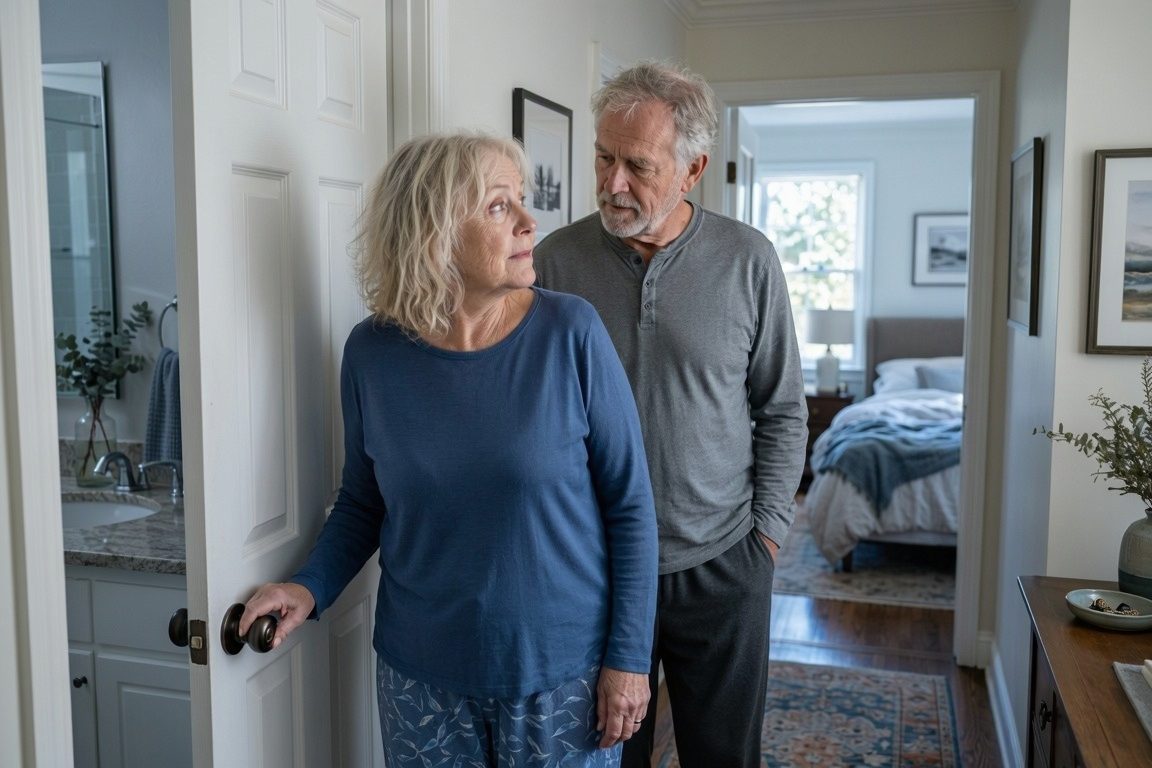
Shadowing is when a person with dementia follows you constantly, keeping you in their line of sight. They may trail you to the kitchen, the bathroom, or even wait at the door when you step outside. This is not a sign of stubbornness or a deliberate attempt to annoy you. Instead, it comes from a place of fear and anxiety. Their brain is struggling to make sense of the world, and they know something is missing. They feel lost and unsafe, and you are the person who has the answers and provides comfort. You become their safety net, and they cannot bear to lose sight of you.
The Unmet Need Behind the Behavior
Experts agree that almost all dementia behavior is a form of communication about an unmet need. With shadowing, the core unmet need is often security and reassurance. The person may be feeling lonely, scared, or confused. They may not be able to put these feelings into words, so they express them by staying close to you. Other unmet needs can also trigger shadowing: they might be hungry, thirsty, in pain, or need to use the bathroom but cannot articulate it. Sometimes, shadowing is worse at certain times of day, like late afternoon (sundowning), when fatigue and changes in light make confusion worse. A brain with dementia can misinterpret shadows as threats, making them cling even tighter to you.
It Is Not About Controlling You
It is crucial to understand that your loved one is not trying to control you or invade your privacy. They are acting out of a deep, primal need for safety. When you get up and leave the room, their brain may not be able to process that you are just going to the kitchen. Instead, they may feel abandoned or that you are gone forever. This is why they follow you. Recognizing this as a symptom of the disease, not a personal attack, can help you respond with patience and grace instead of frustration.
Practical tools
6
Reassuring Script for Leaving the Room
Memorize one short phrase: 'I am going to [place]. I will be right back in [number] minutes,' spoken in a calm, confident tone. Follow through on the time you promised.
Busy Hands Activity Basket
A basket of simple, repetitive sit-down tasks: folding towels, matching socks, nesting plastic bowls, or paging through a photo album. Rotate contents to keep it fresh.
Visual Schedule Whiteboard
Draw or print a simple picture for each part of the day (e.g., coffee cup for breakfast, book for reading). Place it at eye level and point to it before transitions.
Safety Photo Wall
Place framed photos of you and your loved one together in every room they use, so your presence is visually reinforced even when you step out of sight.
Two-Minute Check-In Timer
Set a visible timer for two minutes when you need to be out of the room longer. When it rings, pop your head in, smile, and say, 'I am still here, I will be back in a little bit.'
Respite Resource List
Keep a written list on your phone and fridge of
Different situations
In a memory care facility
Shadowing in a facility often means the resident is anxious and sees you as their primary safety person. When you leave, they may follow staff or other residents. Work with the staff to create a consistent routine for visits. Use a 'goodbye ritual' like a special handshake or a phrase like, 'I will see you tomorrow after breakfast.' Staff can then redirect them to a favorite activity immediately after you leave. Also, ensure the facility has good lighting and familiar objects in their room to reduce confusion.
Late-stage dementia
In late stages, shadowing may decrease because the person is less mobile. Instead of following, they may call out for you or become agitated when you leave. Focus on short, frequent visits. Use a baby monitor or a simple intercom so you can hear them from another room. Their unmet needs are often physical: pain, hunger, or discomfort. Check with their doctor about a pain management plan. Your presence is still their greatest comfort, but you must also prioritize your own rest.
Lewy body dementia (LBD)
In LBD, visual hallucinations and paranoia are common. Shadowing may be driven by fear of what they are seeing. They may follow you because they think there are 'intruders' or 'animals' in the house. Do not argue about what they see. Instead, validate their fear and offer reassurance: 'I see you are scared. I am here with you. Let's go into the kitchen together and have some tea.' Keep lighting soft and even to reduce confusing shadows. Report any new hallucinations to their neurologist, as medication adjustments may help.
Spouse vs. adult child caregiver
As a spouse, your loved one may see you as their lifelong partner and feel lost without you. Shadowing can feel especially intense because of the emotional history. Try to maintain small moments of connection, like holding hands while watching TV. As an adult child, your parent may see you as a protector. They may follow you more when you are about to leave. Use a clear, loving goodbye ritual. Both roles require you to set boundaries for your own mental health. It is okay to say, 'I need 15 minutes to myself. I will be right back.'
Medicaid or limited resources
If you cannot afford paid respite, explore free or low-cost options. Contact your local Area Agency on Aging for volunteer respite programs. Some churches and community centers offer 'memory cafes' or caregiver support groups where your loved one can be supervised for an hour. Use the 'Busy Hands' activity basket and the 'Visual Schedule' whiteboard, these cost almost nothing. Also, consider trading time with another caregiver: you watch their loved one for two hours, and they watch yours.
Common questions
1
What is 'showtime' in dementia and why does it happen during doctor visits?
When your loved one suddenly seems more alert or 'switches on' during a doctor visit, that's 'showtime', a burst of adrenaline from anxiety or an effort to perform, leaving them exhausted later and you feeling unheard.
For the doctor
5
- Ask the doctor: 'Could a new medication or a change in dosage be causing increased anxiety or shadowing?'
- Ask the doctor: 'Could my loved one have a urinary tract infection or be in pain that they cannot express, which is making them more clingy?'
- Ask the doctor: 'Are there any non-drug approaches or therapies (like music therapy or pet therapy) that might help reduce their anxiety?'
- Ask the doctor: 'If the shadowing is severe and causing me significant stress, are there any medications that might help with their anxiety, and what are the risks?'
- Ask the doctor: 'Could this be a sign of a different type of dementia, like Lewy body dementia, which often includes paranoia and hallucinations?'