
Step by step
What not to do
- Do NOT argue or try to reason. Arguing about facts (e.g., 'Mom died 10 years ago') only increases distress.Instead, validate the emotion: 'You miss your mom. Tell me about her.'
- Do NOT use 'no' or 'don't' directly. Saying 'No, you can't go outside now' triggers a power struggle.Instead, say 'Yes, we can go outside after we finish this puzzle.'
- Do NOT redirect to something the person dislikes or finds boring. For example, if they are agitated about wanting to go home, redirecting to 'time for a bath' will likely escalate the behavior. Choose something they love.
- Do NOT ask open-ended questions like 'What do you want to do?' This can overwhelm their cognitive abilities. Use closed-ended choices or statements: 'Would you like to sit here or there?' or 'Let's look at this photo album.'
- Do NOT rush or show frustration. If you are in a hurry, your tone will betray you. Take a moment to center yourself. A calm caregiver is the most effective tool.
- Do NOT use redirection as a way to ignore their feelings. Always validate first. If you skip validation, the person may feel dismissed and become more agitated.
Key points
- Always validate the emotion before redirecting. Saying 'yes' to the feeling opens the door to cooperation.
- Redirection is a skill that improves with practice. Be patient with yourself and your loved one.
- Use statements instead of questions to reduce confusion and resistance.
- Offer an alternative that is genuinely appealing to the person, not just convenient for you.
- Stay calm. Your tone and body language matter more than your words.
- If one redirection fails, try another. There is no single 'right' approach.
Videos
 3 steps to stop difficult dementia behaviors using redirectionThis video breaks down the core three-step process of validation, redirection, and follow-through. It is a great starting point for beginners.
 How to redirect difficult dementia behaviors (3 mistakes to avoid)Learn common pitfalls like redirecting to something unappealing or using a harsh tone. This video helps you refine your technique.
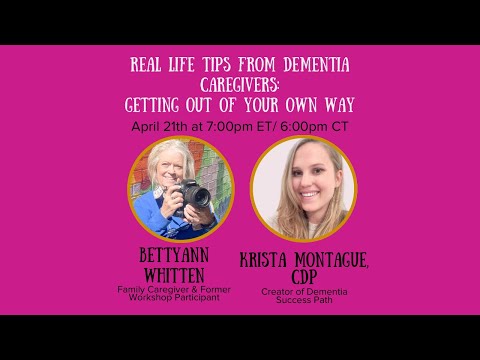 Dementia Caregiver Interview: Tips For Getting Out Of Your Own WayHear from a fellow caregiver about the emotional challenges of redirection and how to let go of the need to be 'right.'
 Why Do Alzheimer's & Dementia Patients Get Aggressive?Understand the roots of aggression and how redirection can prevent or de-escalate it. Essential for safety.
2 more videos
 The Power of YES! How to Fix Problem Dementia Behaviors w/ REDIRECTIONA focused look at the 'power of yes' and how this single word can transform interactions. Practical examples included.
 154. 5 Effective Tips to Handle Repetitive Questions in Dementia CareRepetitive questions are a common challenge. This video shows how to use redirection to break the loop without frustration.
Background
What Is Happening: Why 'No' Fails and 'Yes' Opens a Door
In dementia, the brain's ability to reason, plan, and inhibit impulses is damaged. When you say 'no' or argue, you are asking a brain that can no longer process logic to engage in a logical debate. This triggers frustration, anger, and a sense of being controlled, exactly the opposite of what you want. The person with dementia may feel like a child being scolded, and their response is often to dig in harder. As one expert notes, nobody likes hearing 'no,' whether they are two or forty, and for someone with dementia, the word can feel like a personal attack or a test they are failing.
The Brain Science Behind Redirection
Dementia erodes the brain's ability to shift attention voluntarily. A person may become 'stuck' on a thought, like wanting to go home or needing to find a lost item, because the neural pathways that allow for flexible thinking are damaged. Redirection works by offering a new, compelling focus that bypasses the damaged reasoning centers and speaks directly to the emotional or sensory parts of the brain that are still intact. This is why a simple 'yes, you can go home later, but first let's have a snack' can be more effective than a logical explanation. The key is to validate the emotion first, then offer a new direction that feels like a choice, not a command.
The Art of Redirection: It's a Skill, Not a Magic Trick
Redirection is often described as an art that takes practice. It is not about manipulating or deceiving; it is about meeting the person where they are and gently leading them to a safer or more pleasant place. The goal is to lower the frequency, intensity, or duration of challenging behaviors. When you redirect successfully, you are not 'winning' an argument, you are creating a moment of peace. This skill becomes more natural over time, and even small successes build confidence for both you and your loved one.
Practical tools
6
The 'Yes, and...' Phrase Bank
Keep a mental list of go-to phrases: 'Yes, you want to go home. And I was thinking we could have a snack first.' 'Yes, you need to find your purse. And I saw it in the kitchen, let's look together.' 'Yes, you miss your mother. And I have a photo of her right here.' Practice these so they become automatic.
The 'Enticing Activity' Checklist
Write down 5-10 activities your loved one enjoys: folding towels, looking at a photo album, listening to music, watering plants, sorting coins, or watching birds. Keep this list handy. When you need to redirect, pick one from the list that matches their current mood. For example, if they are restless, try a walk; if they are sad, try music.
The 'Environment Setup' for Easy Redirection
This reduces triggers and makes redirection easier.
The 'One-Step' Task Approach
When redirecting, give a single, simple instruction. For example, 'Please hold this cup for me' or 'Can you hand me that towel?' Avoid multi-step directions. This reduces confusion and increases the chance of cooperation.
The 'Emotion-First' Script
Memorize this 3-part script: 1) Validate: 'I see you're upset.' 2) Connect: 'That makes sense.' 3) Redirect: 'Let's do this instead.' Example: 'I see you're worried about your keys. That makes sense. Let's check the drawer together.'
The 'Positive Tone' Reminder Card
Create a small card or note for yourself that says: 'Smile. Slow down. Use a warm voice. Say yes first.' Place it on the fridge or in your pocket. This can be a quick reminder when you feel stressed.
Different situations
Early-stage dementia (mild cognitive impairment)
In early stages, the person may still have some insight and ability to reason. You can use more collaborative redirection: 'I know you want to go home, and I understand. Let's plan a visit for next week. For now, can you help me with this?' They may respond to logic if it is framed as a partnership. Avoid infantilizing language.
Moderate-stage dementia (middle stage)
At this stage, the person's ability to process complex information is significantly reduced. Use very short, simple sentences. Focus on sensory redirection: a familiar song, a hand massage, or a favorite snack. Avoid any mention of time or future plans. Validation becomes even more critical. Use touch and eye contact.
Lewy body dementia or Parkinson's disease dementia
These conditions often involve visual hallucinations, fluctuating cognition, and sensitivity to medications. Redirection should be gentle and avoid sudden movements or loud noises. If they are seeing something that frightens them, validate the fear ('That must be scary') and redirect to a safe, familiar object or activity. Avoid arguing about the reality of the hallucination.
Spouse vs. adult child caregiver
Spouses may have a deeper emotional history and may feel more personally rejected by the behavior. It can be harder to stay calm. Adult children may have more emotional distance but may also struggle with role reversal. Both benefit from practicing redirection scripts. Spouses may need extra support groups to process feelings of loss. Adult children should remember they are not the parent now, they are the guide.
In a memory care facility vs. at home
In a facility, staff can coordinate redirection strategies. Use consistent phrases and activities across shifts. At home, the caregiver has more control over the environment but may feel isolated. In both settings, ensure the person has access to meaningful activities. In a facility, advocate for person-centered care that uses redirection rather than medication.
For the doctor
4
- If redirection consistently fails and the person becomes physically aggressive or severely agitated, discuss with a doctor whether there is an underlying medical issue (e.g., infection, pain, medication side effect) that needs treatment.
- If the person's behavior is causing significant distress or danger to themselves or others, ask about non-pharmacological interventions first, but also discuss whether a short-term medication adjustment might be needed to ensure safety.
- If the person is having hallucinations or delusions that are frightening and not responsive to redirection, a clinician can help rule out other causes and suggest appropriate strategies or treatments.
- If you are feeling overwhelmed, burned out, or unable to use redirection effectively, ask for a referral to a dementia care specialist or support group. Your well-being is essential to their care.