What not to do
- Do not keep a mental to-do list without writing it down, this increases invisible load.
- Do not assume others know what you are doing or feeling. Invisible work stays invisible until named.
- Do not suppress frustration. Name it aloud to yourself or a support person in a moment of calm.
- Do not accept vague offers of help. Convert 'let me know if you need anything' into a specific request from your task audit.
- Do not compare your caregiving to anyone else's visible output, much is unseen.
Key points
- The invisible mental load is real and includes constant worrying, planning, and emotional holding. It is not your imagination.
- Feeling frustrated, angry, guilty, and exhausted is normal. You are not alone. Most caregivers feel this way.
- Isolation makes the load heavier. Connection, through support groups, friends, or family, is the most powerful antidote.
- You cannot do it all alone. Start by delegating one small task this week. Ask specifically and directly.
- Self-care is not selfish. Your health matters. Even five minutes a day can help reset your stress response.
- Let go of the myth of the perfect caregiver. There is only you, doing your best in an incredibly hard situation.
Videos
 A Team Approach and Caring for Yourself: Long Distance Caregiving (4 of 5)This video offers practical advice on building a care team and caring for yourself, especially if you are a long-distance caregiver. It reinforces the idea that you do not have to do it alone.
 The Caregiver's Journal with Lance A. Slatton with Cindy (PT) & Christina (ST) 'Joy in Caregiving'This video explores finding joy in caregiving despite the challenges. It can help shift perspective and remind you that positive moments are still possible.
 Beverley Glazer Founder of Reinvent Impossible Inc. & Host of 'Aging with Purpose & Passion' PodcastBeverley Glazer discusses reinventing yourself and finding purpose in caregiving. This can be especially helpful when you feel you have lost your own identity.
 Navigating the Emotional Terrain of Caregiving: Understanding and Overcoming Caregiver GuiltThis video directly addresses caregiver guilt, a core part of the invisible mental load. It offers strategies to understand and overcome guilt.
2 more videos
 Caregiver stress related to dementia (Subtitles in Spanish)This video covers caregiver stress specifically related to dementia, with Spanish subtitles. It validates your feelings and offers coping strategies.
 What Is Caregiver Grief?Grief is a common but often unacknowledged part of the mental load. This video explains caregiver grief and helps you name that feeling.
Background
What Is the Invisible Mental Load?
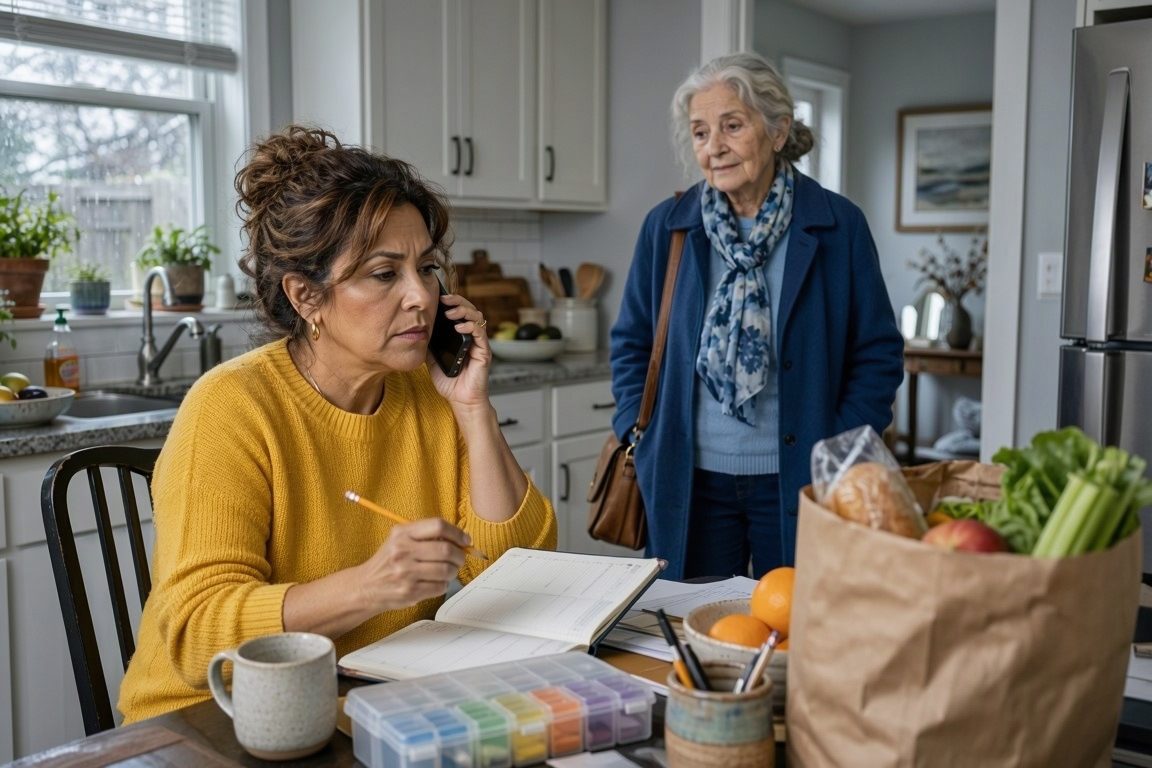
The invisible mental load is the unending, often unspoken work of caregiving that goes beyond physical tasks. It is the constant worry about what might happen next: 'What if she wanders out of the house while I am sleeping? What if she falls or hurts herself?' It is the mental checklist that never stops, tracking medications, scheduling appointments, managing finances, anticipating needs, and holding the emotional space for your loved one. This work is 24/7, and as dementia progresses, one person simply cannot do it all alone. The exhaustion from this invisible load is real, and it often leads to irritability, moodiness, and a feeling of being constantly pressured to give and care all day long.
Why Does It Feel So Isolating?
Feeling alone in your caregiving role is incredibly common, even when other family members are nearby. Often, one person picks up the ball and starts doing most of the care, and family members may step back, thinking, 'She is handling it, so I will just live my life.' This can leave you feeling abandoned and resentful. You may lose your own identity because there are only so many hours in a day. You stop going out, you stop doing things you once enjoyed, and you may feel like you have lost yourself. This emotional isolation is dangerous because human beings regulate stress through connection, our nervous systems calm down in the presence of other regulated people. When you feel isolated, even in a room full of people, that stress has nowhere to go, and burnout accelerates. It is not because you are weak; caregiving was never meant to be done in total emotional isolation.
Is It Okay to Feel Frustrated?
Absolutely. Frustration, anger, guilt, and exhaustion are normal, common emotions in caregiving. Most caregivers report feeling guilty about almost everything, about not being closer, not doing enough, not having enough time. You may feel angry that your life has changed, that you are doing all the work, or that your loved one’s personality has changed due to brain damage. These feelings are part of the normal process of readjusting to a role you never expected. The myth that you should be a saint, someone who helps unconditionally without expressing opinions or needing rest, is impossible. Nobody can be that. Trying to be that saint only leads to terrible guilt. Acknowledging your frustration is a sign of strength, not weakness. It shows you are deeply committed, not only to your loved one but also to your own well-being.
How Do I Account for the Unseen Work I Do Alone?
The first step is to name it. Write down everything you do in a day, not just the physical tasks like bathing or feeding, but the mental ones: the worrying, the planning, the coordinating, the emotional support. This list is your evidence that the load is real. Then, share this list with someone you trust, a friend, a family member, or a support group. You are not alone in this struggle. The most powerful antidote to feeling isolated is connection. Talking to other caregivers in a support group, whether in person or online, will show you that your feelings are the rule, not the exception. Every single caregiver has snapped, been pushed to their limit, and felt guilty afterward. You are not uniquely flawed. You are human.
Practical tools
2
Worry-processing timer
Any timer (phone, kitchen) set for exactly 10 minutes once daily during your scheduled worry block.
Shared care log
A small notebook or a digital tool (e.g., Google Doc, CaringBridge) with daily sections for observations, medication updates, and notes. Each care partner writes a one-line entry per visit.
Different situations
For adult children caring for a parent with early-stage Alzheimer's
You may feel guilty about not being closer or about balancing your own family and work. Use the mental load log to show your siblings what you are doing. Set realistic expectations: you cannot do it all. Delegate one task per sibling, even if they live far away (e.g., handling insurance calls or ordering supplies online). Join a support group for adult children caregivers to normalize your feelings.
For spouses caring for a partner with Lewy body dementia
Lewy body dementia often brings hallucinations, sleep disturbances, and rapid changes. The invisible load includes constant vigilance and emotional whiplash. You may feel abandoned by your partner’s personality changes. Prioritize your own sleep and mental health, consider a night-time respite aide. Use the 'Five-Minute Reset' tool frequently. Talk to a therapist who specializes in dementia caregiving. You are not alone.
For long-distance caregivers
You may feel guilty about not being present and worry constantly from afar. Create a local care team (neighbors, paid aides, local family) and schedule regular video check-ins. Use a shared online calendar for appointments and tasks. Your mental load includes coordinating from a distance, write down every worry and share it with the local team. Join an online support group for long-distance caregivers.
For caregivers in the late stages of dementia
The mental load intensifies as your loved one becomes fully dependent. You may feel grief and exhaustion. It is essential to accept that you cannot do this alone. Hire in-home aides for personal care, even if just for a few hours. Use respite care regularly. Your own health is critical, do not skip your own doctor’s appointments. Consider hospice support for both your loved one and yourself.
For caregivers from minority or underserved communities
You may face additional stigma about admitting you feel depressed or overwhelmed. It is normal to have these feelings, your role has changed, and you are doing something you never expected. Seek support from community organizations, faith groups, or culturally specific caregiver programs. You do not have to be strong alone. Asking for help is a sign of strength.
For the doctor
4
- If you are experiencing persistent sadness, hopelessness, or loss of interest in things you used to enjoy, discuss these symptoms with your doctor. You may be experiencing depression, which is common and treatable.
- If you are having trouble sleeping, changes in appetite, or thoughts of harming yourself or your loved one, seek immediate medical help. Call your doctor or a crisis line.
- If you are considering medication for stress or anxiety, talk to your clinician about options that are safe for you, especially if you are caring for someone with complex medical needs.
- If you feel overwhelmed to the point where you cannot function or are neglecting your own basic needs (eating, bathing, medical appointments), discuss this with your doctor. They can connect you with resources like respite care or counseling.