
Step by step
What not to do
- Do not focus on completing the activity. The common mistake is to feel the activity must be finished to be successful. This creates pressure for both of you.Instead, celebrate the process. If you only fold three towels out of a pile of ten, that is a win. The goal is connection, not productivity.
- Do not use complex verbal instructions. Asking someone to 'go get the red bowl from the kitchen and bring it here' is too many steps. Break it down: 'Let's walk to the kitchen together. See the red bowl? Please hand it to me.' One step at a time prevents confusion and frustration.
- Do not rush or show impatience. If you hurry, the person will sense your anxiety and may shut down or become agitated.Instead, plan for extra time. If you have only 15 minutes, choose a simpler activity. Slowing down actually saves time because you avoid meltdowns and re-direction.
- Do not assume they are not enjoying themselves just because they are not smiling. Many people with dementia show joy in subtle ways: a relaxed posture, a soft humming, or simply staying engaged without distress. Look for these quiet signs rather than expecting a big smile or laughter.
- Do not stick to the same activity every day. Even if folding towels worked yesterday, today it might bore or frustrate them. Variety keeps the brain active and honors their changing mood. Have a 'menu' of three to five activities ready to rotate.
Key points
- Engagement is not the same as an activity, it is what the person chooses to do with what you offer.
- Use the Five Ps: Person-centered, Purposeful, Process-focused, Paced, Pleasant.
- Start with the person's past interests and adapt them to their current ability level.
- Give one-step instructions and allow 10-15 seconds for processing before repeating.
- Stop immediately if you see signs of overwhelm, the goal is connection, not completion.
- Look for subtle signs of joy: relaxed posture, gentle smile, or simply no distress.
Videos
 Carrie Aalberts Founder & Creator of 'Dementia Darling'Carrie Aalberts discusses why engagement matters for dementia, emphasizing that without engagement, the disease progresses faster. She highlights person-centered approaches and the importance of keeping people active mentally, physically, spiritually, socially, and occupationally.
 How to keep a dementia patient busyThis video provides practical activity ideas like polishing silverware, cleaning countertops, and using puzzles with fewer pieces. It also covers how to modify activities for different stages and the importance of slowing down and giving one-step instructions.
 Dementia Friendly Activities at Home: Part 1 of 3This video covers the concept of 'latency', the extra time needed for a person with dementia to process and respond. It offers tips on slowing down, being patient, and using simple, repetitive tasks to reduce anxiety.
 How to increase activity for someone with dementiaThis video explains how to adapt activities throughout the dementia journey, using the example of golfing from mild to severe stages. It also discusses how to recognize joy in subtle cues and choose quality over quantity in activities.
2 more videos
 How To Distract Someone With Alzheimer's? Episode 1This video offers strategies for redirecting attention when a person is upset or agitated, using engaging activities that match their interests. It emphasizes the importance of stopping an activity if the person becomes overwhelmed.
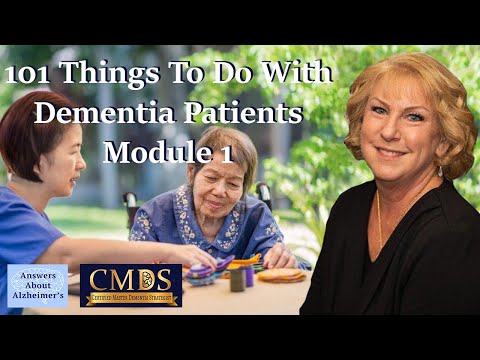 What Activities Are Good For Dementia Patients? Module 1This video introduces the concept of assigning jobs (e.g., sorting plastic pipes or Legos) to give a sense of purpose. It also covers Montessori-type activities that maintain abilities and provide self-directed engagement.
Background
Why a Framework Matters: Moving from 'Activities' to 'Engagement'
Engagement is not the same as an activity. An activity is something you offer, a puzzle, a song, a task. Engagement is what the person chooses to do with that offering. As dementia care expert Teepa Snow explains, engagement means the person is actively participating, not just passively receiving. The Five Ps framework helps you design activities that invite true engagement by focusing on who the person is, what they need, and how they experience the moment.
When a person with dementia has nothing meaningful to do, their condition can progress faster. Boredom, lack of purpose, and social isolation can accelerate cognitive decline. On the other hand, engagement, mental, physical, spiritual, social, and occupational, keeps the person feeling seen and valued. The goal is not to fill time but to create moments of connection that honor the person's whole self.
The Five Ps Explained
The Five Ps are: Person-centered, Purposeful, Process-focused, Paced, and Pleasant. Each P addresses a common pitfall in activity planning. Person-centered means you start with the person's lifelong interests, hobbies, and values, not a generic list. Purposeful means the activity gives the person a sense of contribution and self-worth, even if it is a simple task like polishing silverware or sorting socks. Process-focused means you let go of the need to finish; the joy is in the doing, not the outcome. Paced means you allow extra time for processing and response, never rushing. Pleasant means you monitor for signs of distress and stop immediately if the person becomes overwhelmed, frustrated, or frozen.
This framework is grounded in research showing that individualized, relationship-based care improves quality of life and reduces behavioral expressions like agitation or wandering. By using the Five Ps, you become a detective of joy, looking for subtle cues like a relaxed posture, a gentle smile, or simply the absence of distress.
Practical tools
5
The 'Interest Detective' Checklist
Before planning, ask yourself:
Write down two to three ideas and try one. Keep a small notebook to track what works.
The 'One-Step' Script
Use this exact phrase structure: 'Let's [action] together. Watch me first. Now you try.' For example: 'Let's wipe the table together. Watch me: I am wiping this spot. Now you try.' Wait silently for 10 seconds. If no response, gently guide their hand. Never use 'Do you want to...?' as it invites a 'no' or confusion.
The 'Stop and Sip' Transition
When the activity ends or frustration appears, have a pre-planned calming transition. Say, 'That was good work. Let's take a break and have some water/tea.' Keep a cup and a calm drink ready. This prevents abrupt endings that can cause agitation.
The 'Sensory Kit'
Assemble a small box with items that engage different senses:
Use these when the person is restless or bored. Offer one item at a time and describe it: 'Feel this soft cloth, it is so smooth.' This works especially well in later stages.
The 'Job Jar'
Write simple, purposeful tasks on slips of paper and put them in a jar. Examples: 'Sort the socks,' 'Polish the silverware (with a soft cloth only),' 'Water the plant,' 'Fold the napkins.' Let the person pick one. This gives them a sense of choice and contribution, even if the task is simple.
Different situations
Early-stage dementia (mild cognitive changes)
In early stages, the person can still do many of their usual hobbies with minor adjustments. For example, if they loved golf, they may still play with supervision and without driving the cart. If they baked, pre-measure ingredients and let them mix and pour. The key is to keep them engaged in their community and interests as long as possible. Do not shut them away, bring the things they love into their life. Use the Five Ps to simplify, not eliminate.
Moderate-stage dementia
At this stage, focus on repetitive, familiar tasks that use preserved procedural memory. For example, folding laundry, wiping counters, or sorting items by color. Avoid tasks that require planning or sequencing. Use the 'One-Step' script and allow extra time. The person may need more help getting started, so model the action first. Keep activities short (10-15 minutes) and end before frustration sets in.
Late-stage dementia
In late stages, engagement is about sensory and emotional connection, not task completion. Use the 'Sensory Kit' with soft textures, calming music, or familiar scents. Activities might include listening to a favorite song, holding a hand, or looking at a photo album. The goal is comfort and presence. Watch for subtle signs of enjoyment like a relaxed face or a gentle squeeze. Never force participation.
Lewy body dementia (with fluctuating cognition and motor symptoms)
People with Lewy body dementia may have good days and bad days. On good days, they might enjoy a puzzle or a walk. On bad days, they may need simpler, calming activities like listening to music or looking at a picture book. Be flexible and watch for visual hallucinations that might make certain activities (like puzzles with complex patterns) distressing. Always prioritize safety and comfort.
Caregiver is an adult child vs. spouse
An adult child may need to gently introduce new routines, as the parent may resist being 'told what to do.' Use phrases like, 'I could really use your help with this,' to preserve their sense of authority. A spouse may find it easier to continue shared routines (e.g., setting the table together) but may also feel grief. Both roles benefit from the Five Ps to reduce conflict and increase connection.
For the doctor
4
- If the person becomes consistently agitated or aggressive during activities, discuss with a doctor or occupational therapist to rule out pain, medication side effects, or unmet needs.
- If the person has a history of falls, ask a physical therapist for safe activity modifications (e.g., seated exercises instead of standing).
- If the person has swallowing difficulties, avoid activities involving small objects that could be a choking hazard (e.g., beads, small puzzle pieces). Ask a speech therapist for safe alternatives.
- If the person is on medications that cause drowsiness or dizziness, discuss the best time of day for activities with their prescriber.