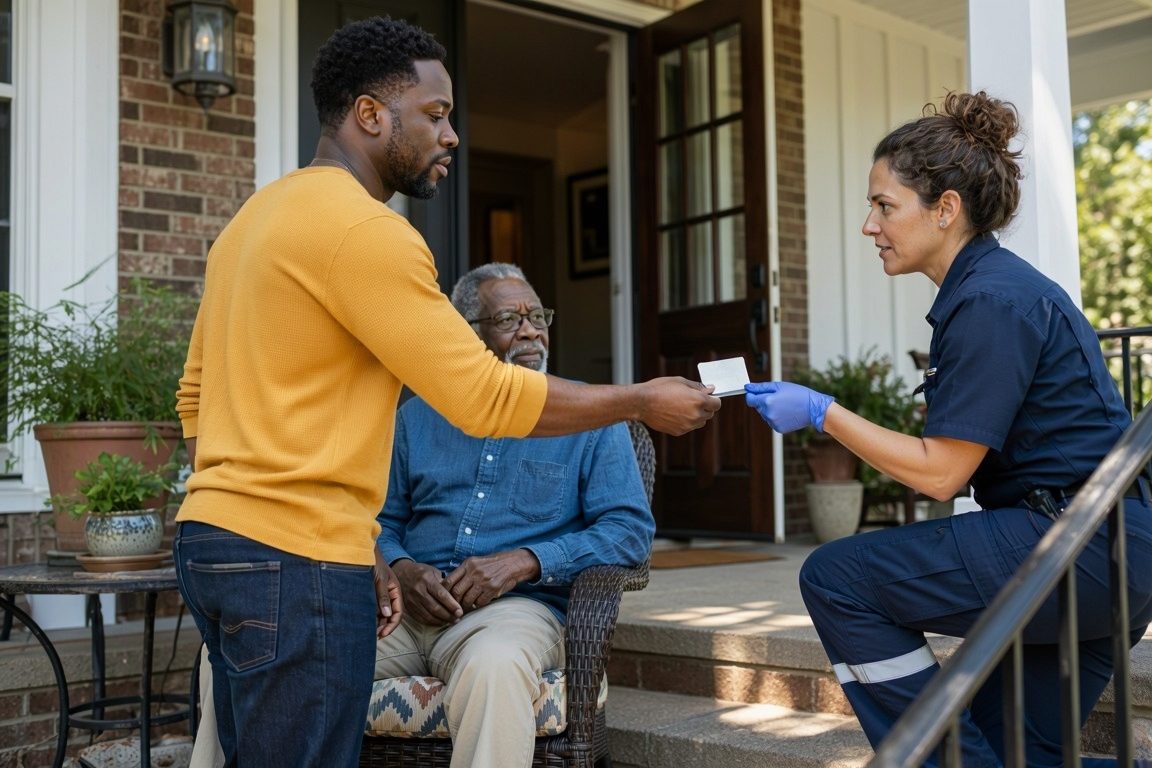
Step by step
What not to do
- Do not rely on the card without practice: rehearse handing it over in calm situations so it becomes automatic in a crisis.
- Do not overcrowd the card with text: limit bullet points to three or four key instructions for quick reading in an emergency.
- Do not use the card as a substitute for other safety tools: combine it with medical alert jewelry, MedicAlert+Safe Return, or a 911 registry like Smart911.
- Do not try to hand the card to a responder mid-command or when agitated: wait for a pause or hold it up calmly, then follow their instructions first.
Key points
- The Dementia Q Card is a simple, wallet-sized card that tells first responders the person has a cognitive impairment and how to communicate effectively.
- Carry the card in a consistent, accessible place (wallet, lanyard, or keychain) and practice using it with your loved one.
- Keep the card brief: diagnosis, communication tips, and emergency contact. Laminate it for durability.
- Combine the card with other tools like MedicAlert+Safe Return and a Smart911 profile for layered safety.
- Personalize the card for specific dementia types (FTD, LBD, late-stage) and for the caregiver's role (spouse vs. adult child).
- Update the card regularly and include it in your loved one's emergency kit.
Videos
 Discussing The Resources of the Dementia Society of American with Founder, Kevin JamesonThis video introduces the Dementia Q Card and other free resources from the Dementia Society of America, including how to order or print the card.
 An Introduction to: Care Partner Skill CardsTeepa Snow demonstrates how to use skill cards, including the Q Card, with practical tips on holding, handing, and flipping the lanyard for best effect.
 Ep. 301: Emergency Services, How to Approach Someone That May Have DementiaThis episode covers real-life scenarios where first responders interact with people with dementia, and how the Q Card can prevent misunderstandings and injuries.
 Michele Bolton Founder and CEO of MY911, IncMichele Bolton explains the MY911 emergency ID card system, which is similar to the Q Card and available in Canada and the US.
2 more videos
 Frontotemporal Dementia: Signs and SymptomsUnderstanding FTD helps you personalize the Q Card for behavioral symptoms that first responders may misinterpret.
 Curious Opinion on KETOGENIC Diet and Dementia ~ ABCs of Dementia FAQsWhile not directly about the Q Card, this video provides context on managing dementia symptoms, which can inform what you write on the card.
Background
What Is the Dementia Q Card and Why Does It Matter?
The Dementia Q Card is a simple, wallet-sized card that you or your loved one can carry and hand to a first responder, such as a police officer, firefighter, ambulance driver, or emergency room technician, during an interaction. The card states clearly that the person has a cognitive impairment, like dementia or Alzheimer's, and provides brief, respectful instructions on how to communicate best with them. For example, it might say, 'I may not be able to respond the way you expect. Please give me time to answer, and know that if I cannot respond, it is not because I do not want to.' This card is not a medical alert bracelet or a legal document; it is a communication tool that respects the person's dignity while helping responders adjust their approach in real time.
Why First Responders Need This Card
First responders are trained to handle emergencies quickly, often using direct commands and rapid questioning. But a person with dementia may not be able to follow those commands, they might become confused, frightened, or even combative because their brain is processing information differently. As one expert noted, a person with dementia may not be able to provide a good medical history, list their medications, or even remember why a responder is there. This can lead to frustration on both sides, and in some cases, injuries or lawsuits have occurred when officers misinterpreted dementia-related behaviors as resistance or intoxication. The card bridges that gap by giving the responder a quick, non-verbal cue that the person has a brain condition, which changes how the responder should communicate and what they should look for.
How the Card Works in Practice
The card is designed to be carried in a pocket, purse, or on a lanyard. Some experts recommend keeping the lanyard flipped to the back until you need it, so it does not interfere with natural interaction but is still available. When a first responder approaches, you or your loved one can simply hand the card over. The front of the card typically says something like 'Dementia Aware' or 'I have a cognitive impairment,' and the back may include specific tips for the responder, such as 'Speak slowly, use simple words, and maintain eye contact.' Some cards also have space to write the person's name, emergency contact, and key diagnoses (e.g., frontotemporal dementia or Lewy body dementia). The goal is to empower the person with dementia to participate in their own care and to help the responder see the person, not just the behavior.
Practical tools
5
Dementia Society of America Q Card Template
Free printable PDF from dementiasociety.org with 'Dementia Aware' on front and communication tips on back. Print on Avery 8371 business card sheets and laminate.
MY911 Emergency ID Card
Pre-printed, laminated card from my911.ca or my911.com (~$10-15). Includes space for medical history, medications, and emergency contacts; fits in wallet or on lanyard.
MedicAlert+Safe Return Program
24/7 emergency response service for people with dementia who wander. Provides a medical ID with a unique number; responders call to get diagnosis, history, and caregiver contact.
Smart911 Profile
Free service in many US counties to create a household safety profile. When 911 is called, dispatchers see that a resident has dementia, so responders arrive prepared.
Breakaway Lanyard
Safety-release lanyard that attaches to the card, bag, wheelchair, or walker. Flip card to back during daily activities and bring forward when needed. Available at office supply stores.
Different situations
Frontotemporal Dementia (FTD)
FTD often affects behavior and language before memory. On the card, add: 'I may say or do things that seem rude or inappropriate. This is due to my brain condition, not intent. Please do not take it personally.' Also, note that the person may not recognize they have a condition, so the caregiver should hand the card.
Lewy Body Dementia (LBD)
LBD can cause hallucinations, fluctuating alertness, and movement problems. On the card, add: 'I may see or hear things that are not real. Please do not argue with me about them. Also, I may have trouble moving or standing still. Give me time.' Consider adding a note about medication sensitivity to antipsychotics.
Late-Stage Dementia / Non-Verbal
If the person can no longer speak or follow commands, the card should be carried by the caregiver. Write: 'This person cannot speak or follow instructions. They may be frightened. Please move slowly, speak softly, and do not touch them without warning. Contact [caregiver name] immediately.'
Caregiver Is an Adult Child vs. Spouse
An adult child may need to explain their relationship to the responder. On the card, include: 'I am the caregiver. The person with dementia is my [mother/father]. I have legal authority to make decisions. Please contact me first.' A spouse may simply write 'I am the spouse and primary caregiver.'
Person Lives Alone or Is Unsupervised
If the person with dementia lives alone, the card is critical. Add: 'I live alone. I may not remember to eat or take medications. Please call my emergency contact [name and number].' Also, register with the local police department's 'vulnerable person' registry if available.
For the doctor
4
- Ask your doctor: 'Should I include any specific medication warnings on the card, such as a risk of seizures or a reaction to certain sedatives?'
- Discuss with your clinician: 'Is there a specific diagnosis code or medical term I should write on the card to help responders understand the severity?'
- Ask your pharmacist: 'Are there any over-the-counter medications or supplements my loved one takes that could interact with emergency treatments? Should I list those on the card?'
- Consult with a social worker or care coordinator: 'Are there local first responder training programs for dementia awareness that I can share with my local police or fire department?'