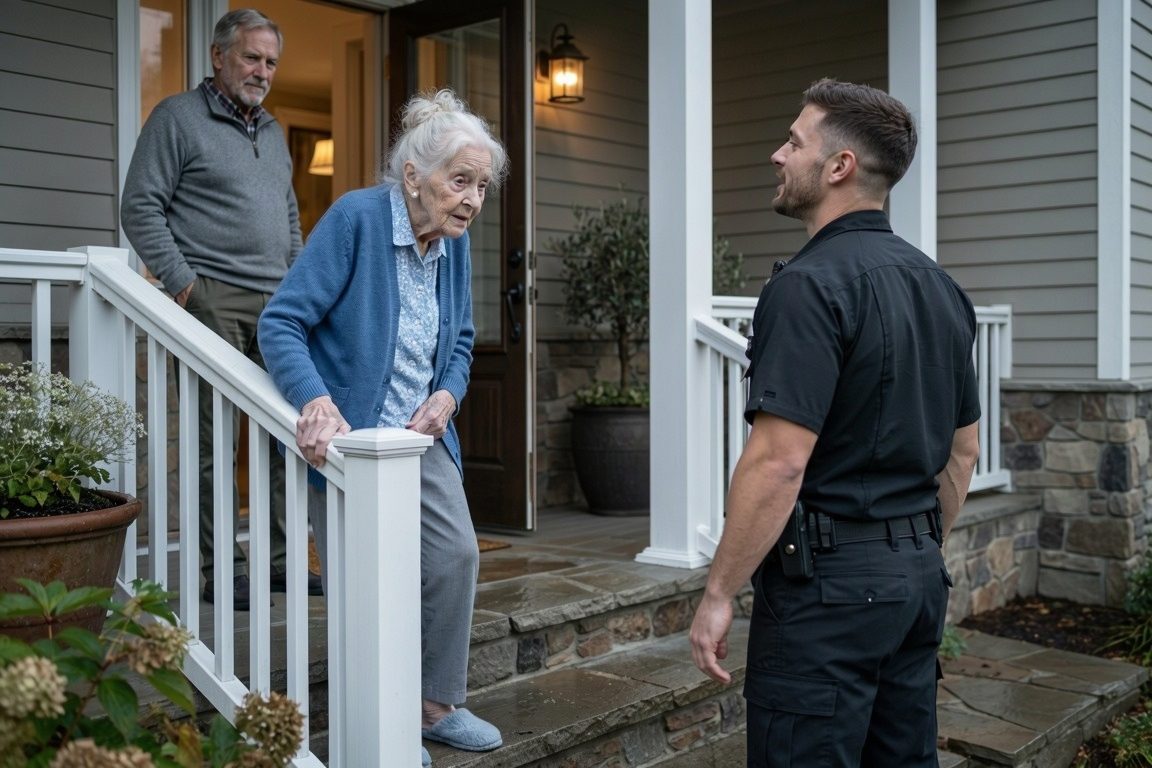
Step by step
What not to do
- Do not use a loud, commanding voice: This triggers a fear response in a person with dementia, making them more agitated.Instead, use a soft, calm tone and slow speech.
- Do not argue or use logic: The person’s reasoning brain is damaged. Saying 'You can’t go home because it’s not there anymore' will only confuse and upset them.Instead, validate their feeling: 'You want to go home. Let’s sit and talk about home.'
- Do not touch the person without warning: Sudden physical contact can be perceived as a threat. Always ask, 'May I put my hand on your shoulder?' and watch for their reaction. If they pull away, give space.
- Do not assume they are intoxicated or mentally ill: Many dementia behaviors mimic intoxication or psychiatric conditions. Always consider dementia first, especially in older adults, and avoid handcuffing unless absolutely necessary for safety.
- Do not leave them alone in a strange place: If you must transport them, stay with them or have a colleague stay. Wandering can lead to falls or getting lost. Use a calm, reassuring presence.
- Do not forget to check for physical causes: Pain, infection (especially UTI), hunger, or thirst can cause sudden confusion or aggression. Ask the person or caregiver if they’ve had any recent falls, fevers, or changes in behavior.
Key points
- First responders must shift from a command-and-control mindset to a validation-and-redirect approach when interacting with people with dementia.
- The most effective training starts with a conversation between first responder agencies and local dementia experts, build the relationship before a crisis.
- Use the GATHER framework (Gather, Assess, Try to reminisce, Check medical causes, Evaluate environment, Redirect) to structure every interaction.
- Never argue, use logic, or raise your voice, these escalate agitation. Instead, validate feelings and redirect to a neutral topic.
- Always check for a MedicAlert+Safe Return bracelet or wallet card, it can save time and prevent a traumatic outcome.
- Document and debrief after every dementia-related call to continuously improve team response and share lessons learned.
Videos
 SUP! Creating Partnerships with First RespondersThis video directly addresses how to build relationships between dementia care experts and first responders, which is the foundational step for effective training.
 How Do Healthcare Providers Address Caregiver Burnout in Dementia Care? | TestUnderstanding caregiver burnout helps first responders recognize when a family is overwhelmed and may need immediate resource referrals.
 What To Ask When Looking For A Memory Care Facility? | TestFirst responders may encounter families who need guidance on choosing a safe facility; this video provides questions they can share.
 Time with Teepa - Medication Administration Changes You Should Know AboutMedication changes can trigger sudden confusion or agitation; this video helps first responders understand that a recent med change may be the cause.
2 more videos
 Can Dementia Guidance Help Reduce Caregiver Burnout? | TestThis video reinforces the importance of connecting caregivers to support, which first responders can do during or after a call.
 The Baffled Brain: Demystifying Dementia Episode 22 April 24 ,2021This episode explains the brain changes behind dementia behaviors, giving first responders the 'why' behind the techniques they learn.
Background
Why First Responders Need Specialized Dementia Training
First responders are trained to handle high-stress, often dangerous situations using command-and-control tactics. But a person with dementia is not acting out of malice or criminal intent, they are responding to confusion, fear, unmet needs (like pain, hunger, or needing the bathroom), or sensory overload. Their brain’s reasoning center is damaged, so logic and commands don’t work. Instead, they may become more agitated, which can escalate into a physical confrontation. Up to 45% of older adults with dementia admitted to hospital exhibit responsive behaviors (source 19), and many of those encounters begin in the community with first responders.
The Core of De-escalation: Understanding Responsive Behaviors
Experts now use the term 'responsive behaviors' instead of 'behavioral symptoms' because these actions are usually a response to an unmet need or environmental trigger. A person who is exit-seeking may be trying to 'go home' to a place they remember from childhood. Someone who is shouting may be in pain or frightened by a loud noise. First responders must learn to see these behaviors as communication, not defiance. This shift in mindset is the foundation of safe, effective interaction. As one source notes, 'if you can close your eyes, you’re not seeing a whole lot, so maybe you’re starting to pay attention to what’s going on inside' (source 10), the same principle applies to listening to the person, not just reacting.
Building Partnerships Before a Crisis
The best training happens before an emergency. The single most effective step is for first responder agencies to reach out to local dementia care experts, like the Alzheimer’s Association chapter, a memory care facility, or a geriatric specialist, and start a conversation. As one expert advises, 'just reach out and have a conversation… be persistent' (source 1). This builds trust and creates a direct line for advice when a tricky call comes in. For example, a police chief who knows the local dementia specialist by first name can call for real-time guidance. This relationship also helps first responders learn what resources exist (like MedicAlert+Safe Return programs) so they can connect families to support.
Practical tools
6
The 'Validation and Redirect' Script
Exact phrases to say when a person is agitated: 'I can see you’re upset. It’s okay to be angry. Let’s take a deep breath together.' Then redirect: 'I notice you have a beautiful ring. Tell me about it.' This script works because it validates emotion without arguing, then shifts focus to a neutral topic.
MedicAlert+Safe Return Program
A national program that provides a medical ID bracelet or necklace with a 24/7 response center. First responders can call the number on the ID to get the person’s name, diagnosis, emergency contacts, and wandering history. This is a critical tool for quickly identifying and safely returning a person who has wandered.
The 'GATHER' Quick Reference Card
A laminated card that first responders can keep in their vehicle. It lists:
This provides a structured, easy-to-remember approach under stress.
The 'Slow Down' Breathing Exercise
Before engaging, take three slow, deep breaths. Roll your shoulders back, relax your hands, and close your eyes for a second. This lowers your own stress hormones and helps you appear calm, which in turn calms the person with dementia. Practice this daily so it becomes automatic.
Local Dementia Resource List
Create a one-page list of local resources:
Keep a copy in every patrol car or ambulance. When you encounter a caregiver in distress, hand them this list and say, 'You don’t have to do this alone.'
The 'One-Step' Command Technique
Instead of saying 'Please sit down and tell me your name,' say one thing at a time: 'Please sit down.' Wait for them to process and comply (this can take 10-30 seconds). Then say, 'What is your name?' This reduces overwhelm and increases cooperation.
Different situations
Lewy body dementia
People with Lewy body dementia often have visual hallucinations and severe fluctuations in attention. First responders should not argue about the hallucination; instead, say, 'I see you’re seeing something. Let’s move to a quieter place.' They may also have Parkinson’s-like stiffness or tremors, so avoid physical restraint that could cause injury.
Late-stage dementia
The person may be non-verbal, bedridden, or unable to follow commands. Focus on comfort: check for pain, reposition gently, and use a soft voice. Do not attempt to move them without proper equipment (e.g., a stretcher with padding). Call for backup if needed.
First responder is a family member or neighbor
If you know the person personally, it can be harder to stay objective. Use the same scripted phrases as you would with a stranger. Avoid calling them by their first name if that triggers a negative response. Ask a colleague to take the lead if you feel emotional.
In a facility (nursing home, memory care)
Staff at the facility should have dementia training. Ask them for the person’s baseline behavior, triggers, and what usually calms them. Do not assume the staff knows, ask specific questions: 'What do you do when she gets upset?' Follow their lead, but also assess for abuse or neglect if the person seems fearful of staff.
Medicaid or low-resource setting
If the person has limited access to medical alert IDs or support services, first responders can still use the validation and redirect technique. Offer to call a family member or neighbor. Provide the local Area Agency on Aging number for follow-up resources. Every interaction is an opportunity to connect them to help.
For the doctor
4
- If the person has a known history of aggression or violence, discuss with a geriatric psychiatrist or dementia specialist whether any medication adjustments are needed for safety.
- If the person is on antipsychotic or sedative medications, ask their doctor about potential side effects that could worsen confusion or cause falls.
- If the person has a feeding tube or other medical device, consult with a nurse or doctor before moving or restraining them to avoid injury.
- If the person is in a facility and you suspect abuse or neglect, report it to adult protective services and discuss with a clinician how to document findings without compromising the person’s safety.