Step by step
What not to do
- Do not ask 'Do you want to go?' and accept 'no' as a final answer. This backfires because people with dementia often say no to anything that feels unfamiliar or hard.Instead, use a direct invitation like 'Come with me: I have something special planned.'
- Do not expect them to behave the way they used to. If you hold them to old standards, you will both feel frustrated. Remember: you are not going for quality of the task. Let go of how the t-shirt is folded or whether they sing the right words. The value is in being present, not performing.
- Do not isolate them because you fear judgment from others. Many people in the congregation simply do not know how to interact. That is not a reason to stay home. Educate a few key people ahead of time. As one expert says, 'It's okay to engage, doing something is the right thing.'
- Do not force them to stay if they become distressed. Pushing through agitation can create a negative association with the place. It is better to leave early and try again another day than to have a traumatic experience that makes future attempts harder.
- Do not stop going altogether because it feels easier. The loss of community affects both of you. You may feel anger or frustration at the situation, but withdrawing from activities can increase your own isolation. Look for respite options like adult day healthcare or volunteer sitters so you can still attend events even if your loved one cannot.
Key points
- Do not stop going to church or community events just because behavior changes, spiritual and social connection still matter deeply.
- Use direct invitations like 'Come with me' instead of asking 'Do you want to go?' to overcome initiation difficulties.
- Modify the activity, not the person: shorter visits, quiet seating, music-only attendance, and a pre-arranged exit plan.
- Educate one or two people at the venue so they can offer a simple greeting, this reduces awkwardness for everyone.
- Keep a log of what works and what doesn't; patterns will guide your decisions over time.
- Your own well-being matters too, use respite services or a buddy system so you can still attend events even if your loved one cannot.
Videos
 SUP! Straight Up PositiveTeepa Snow discusses how condemning a person with dementia to stay home because they don't behave as expected robs them of spiritual and social benefits. This video reinforces the importance of inclusion.
 How to survive the holidays as a dementia caregiverThis video offers practical tips for adjusting holiday activities with dementia in mind, including scheduling around nap times and avoiding evening events, directly applicable to church and community gatherings.
 Dementia friendly activities someone would actually enjoy!Provides strategies for increasing the chances your loved one will enjoy an activity, including how to invite them and how to modify tasks, useful for adapting church participation.
 An Interview with Tim England Australia Dementia Expert and ChampionTim England emphasizes that engaging with people with dementia is the right thing to do, and that doing nothing is wrong. This supports the idea of continuing community involvement.

Background
Why Community and Spiritual Activities Still Matter
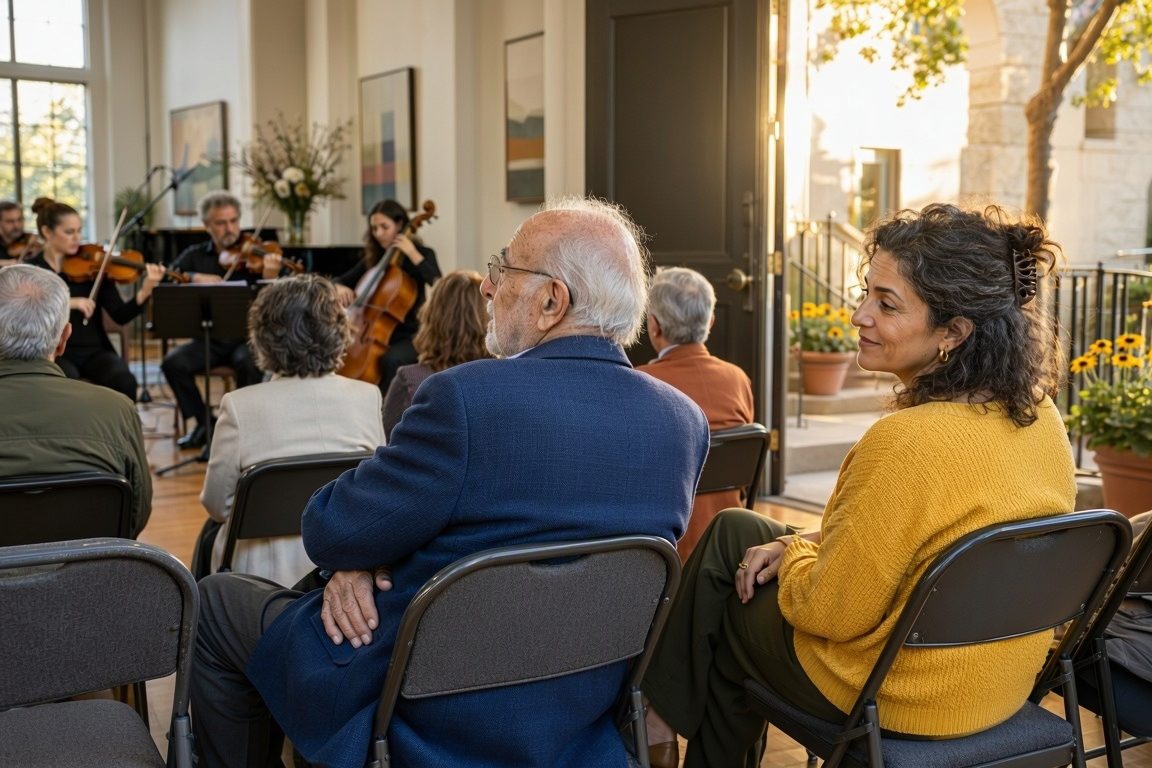
For many people, church or community events are not just social obligations, they are sources of comfort, identity, and connection. As one expert notes, people go to church to feel safe, to feel energetic, to talk to God, and to find happiness when they are sad. A person with dementia can be equally benefited by that same spiritual experience. The problem is often not the person's ability to participate, but that congregations, pastors, or priests are not prepared for someone with brain changes, so we end up condemning the person to stay at home. That loss can accelerate isolation and decline, because familiar environments and routines help maintain function longer.
The Real Challenge: Initiation and Overwhelm
It is easy to think your loved one no longer wants to go because they say 'no' or seem resistant. But research shows that people with dementia often have trouble initiating activities, they don't know how to get started, or they feel the activity will be too hard. So when you ask, 'Do you want to go to church?' they may automatically say no. That is not a refusal of the experience itself; it is a signal that they need help getting started. Similarly, large gatherings can be overwhelming, but smaller groups or modified participation can still work well. The key is to shift from asking to inviting, and from expecting full participation to accepting any level of engagement.
The Risk of Withdrawal for Both of You
When caregivers stop taking their loved one to community events, the caregiver also loses that support network. You may feel anger or frustration at the situation, or become impatient because you've seen them do things before but now they can't. That frustration can lead to withdrawing from activities altogether. But as one expert says, 'Doing something is the right thing. Doing nothing is the wrong thing.' It is okay to engage, even if you don't know exactly what to do. The longer you keep your loved one in familiar community settings, the longer they may be able to function at a certain level. Taking them out of those environments can lead to a drastic decline because they cannot re-adapt to new places.
Practical tools
6
The 'Come With Me' Invitation Script
Instead of asking a question, use a statement that implies action. Examples: 'I have a great idea, let's go to church together.' 'Oh, I want to show you something special today.' 'You've been asking about the music, so I brought you with me.' This approach reduces resistance and helps them get started.
Pre-Event Checklist
Before each event, run through this short list:
Keep this checklist on your phone or in your car.
The 'One Person' Buddy System
Identify one person at the church or community group who can be your 'buddy.' This could be an usher, a pastor, or a friend. Before the event, tell them: 'Please just say hello to my loved one and smile. You don't need to have a conversation.' This simple act of recognition can make your loved one feel welcomed and reduce your own stress.
Quiet Corner Setup
At the venue, identify a quiet spot away from loud speakers, crowds, or bright lights. This could be a side pew, a back row, or a small side room with a chair. Bring a familiar item like a favorite shawl or a small photo. If your loved one becomes overwhelmed, you can move to this spot without leaving entirely.
Music-Only Attendance Plan
If the full service or event is too long, plan to attend only the music portion. Arrive for the first hymn and leave after the last song. Let the greeter know you will be leaving early. This allows your loved one to experience the emotional and spiritual benefits of music without the cognitive demands of a sermon or lengthy program.
Post-Event Reflection Log
Keep a small notebook or a note on your phone where you record after each event: date, time, activity, how your loved one seemed (calm, agitated, happy, tired), and what you would do differently. Over time, you will see patterns that help you plan better. For example, you may notice that morning services work better than evening ones.
Different situations
Early stage vs. middle stage
In early stages, your loved one may still be able to participate in most of the service or event, but may withdraw due to anxiety about making mistakes. Use the 'Come With Me' invitation and keep the event short. In middle stages, focus on sensory experiences like music and familiar faces. Let go of expecting them to follow the program. They may need to sit in a quiet area or leave after 15 minutes.
Lewy body dementia or Parkinson's dementia
People with Lewy body dementia often have fluctuations in attention and may experience visual hallucinations. Avoid events with bright, flickering lights or loud, sudden noises. Choose a seat near an exit. Be prepared to leave quickly if they become confused or see things that aren't there. The music portion may be more calming than a spoken service.
Spouse caregiver vs. adult child caregiver
As a spouse, you may feel a deeper loss because this was a shared spiritual practice. You may need extra support from the congregation. Consider asking a friend to sit with your loved one for 20 minutes so you can attend a portion of the service alone. As an adult child, you may feel pressure to 'manage' the situation. Remember that your role is to facilitate connection, not to control the outcome. It is okay if the experience is imperfect.
If your loved one is in a facility or memory care
Many facilities have chaplains or hold religious services. Ask the activities director if your loved one can attend. You can also bring a recorded sermon or hymns to their room. If they cannot go to the community, bring the community to them: invite a friend from church to visit for 15 minutes and simply hold their hand or sing a song.
If your loved one is resistant to all community events
Resistance often comes from feeling overwhelmed or not knowing how to start. Try a very short, low-pressure visit: drive by the church and look at the building, or sit in the parking lot and listen to the music for five minutes. Gradually increase the time. If they still resist, consider a different type of community event that matches their current abilities, such as a small coffee gathering or a walk in a park where people gather.
For the doctor
3
- If your loved one has a history of severe anxiety or agitation in crowds, ask the doctor about using a short-acting anti-anxiety medication before the event. Do not start or change any medication without medical guidance.
- If your loved one has a condition like COPD or heart disease, discuss whether the physical demands of attending an event (walking, stairs, temperature changes) are safe. Ask for specific activity restrictions.
- If your loved one is in the late stages and has frequent falls or infections, ask the doctor whether attending community events poses a risk of exposure to illness. Weigh the benefits of social engagement against the risk of infection.