Step by step
What not to do
- Do not insist on a walker for mid-to-late stage dementia patients who never used one, and never force use if resisted, new learning and power struggles both elevate fall risk.
- Do not dismiss falls as normal aging or clumsiness; falls are a leading hospitalization cause in dementia, always investigate medications, vision, balance, and environment.
- Do not neglect your own physical safety when assisting. If you are frail, use a gait belt for transfers and consider hiring a caregiver for high-risk activities like bathing.
Key points
- A walker can increase fall risk in mid-to-late stage dementia because the person cannot learn to use it properly and may lean forward or forget it.
- Environmental safety (remove rugs, clear clutter, good lighting) is often more effective than any mobility aid.
- Proper footwear (supportive, non-slip shoes) is a non-negotiable fall prevention strategy.
- Always review medications with a doctor; many common drugs increase fall risk.
- Physical therapy is the best way to get the right walker and learn how to use it safely.
- Supervision and hands-on assistance are essential as dementia progresses; a device alone is not enough.
Videos
 Providing Support When Mobility Rules Are Not Regarded | Teepa's ClipsTeepa Snow explains why walkers can be dangerous in mid-to-late stage dementia and how to approach mobility support differently.
 095. How to create a safe home for Dementia family membersA practical guide to making your home fall-proof, which is often more effective than a walker.
 7 Reasons People With Dementia Fall (and how to help)Breaks down the common causes of falls beyond just needing a walker, including medication and environment.
 Steady Steps: Practical Strategies for Managing Falls in DementiaOffers concrete, step-by-step strategies for preventing falls without relying solely on a walker.
Background
Why a Walker Isn't Always the Answer
When we see a loved one with dementia becoming unsteady, our first instinct is often to get them a walker. It seems like the logical, safe solution. However, research and expert experience show that for people in mid-to-late stage dementia, a walker can actually increase the risk of fall-related injuries within six months to a year. This happens because the brain damage from dementia makes it very difficult to learn how to use a new assistive device properly. The person may lean forward into the walker, creating a dangerous forward momentum. They may also forget the walker exists when it is out of sight, yet their body has become accustomed to that forward lean, leading to a forward fall when they try to walk without it.
The Cognitive Load of a Walker
Think of using a walker like texting while driving. For a healthy adult, the extra cognitive load is minimal. But for a person with dementia, experts suggest the brain may work significantly harder just to process the information needed to use the walker correctly. This extra demand can actually impede walking rather than assist it. The walker becomes one more confusing object in an already compromised brain, leading to hesitation, poor coordination, and falls. The person may also forget to lock the wheels on a rolling walker, causing it to slide forward and pull them off balance. This is why many experts recommend the classic, simple walkers with no wheels and tennis balls on the back legs, they don't require locking and stay put.
The Real Cause of Falls: Environment and Body
Before you focus on the walker, it's crucial to understand that falls in dementia are rarely just about needing a walking aid. The primary causes are often environmental clutter, poor footwear, medication side effects, and underlying balance issues from the disease itself. Area rugs are a major tripping hazard. Poorly fitting shoes or slippery soles are an accident waiting to happen. Many medications, especially those for sleep, anxiety, or blood pressure, can cause dizziness or drowsiness, significantly increasing fall risk. And for many with dementia, especially those with Lewy body dementia or Parkinson's, the core problem is a balance disorder, not leg weakness. A cane or walker only helps with one-sided weakness; for a true balance problem, you can fall on either side, making a walker only partially helpful.
Practical tools
3
Two-Wheeled or No-Wheeled Walker with Tennis Balls
Most stable option: no brakes to forget, stays close to the body. Cut tennis balls and slide onto back legs for smooth glide without rolling away. Cease use immediately if the person cannot handle it safely.
Home Fall-Proofing Checklist
Room-by-room audit:
Gait Belt
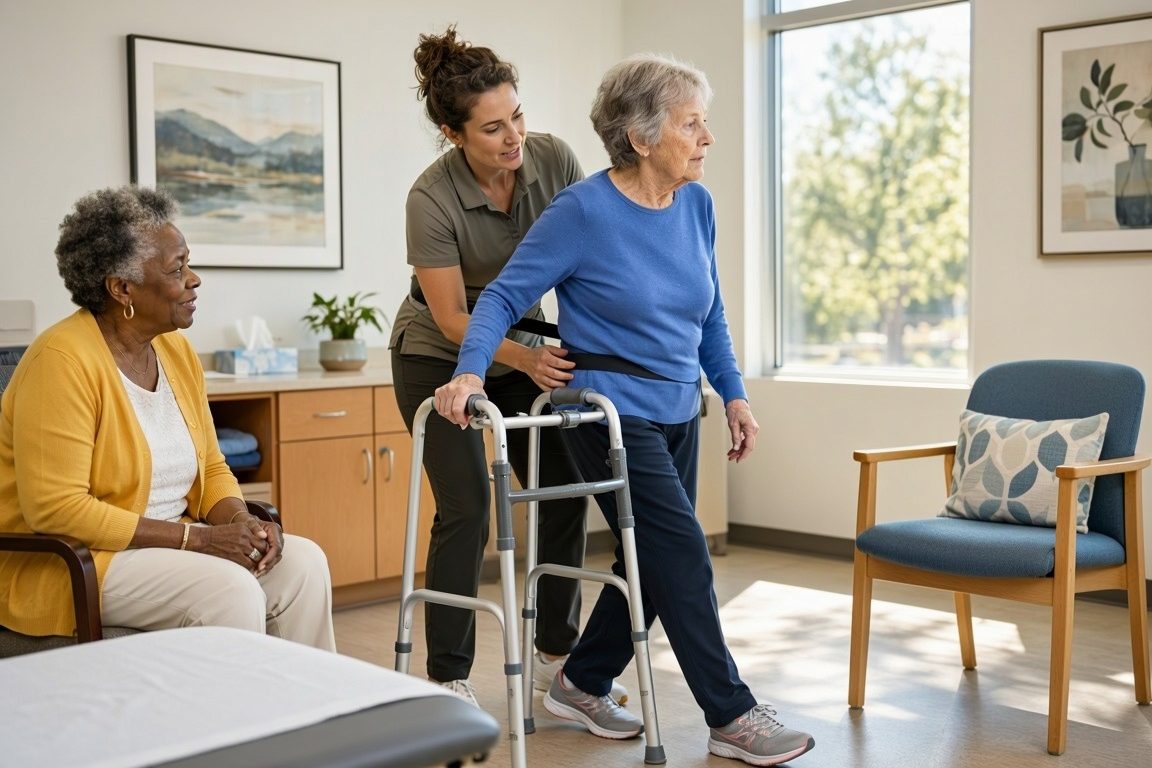
Sturdy canvas belt with handles that fastens around the waist, providing a secure grip for transfers and walking without back strain or injury from grabbing clothing or arms during a fall. Essential for any hands-on mobility assistance.
Different situations
Lewy Body Dementia or Parkinson's Disease Dementia
Balance problems are often severe and central to the disease. A walker may be necessary, but it must be chosen with extreme care. A physical therapist is essential. The person may also have visual hallucinations that can make a walker seem confusing or frightening. Use a simple, non-wheeled walker. Also, be aware that these individuals are very sensitive to medications, so a medication review is even more critical.
Early Stage Dementia
In early stages, the person can still learn to use a walker properly. This is the best time to introduce it if needed. Work with a physical therapist to get the right fit and training. The person may be more willing to use it if it is presented as a tool for maintaining independence and preventing a serious injury. Use positive language: 'This will help you keep walking safely for a long time.'
Late Stage Dementia
At this stage, the person likely cannot learn to use a walker at all. It will be a hazard. Focus entirely on environmental safety, good shoes, and hands-on assistance. Use a gait belt to help support them when they walk. Consider a wheelchair for longer distances, but be aware that they may try to stand up from it and fall. Supervision is constant.
Spouse vs. Adult Child Caregiver
If you are a spouse, you may be physically frail yourself. Do not try to catch a falling partner; you could both be injured. Use a gait belt and learn safe transfer techniques from a physical therapist. If you are an adult child, you may have more physical strength but less emotional authority. Use gentle persuasion and avoid power struggles. In both cases, consider hiring a private caregiver for bath times or walks if needed.
In a Facility (Nursing Home or Memory Care)
The facility staff should be trained in fall prevention. Ask to see their fall prevention plan. Ensure they are using the correct type of walker for your loved one (simple, non-wheeled). Ask that they remove all area rugs from their room. Ensure they are taking your loved one to the bathroom on a regular schedule (every 2 hours) to prevent falls from rushing. If your loved one is wandering, a locked memory care unit may be the safest option.
For the doctor
5
- Ask your doctor: 'Could any of my loved one's medications be increasing their fall risk? Can we review the list together?'
- Ask your doctor: 'Is a physical therapy evaluation appropriate to assess their mobility and recommend the right walking aid?'
- Ask your doctor: 'Could their falls be related to a new balance problem, low blood pressure, or a vision issue that needs to be evaluated?'
- Ask your doctor: 'Is it safe for my loved one to use a walker given their stage of dementia and cognitive abilities?'
- Ask your doctor: 'Are there any underlying medical conditions, like a urinary tract infection or dehydration, that could be causing sudden falls?'