Step by step
What not to do
- Do not use hot water bottles or heating pads directly on the skin. People with dementia may not feel burning sensations due to reduced sensitivity, leading to burns.Instead, always wrap heat sources in a towel and test on yourself first.
- Do not crank the thermostat to 85°F (29°C) and expect it to solve the problem. While the room should be warm (72–78°F or 22–26°C), overheating the core can cause dehydration, agitation, and confusion. Use targeted warming of extremities instead.
- Do not force the person to wear more layers if they resist. Piling on sweaters or socks can feel restrictive and lead to combativeness.Instead, warm their hands and feet first, then offer a light layer if needed.
- Do not ignore signs of poor circulation, such as bluish or darkened fingers, toes, lips, or nose. This can indicate that blood is shunting to vital organs and may be a sign of advanced disease or infection. Discuss with a clinician if this persists.
- Do not use scented lotions or essential oils without checking for allergies or preferences. Strong smells can overwhelm a person with dementia, especially in Lewy body disease where olfactory sensitivity may be altered. Stick to unscented, hypoallergenic products.
- Do not rush the process. If the person is agitated or refuses, step back and try again later. Forcing warmth can create a negative association. Use a calm voice and offer choices: 'Would you like the warm sock on your hands or your feet?'
Key points
- Warm the hands and feet first, this signals the body to relax blood vessels and improve overall warmth.
- Use gentle, non-threatening touch and explain what you are doing to reduce resistance.
- Avoid direct heat on the skin; always wrap heat sources and test on yourself first.
- Rice socks, warm beverages, and gentle massage are safe, effective tools.
- Do not overheat the room or pile on layers, targeted warming works better.
- For Lewy body and vascular dementia, tailor the approach to circulation and sensitivity issues.
Videos
 Ep. 109: How Cold Temperatures Affect People Living With DementiaExplains why people with dementia feel cold even in warm rooms, reinforcing the need for targeted warming of extremities.
 When Someone With Dementia REFUSES to Bathe: Do This!Offers strategies for overcoming resistance, which applies to warming hands and feet if the person is reluctant.
 How Do You Persuade Someone With Dementia To Bathe?Teaches gentle persuasion techniques that can be adapted for warming routines.
 Do This BEFORE It’s Too Late…Highlights the importance of proactive comfort measures, including temperature management.
2 more videos
 What are the Different Stages of Dementia? Late Stage End of LifeExplains late-stage changes like poor circulation, helping caregivers adjust warming methods.
 Why Meal Refusal Happens with Dementia (And How to Tackle It Without a Fight)Offers communication tips that apply to any care task, including warming hands and feet.
Background
Why Hands and Feet Get So Cold
In mid-to-late Lewy body and vascular dementia, the brain’s ability to regulate body temperature becomes impaired. The person’s internal thermostat may signal that the core is cold, even when the room is warm, causing blood vessels in the hands and feet to constrict and shunt warm blood toward vital organs. This leaves the extremities feeling icy and sometimes looking bluish or darker due to poor circulation. Caregivers often notice that even with the thermostat set to 80°F (27°C) and the person wearing multiple sweaters, their hands and feet remain cold. This is not a sign of being underdressed, it is a neurological response that requires targeted warming of the extremities to signal the body to relax and allow blood flow back to the hands and feet.
How Warming Extremities Helps the Whole Body
When you gently warm the hands and feet, the blood vessels in those areas respond by relaxing and dilating. This allows warm blood from the core to flow more freely into the extremities, which in turn helps the person feel warmer overall. The effect is temporary but powerful: after warming their hands and feet, you may be able to lower the room temperature or remove a heavy sweater because the person’s body no longer feels the need to conserve heat. This approach works with the brain’s faulty signals rather than fighting them. It also reduces the risk of overheating the core, which can cause agitation or discomfort. For people with Lewy body dementia, who are often sensitive to temperature extremes, this method can be especially calming.
The Role of Touch and Approach
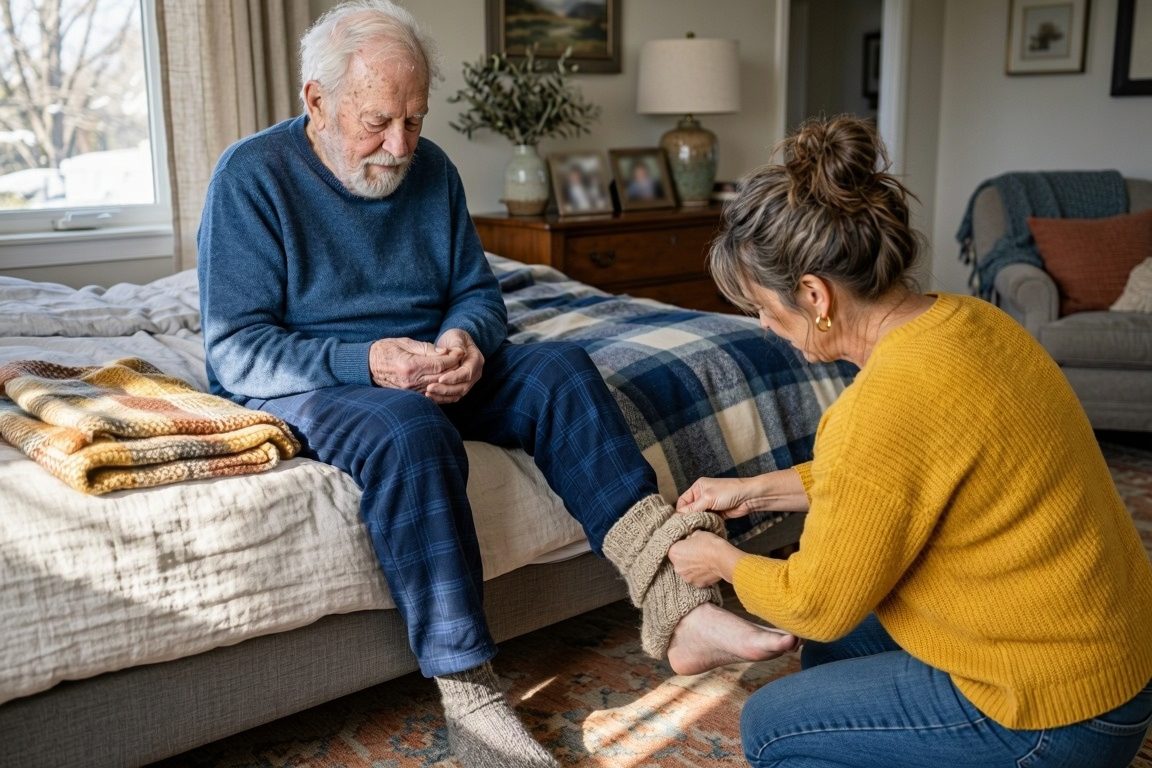
How you approach the person matters as much as what you do. A person with dementia may misinterpret your intentions if you suddenly grab their hands or feet. Use a calm, positive tone and explain what you are about to do: 'I’m going to help warm your hands with this cozy sock filled with rice.' Move slowly and let them see the warm object before you touch them. If they resist, do not force it, try again later or offer a warmed cup to hold instead. Gentle massage with lotion can also warm the skin and improve circulation while providing soothing sensory input. The goal is to create a sense of safety and comfort, not to startle or overwhelm.
Practical tools
6
Rice sock or bean bag warmer
Fill a clean cotton sock with 1 cup of uncooked rice or dried beans, tie the end, and microwave for 30–60 seconds. Test on your wrist. Wrap in a thin towel. Use on hands, feet, or lap. Reheat as needed. Avoid using for more than 20 minutes at a time to prevent burns.
Warm beverage in a mug
Offer warm (not hot) herbal tea, warm milk, or broth in a ceramic or insulated mug. Let the person wrap their hands around it for several minutes. Use a lidded travel mug if spills are a concern. This provides both warmth and hydration.
Non-skid grippy socks and fleece slippers
After warming feet, put on soft, non-skid socks (like those with grippy dots) and then fleece-lined slippers. Avoid tight elastic. This keeps feet warm and reduces fall risk. Look for brands like 'Hospitology' or 'Grip Socks' on Amazon.
Heated blanket with auto shut-off
Use a low-wattage heated blanket with an automatic shut-off timer (e.g., 2 hours). Set to the lowest setting. Place over the person’s feet or hands, not directly on skin. Never use while they are asleep. Brands like 'Sunbeam' or 'Biddeford' have safety features.
Warm washcloth and unscented lotion
Wet a soft washcloth with warm water, wring out, and wrap around hands or feet for 1–2 minutes. Follow with a gentle massage using unscented lotion (like 'Cetaphil' or 'Aveeno'). This soothes and improves circulation.
Space heater with tip-over shut-off
Use a small ceramic space heater with automatic shut-off if tipped. Place on a stable surface away from the person and flammable materials. Set to 72–75°F (22–24°C) to warm the room without overheating. Monitor the person for signs of discomfort.
Different situations
Lewy body dementia (mid-stage)
People with Lewy body dementia often have fluctuations in alertness and may be sensitive to temperature changes. Use gentle, predictable routines, warm their hands and feet at the same time each day (e.g., before meals). Avoid strong scents in lotions. If they have tremors, use a warm washcloth rather than a rice sock that might be dropped. Monitor for signs of overheating, as they may not communicate discomfort.
Vascular dementia (late-stage)
Vascular dementia often involves circulation issues due to underlying cardiovascular disease. Check hands and feet for swelling, discoloration, or sores before warming. Use warm (not hot) water for washcloths. Avoid tight socks or slippers. If the person has difficulty swallowing, offer thickened warm beverages only. Consult a clinician about using heated blankets if the person has poor circulation.
Late-stage dementia (end of life)
In the final stages, the body may shunt blood to vital organs, making extremities cold and bluish. Focus on comfort rather than rewarming. Use a warm blanket over the feet and gentle hand-holding. Avoid any heat source that could cause burns if the person is immobile. Discuss with hospice if the person is in their care. The goal is comfort, not temperature correction.
Spouse vs. adult child caregiver
A spouse may feel more comfortable with intimate touch, like holding hands or foot massage. An adult child should approach with extra care, using verbal explanations and offering choices. Both should avoid sudden movements. If the person is in a facility, coordinate with staff to ensure consistent warming routines and avoid conflicting approaches.
In a facility or with Medicaid
In a facility, request that staff use rice socks or warm washcloths as part of the daily care plan. Ensure the person’s room is kept at a comfortable temperature (72–75°F). If the person is on Medicaid, check if the facility provides heated blankets or if you need to bring your own (with approval). Label all personal items clearly.
For the doctor
5
- Ask the doctor: 'Is it safe to use a heating pad or electric blanket for my loved one, given their circulation and skin condition?'
- Ask the doctor: 'What signs of poor circulation should I watch for, and when should I seek medical help?'
- Ask the doctor: 'Could the cold hands and feet be a side effect of any medications they are taking?'
- Ask the doctor: 'Are there any underlying conditions (like diabetes or peripheral artery disease) that affect how I should warm their extremities?'
- Ask the doctor: 'If their hands or feet turn blue or dark, should I call you or go to the emergency room?'