Step by step
What not to do
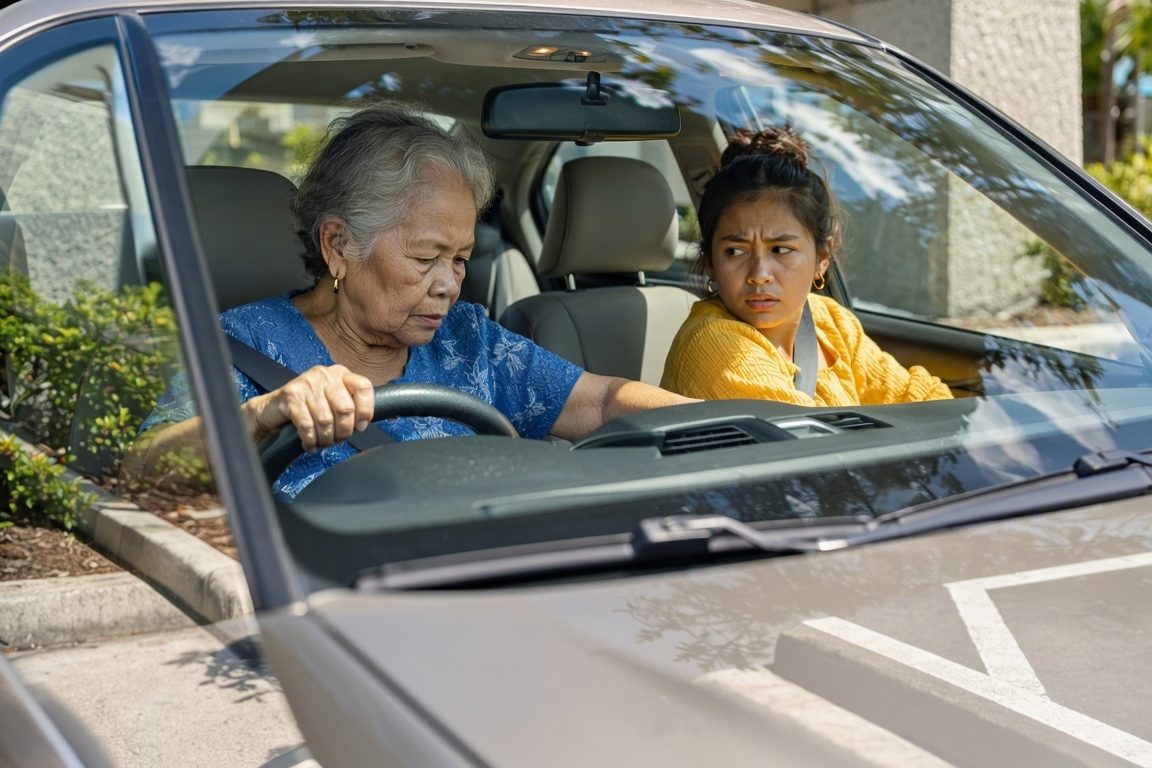
- Do not assume short trips or familiar routes are safe; dementia impairs split-second reactions on every road.
- Do not argue with them about their driving ability. Let a neutral third party like a doctor or driving specialist deliver the message.
- Do not wait for a serious accident to take action. Act on warning signs early, even if it feels premature.
- Do not hide the keys without a plan. Replace them with dummy keys, install a kill switch, or move the car out of sight, and pair this with an alternative transportation plan.
Key points
- Dementia affects the brain's ability to react quickly, anticipate danger, and judge distance, even on familiar roads.
- Do not rely on short, familiar routes as proof of safety. The real danger is in unexpected events.
- Look for concrete signs: getting lost, hitting curbs, missing signs, confusing pedals, or unexplained car damage.
- Involve the doctor and DMV to remove the burden of being the 'bad guy' from you.
- Plan for alternative transportation before you take the keys away.
- Use dummy keys or a kill switch only under professional guidance, and stop immediately if the person shows distress or tries to fix the car.
Videos
 SIGNS YOUR LOVED ONE WITH DEMENTIA IS NOT SAFE TO DRIVEThis video directly addresses the warning signs you should look for, making it a perfect companion to this article.
 Find out if your loved one with dementia is safe to drive!This video offers practical tips on how to formally assess driving safety, including the role of driving rehabilitation specialists.
 How to stop your loved one with dementia from drivingThis video focuses on the hardest part: how to actually prevent driving once you know it's unsafe, without damaging your relationship.
 Driving Under the Influence...of Dementia | Teepa's ClipsTeepa Snow explains the brain changes behind driving difficulties and why the person cannot see their own decline.
2 more videos

Background
Why Dementia Changes Driving Ability
Driving is one of the most complex tasks our brains perform. It requires split-second decisions, anticipating what other drivers might do, judging distances, and reacting to unexpected events, all while following traffic rules. Dementia progressively damages the parts of the brain that handle these skills, especially the frontal lobes responsible for executive function. This means your loved one may lose the ability to plan, organize, and anticipate consequences, even if they can still remember how to turn the key and press the gas. As one expert explains, the same brain changes that make it hard for them to see what we're saying also make it impossible for them to recognize their own driving decline , their brain literally cannot tell them they are unsafe. This is not stubbornness; it is the disease.
The Myth of Familiar Routes
Many caregivers assume that as long as their loved one only drives to a few familiar places, the pharmacy, church, or a friend's house , they are still safe. This is a dangerous misconception. Dementia does not just affect navigation; it affects reaction time, judgment, and the ability to handle surprises. A child running into the street, a car suddenly braking, or a pedestrian stepping off the curb , these are the moments that require the brain to process information instantly and act. When dementia is present, that processing speed slows dramatically, and the ability to anticipate what others might do is lost. Even on a road they have driven for decades, a person with dementia may miss a stop sign, confuse the gas and brake pedals, or fail to notice a pedestrian until it is too late. The risk is not just to them , it is to everyone on the road.
Practical tools
4
Passenger Observation Checklist
Print a short list for a ride-along. Check off:
If two or more, get a formal evaluation.
Doctor's Letter to the DMV
Ask the doctor or neurologist to write a letter or use your state's form reporting the person is no longer medically fit to drive. The DMV then requires a test or revokes the license, removing you from the enforcer role.
Dummy Keys and Kill Switch
Replace real keys with identical-looking non-working ones. Or have a mechanic install a hidden kill switch. Best used with a doctor's recommendation to avoid damaging trust.
Local Transportation Resource List
Call your Area Agency on Aging (eldercare.acl.gov or 1-800-677-1116) for a list of senior transportation options, volunteer driver programs, paratransit, discounted ride-sharing, with schedules and numbers ready.
Different situations
Lewy body dementia or Parkinson's disease dementia
These conditions often cause visual hallucinations, fluctuating alertness, and sudden changes in attention. Your loved one may be fine one moment and confused the next. Driving is especially dangerous because they may see things that aren't there (like a person in the road) and swerve or brake suddenly. Also, they may have tremors or stiffness that affect steering and pedal control. Consider stopping driving earlier than you would for Alzheimer's.
Early-stage dementia (stages 1-3)
In early stages, your loved one may still be aware of their diagnosis and willing to discuss driving. Use this window to have honest conversations about planning for the future. You can say, 'We know this disease will eventually affect your driving. Let's make a plan now while you can still help decide.' This collaborative approach reduces resistance later.
Middle-stage dementia (stages 4-5)
At this stage, your loved one likely cannot recognize their own limitations. Do not expect them to agree with you. Use the doctor and DMV as the authority. Focus on practical solutions like hiding the car or installing a kill switch. Avoid lengthy explanations, they may not understand or remember. Keep it simple: 'The doctor said no driving. Here is your ride schedule.'
Spouse vs. adult child caregiver
If you are the spouse, your loved one may see you as a partner, not an authority. They may be more resistant to your input. Consider having a doctor or adult child deliver the message instead. If you are an adult child, be aware that your parent may feel you are 'taking over' or treating them like a child. Use the doctor as the reason, and emphasize that you are doing this out of love and concern, not control.
Living in a facility or memory care
If your loved one is in a facility, the staff should already be managing driving. However, they may still have access to a car if a family member brings one. Communicate with the facility director to ensure the car is not available. If your loved one asks to drive, redirect to an activity or a walk. The facility's policies should support you, use them.
Common questions
2
How do I recognize stroke warning signs?
This article focuses on driving safety for dementia, not stroke signs; for stroke, remember FAST: Face drooping, Arm weakness, Speech difficulty, Time to call 911.
What warning signs indicate my loved one is unsafe to drive?
Look for concrete warning signs like getting lost on familiar routes, hitting curbs, missing traffic signs, confusing pedals, or finding new unexplained dents on the car.
For the doctor
6
- Ask your loved one's doctor for a formal driving assessment referral. This is a medical evaluation, not something you can do at home.
- Discuss whether any medications they are taking could impair driving further. Some dementia medications, sleep aids, or anxiety meds can cause drowsiness or slowed reactions.
- If your loved one has a history of wandering, ask the doctor about the safest way to prevent them from accessing a car. Wandering plus access to a vehicle is a high-risk combination.
- Ask the doctor about state-specific reporting laws. In some states, physicians are required to report unsafe drivers with dementia. Knowing this can help you decide how to proceed.
- Ask your doctor: 'Are there any legal concerns with using dummy keys or a kill switch to prevent driving in our state?'
- Ask your doctor: 'What specific signs of distress or agitation should I watch for if I use a kill switch or dummy keys, and when should I stop using them immediately?'