Step by step
What not to do
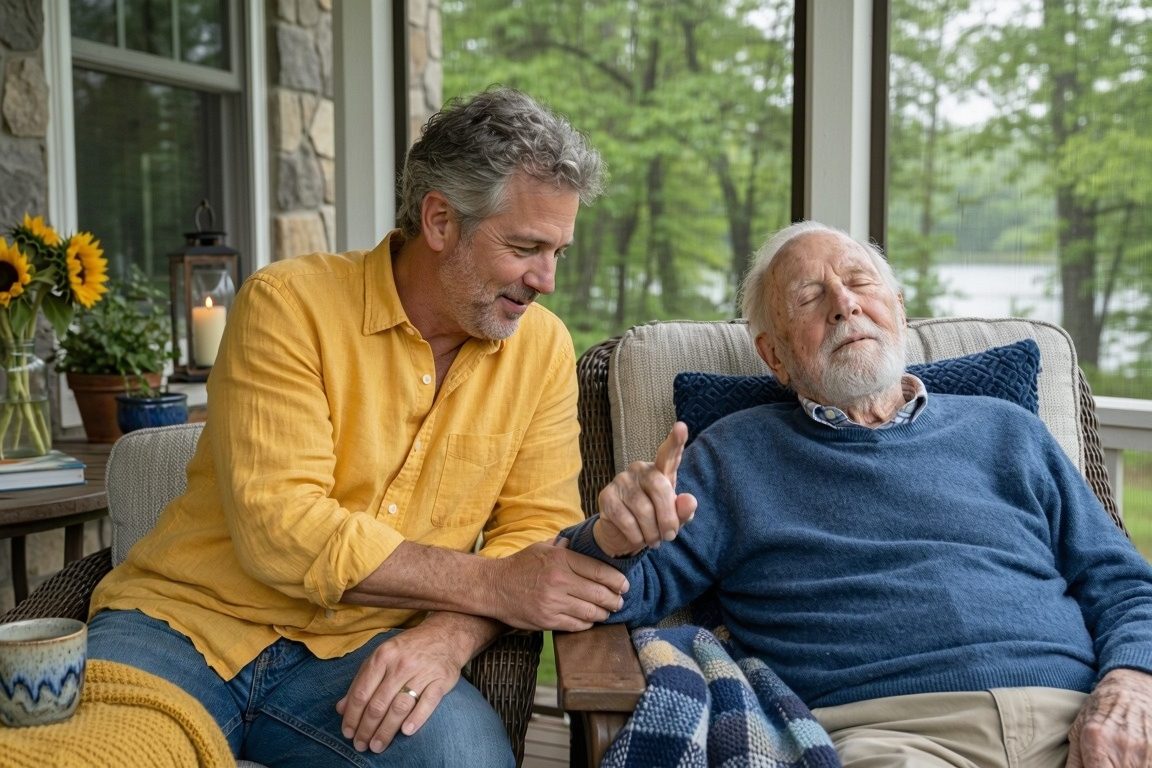
- Do not lean in close or make direct eye contact right away. This can feel threatening or overwhelming to someone in Pearl, who is already internally focused.Instead, approach from the side and keep your face at or below their eye level.
- Do not use a loud or high-pitched voice. A bright, cheerful tone can startle or overstimulate someone in Pearl. Use a low, slow, rhythmic voice instead, like a gentle hum or a soft murmur.
- Do not interpret a lack of response as rejection or failure. The person may be deeply engaged in internal processing and simply cannot show it outwardly. Your job is to offer and wait, not to demand a reaction.
- Do not touch the person without first giving a verbal cue and waiting. A sudden touch can cause a startle reflex or withdrawal.Instead, say, 'I'm going to put my hand on your arm now,' and then move slowly.
- Do not keep talking or repeating yourself if there is no response. Silence is a powerful tool in Pearl. Constant chatter can overwhelm the brain and push the person further inward.
- Do not assume that closed eyes mean the person is asleep or unaware. Many people in Pearl keep their eyes closed to reduce visual input so they can focus on other sensations or internal thoughts. Always assume the person can hear and understand you.
Key points
- Engagement in Pearl is about micro-movements, not big reactions. Look for a head turn, a change in breathing, a finger twitch, or a brief eye opening.
- Always start with a general comment to the space, not a direct question or demand. This reduces pressure and invites the person to respond on their own terms.
- Use the 10-second pause after every cue. The person's brain needs time to process and respond. Do not rush.
- Your own internal state matters. If you are rushed or anxious, the person will sense it and may retreat. Ground yourself first.
- Silence is a powerful tool. Do not fill every moment with talk. Sometimes being present without words is the deepest form of engagement.
- Document what works. Over time, you will learn the person's unique 'Pearl language', the specific cues and rhythms that invite connection.
Videos
 Time with Teepa - Caregiving to Care Partnering, 22 Years Makes a DifferenceTeepa discusses how her understanding of brain states (including Pearl) has evolved over decades, emphasizing that engagement is not about 'us and them' but about noticing when we ourselves are in a Pearl-like state. This video helps caregivers see the Pearl state as a shared human experience.
 Dementia Care Masterclass | Working with Someone in an Emerald GEMS StateWhile this video focuses on Emerald, Teepa demonstrates the technique of starting in a common space and offering a general comment to a group, a method that directly applies to assessing engagement in Pearl. Watch for her slow, calm approach and the way she waits for a response.
 Teepa Watching Teepa | Teepa's ClipsIn this clip, Teepa watches herself and points out micro-movements and cues she missed in real time. This is a masterclass in learning to see the subtle signs of engagement that are easy to overlook, especially in Pearl state.
Background
What the Pearl State Actually Feels Like
The Pearl state is a brain state where a person is deeply internally focused, often because their brain is working hard to process sensory input, manage discomfort, or simply rest. Unlike the Diamond or Emerald states where a person might actively seek out or respond to social interaction, someone in Pearl is more likely to be still, quiet, and seemingly unreachable. Their eyes may be closed or unfocused, their body may be slumped or very still, and they may not respond to their name or a gentle touch right away. This is not a sign of disinterest or withdrawal, it is a protective state where the brain is conserving energy or processing information internally.
Why Engagement Looks Different in Pearl
In the Pearl state, engagement is not about big smiles, eye contact, or conversation. Instead, it is about tiny, almost imperceptible shifts in the body that indicate the person is aware of you and your presence. A caregiver might notice a slight turn of the head toward your voice, a change in breathing rhythm (slower or deeper), a small movement of the fingers or toes, or a brief opening of the eyes that then closes again. These are all signs that the person is 'with you' even if they cannot show it in a typical way. The key is to slow down, lower your own energy, and watch for these micro-movements rather than expecting a big reaction.
The Caregiver's Internal State Matters
Teepa Snow often reminds care partners that we, too, can slip into a Pearl-like state when we are tired, stressed, or overwhelmed. If you are rushing, talking fast, or feeling anxious, the person in Pearl will sense that energy and may retreat further. To truly assess engagement, you must first ground yourself, take a slow breath, soften your voice, and approach with a calm, open posture. When you are internally focused and quiet, you create a safe space for the person to respond in their own time. This is not about 'getting a reaction' but about being present together.
Practical tools
6
The 10-Second Pause
After any comment, touch, or cue, count silently to ten before doing anything else. This gives the person's brain time to process and respond. Use this pause every time you interact with someone in Pearl.
The 'Soft Offer' Script
Use these exact phrases in a low, slow voice: 'I'm here with you.' / 'No rush.' / 'I'll wait.' / 'You can let me know when you're ready.' These words create safety and permission to respond in their own time.
The Hand-Under-Hand Cue
If you want to offer a touch cue, place your hand under the person's hand (palm up) and gently rest their hand on top of yours. Then slowly move your hand to guide theirs toward an object (like a soft cloth or a cool stone). This gives them control and reduces the startle factor.
The 'One Word' Sensory Menu
Prepare a short list of single-word sensory cues to try, one at a time, with long pauses between: 'cool,' 'warm,' 'soft,' 'smooth,' 'still,' 'quiet.' Say the word, then offer the matching sensation (e.g., a cool metal spoon, a warm rice bag, a velvet scrap). Watch for any micro-movement.
The Observation Log
Keep a small notebook or a note on your phone with columns: Date/Time, Cue Used, Response Seen (describe the micro-movement), and Notes. Over a week, patterns will emerge that tell you what the person finds engaging.
The Side-by-Side Setup
Instead of sitting face-to-face, sit next to the person, both facing the same direction (e.g., toward a window or a blank wall). This reduces the social demand and allows the person to engage with the environment or with you at their own pace. You can comment on what you both see: 'Look at that bird outside.'
Different situations
Late-stage Alzheimer's or other dementia (Pearl state is more common and prolonged)
In late stages, the person may spend most of their time in Pearl. Engagement may be limited to a single micro-movement per session. Do not expect more. Focus on comfort and presence rather than 'activity.' Use the hand-under-hand technique with a soft object like a fleece square. Keep sessions very short (2–3 minutes) and space them out. Always prioritize pain and discomfort checks first, sometimes engagement is impossible because the person is in pain.
Lewy body dementia (with fluctuating alertness)
In Lewy body dementia, the person may shift in and out of Pearl state rapidly, sometimes within minutes. Watch for visual hallucinations or tremors that might indicate they are actually in a different state (like Ruby or Amber) but appear Pearl-like due to medication side effects or fatigue. If you see any sign of distress (grimacing, rapid breathing), stop and reassess. Use very simple, single-sensory cues (one at a time) and avoid any visual clutter in the room.
Spouse caregiver vs. adult child caregiver
A spouse may have an easier time reading micro-movements because of years of familiarity, but may also feel more pressure to 'connect' and can become frustrated by the lack of visible response. An adult child may need more explicit guidance to slow down and not take the silence personally. Both should practice the 10-second pause and the 'soft offer' script. A spouse might try humming a familiar song from their early relationship; an adult child might try a simple hand massage with lotion.
In a facility setting (nursing home or memory care)
In a facility, the person may be in Pearl because of overstimulation from noise, lights, or multiple staff interactions. Before trying to engage, reduce environmental stimuli: turn off the TV, close the curtain, lower the lights. Use the side-by-side setup rather than face-to-face. If the person is in a wheelchair, position yourself at their side, not in front. Document any engagement in the care plan so other staff know what cues work.
Medicaid or limited resources
You do not need expensive tools. A cool washcloth, a warm sock filled with rice, a piece of velvet from an old dress, or a smooth stone from the garden all work as sensory cues. The most important tool is your own calm presence. If you are stressed, take five minutes to breathe before approaching. Free resources like the Positive Approach to Care website have printable cue cards for the 'soft offer' script.
For the doctor
3
- If the person in Pearl state shows no response to any sensory cue for several days in a row, discuss with their doctor whether there might be an underlying medical issue (e.g., infection, pain, medication side effect) that is making engagement impossible.
- If the person suddenly shifts from Pearl to a more agitated state (like Ruby or Amber) after a sensory cue, ask the clinician whether the cue might be triggering a pain response or a hallucination, especially in Lewy body dementia.
- If the person is on medications that cause drowsiness or sedation (e.g., antipsychotics, benzodiazepines, some antidepressants), discuss with the clinician whether the Pearl-like state is a side effect and whether a medication adjustment might improve alertness for engagement periods.