Step by step
What not to do
- Do not rely on the person's own judgment about safety. They may insist they are fine to cook or drive, but their brain cannot accurately assess risk.Instead, trust your observations and the concerns of others. Remove the hazard quietly and redirect to a safe activity.
- Do not argue or try to reason with your loved one about why they cannot do something. Their brain cannot process logic. Arguing only escalates agitation.Instead, use distraction: 'Let's go for a walk instead' or 'I need your help folding these towels.'
- Do not leave them unsupervised for long periods, even if they seem calm. Stage 5 can have good days and bad days, and a sudden change can lead to wandering, falls, or accidents. Arrange for a family member, friend, or paid caregiver to be present if you need to leave.
- Do not wait for a crisis to make legal and financial decisions. If you have not already, obtain power of attorney for healthcare and finances while your loved one can still participate. Without these documents, you may be unable to make critical decisions later. Discuss this with an elder law attorney.
- Do not neglect your own self-care. You cannot be an effective 'captain' if you are exhausted and overwhelmed. Accept help from others, use respite care, and take breaks. Your well-being directly affects the quality of care you can provide.
Key points
- Stage 5 is when safety must become your top priority because the person can no longer judge what is safe.
- You must become the 'captain of the ship', making decisions based on your observations, not on the person's wishes.
- Conduct a home safety audit and remove hazards like stove knobs, loose rugs, and accessible medications.
- Use practical tools like two-hour toilet reminders, door alarms, and finger foods to maintain safety and dignity.
- Do not argue or reason, use distraction and redirection instead.
- Take care of yourself: ask 'What is the next right step for me?' and accept help from others.
Videos
 The 7 Stages Of Alzheimer's: Stage 5This video explains the specific challenges of Stage 5, including loss of independence and the need for caregiver decision-making.
 What Are The 7 Stages Of Alzheimer's Disease? Stage 5Another perspective on Stage 5, focusing on daily functioning and how to adapt care routines.
 090315 Next Right StepA short, practical video on using the 'next right step' question to manage caregiver overwhelm.
 090315 Next Right Step 2Continuation of the 'next right step' concept, reinforcing self-care and decision-making.
Background
Why Safety Becomes the Number One Priority in Stage 5
In Stage 5, also called moderately severe cognitive decline, the person with Alzheimer's begins to lose the ability to perform basic self-care and daily tasks. They may forget to dress appropriately for the weather, struggle to follow a recipe, or leave the stove on. More critically, they lose insight into their own limitations, they cannot recognize when they are unsafe. This is why experts say safety must become the caregiver's primary concern, overriding even the person's stated preferences in the moment.
This stage is marked by major memory gaps that directly impact day-to-day functioning. The person may still recognize close family and recall their own childhood, but they cannot reliably manage money, medications, or household hazards. They are at increased risk for falls, wandering, malnutrition, and accidents. Because their brain can no longer process danger, you must now make decisions based on your observations and best judgment, not on what the person wants. This shift can feel uncomfortable, but it is necessary to prevent serious harm.
The Caregiver as 'Captain of the Ship'
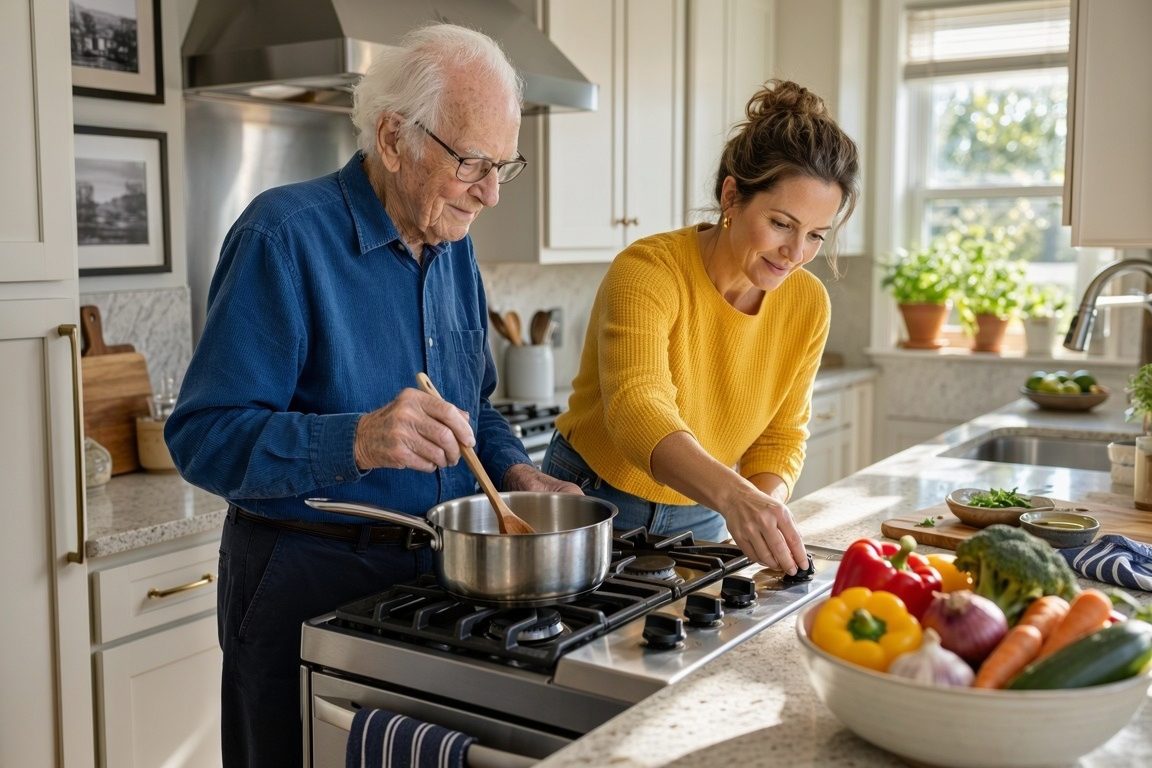
In Stage 5, the person with dementia can no longer steer their own boat. As the cognitively intact caregiver, you must take over the helm. This means you will sometimes have to override their wishes, for example, insisting they stop driving, or refusing to let them cook alone , even if it causes upset. The goal is not to control, but to protect.
This role requires a mindset shift: you are not being mean or disrespectful; you are being the responsible adult in the room. The person's brain is no longer capable of making safe choices, so you must make them. This includes planning ahead for basic needs like meals, housing, and personal care. Listen to friends and family who express concern about your loved one's abilities , they may see what you are too close to notice. And remember, you can control your decisions and your approach, even when you cannot control the disease.
Practical tools
6
Home Safety Checklist
Print or write a simple checklist:
Go through each room weekly. Tape the checklist inside a cabinet door as a reminder.
Two-Hour Toilet Reminder
Set a timer on your phone or a smart speaker to go off every two hours. When it goes off, say gently: 'It's time to use the bathroom.' Guide them there, offer help with clothing if needed, and praise them afterward. This prevents accidents and maintains dignity.
Door Alarm or Slide Bolt
A simple magnetic door alarm (under $20) sounds when the door opens, alerting you to wandering. A slide bolt placed high or low on the door (out of the person's line of sight) can also prevent exit. Only use a slide bolt when you are at home and can unlock it immediately in an emergency. Ensure the person can exit safely another way, or rely on door alarms when you are away. Test regularly to ensure they work.
Medication Pill Organizer with Lock
Use a weekly pill box with compartments for morning, noon, evening, and bedtime. If your loved one might take extra doses, buy a lockable medication box. Fill it together at the start of each week, and check it daily.
Finger Foods and Pre-Cut Meals
Prepare easy-to-eat foods like small sandwiches, cheese cubes, grapes (cut lengthwise), hard-boiled eggs, and yogurt cups. Avoid choking hazards like whole nuts or large chunks of meat. Serve on a plate with a non-slip mat to prevent spills.
The 'Next Right Step' Question
When you feel stuck or overwhelmed, pause and ask yourself out loud: 'What is the next right step for me right now?' It might be as simple as taking three deep breaths, drinking water, or calling a friend. This tool helps you stay grounded and focused.
Different situations
Lewy body dementia (LBD) or Parkinson's disease dementia
In LBD, safety risks are amplified by visual hallucinations, fluctuating cognition, and movement problems. Falls are more common due to stiffness and balance issues. Remove clutter and use nightlights. Do not argue about hallucinations, instead, validate the feeling and redirect. Medication management is especially critical because some antipsychotics can be dangerous in LBD; always discuss with a neurologist.
Frontotemporal dementia (FTD)
In FTD, behavior changes (like impulsivity, loss of empathy, or compulsive eating) may appear earlier than memory loss. Safety risks include eating non-food items, wandering with a purpose, or sudden aggression. Lock up food and dangerous objects. Use redirection and avoid confrontation. Decision-making may need to happen sooner than in Alzheimer's.
Vascular dementia
Vascular dementia often progresses in a stepwise pattern, with sudden declines after strokes or mini-strokes. Your loved one may have good days and bad days. Safety planning should be flexible and reassessed after any new health event. Blood pressure and medication management are critical to prevent further damage. Discuss fall prevention with a physical therapist.
Spouse vs. adult child caregiver
Spouse caregivers often struggle with the role reversal and may feel guilty about taking control. Adult children may face resistance from the parent who still sees them as a child. In both cases, seek support groups. Spouses should prioritize their own health and consider respite care. Adult children should involve other family members to share decisions and reduce burden.
In a facility (assisted living or nursing home)
Even in a facility, you must advocate for safety. Ask about the staff-to-resident ratio, fall prevention protocols, and how they handle wandering. Visit at different times of day to check on care. Ensure the room is free of hazards. You may still need to make decisions about medical care, so keep advance directives on file.
For the doctor
5
- Ask your doctor: 'Is it safe for my loved one to be left alone for any period of time? What specific signs should I watch for that indicate it is no longer safe?'
- Discuss medication management: 'Are there any medications that could increase fall risk or confusion? How should I handle refusal of medication? Is it safe to offer a medication in a different form, such as liquid or crushed, and if so, how?'
- Ask about driving: 'Can you provide a formal recommendation that my loved one stop driving? Are there alternative transportation resources in our area?'
- Inquire about wandering: 'What steps should I take to prevent wandering? Are there any medical devices (like GPS trackers) you recommend?'
- Discuss end-of-life planning: 'If we have not yet completed advance directives, how can we do that now? What decisions will I need to make in the future?'