Step by step
What not to do
- Do not wait until a crisis to start legal planning. After a fall or hospitalization, the person may have lost capacity, forcing costly public conservatorship. Start at diagnosis or even earlier if dementia is suspected.
- Do not use generic online legal forms without an attorney. State laws differ; forms valid in one state may be invalid in another. An attorney ensures proper execution, witnessing, and notarization.
- Do not assume the same person should handle both finances and healthcare. Splitting roles provides checks and balances. Discuss with the person and attorney to find the best fit.
- Do not pressure the person to sign when tired, confused, or upset. Capacity fluctuates, choose a time when they are well-rested and clear-headed. If they resist, back off and try later.
- Do not forget to update beneficiary designations on retirement accounts, life insurance, and bank accounts. These override your will and must be consistent with your plan.
- Do not name someone as agent without asking them first. Being a power of attorney agent is a serious, long-term responsibility. Ask privately if they are willing and able.
Key points
- Start legal planning immediately after a dementia diagnosis, while the person still has capacity to participate and sign documents.
- The four essential documents are: durable power of attorney for finances, healthcare power of attorney, living will/advance directive, and last will and testament.
- Hire an elder law attorney who specializes in dementia; do not rely on generic online forms.
- Involve the person with dementia in the process as much as possible, use gentle conversations and choose a good day for signing.
- Store documents safely and share copies with agents, doctors, and trusted family members.
- Update documents annually or after major life changes; once capacity is lost, changes require a court order.
Videos
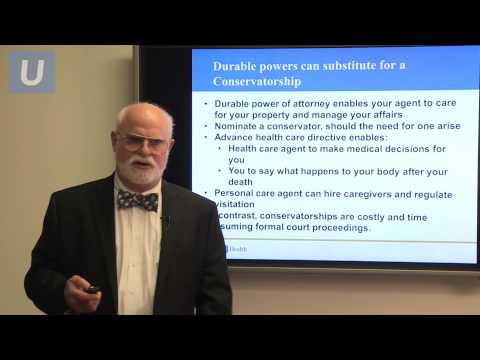 Elder Law: Protecting & Caring for Patients with Dementia | Marc B. Hankin | UCLAMDChatThis video from UCLA Health explains the legal tools, including conservatorships and powers of attorney, from an elder law attorney's perspective. It covers how to protect assets and avoid common pitfalls.
 Dementia & Power Of AttorneyA focused explanation of why power of attorney is critical in dementia, including what happens if you don't have one and how to get it done while the person still has capacity.
 Advanced Directives from the Perspective of a Concerned Person Living with Dementia.Hear directly from a person living with dementia about why advance directives matter to them. This video offers a powerful, personal perspective that can help families understand the emotional importance of planning.
 Early Onset Dementia and Alzheimer's DiseaseThis video discusses the unique challenges of early-onset dementia, including the need for legal and financial planning while the person is still working and raising a family.
2 more videos
 Reasons Someone Should Get Dementia TestingExplains why formal testing is important for legal planning, some facilities and legal processes require a documented diagnosis. Useful for families who are unsure about pursuing a diagnosis.
 The Baffled Brain Demystifying Dementia Episode 30 June 26 2021Covers practical aspects of dementia care, including the importance of advance care planning and how to navigate conversations about legal documents.
Background
Why Legal Planning Is Urgent in Dementia
Dementia is a progressive, life-limiting disease that gradually affects a person's ability to make sound decisions. In the early stages, someone may still have the cognitive capacity, called 'legal capacity', to understand and sign legal documents. As the disease advances, that window closes. The sooner these plans are put in place, the more likely it is that the person living with dementia will be able to participate in the process and express their own wishes. Waiting until a crisis, like a fall, infection, or financial mistake, often means you'll need a costly, court-supervised conservatorship, which is far more stressful and expensive.
Legal planning for dementia isn't just about end-of-life care. It covers everyday decisions: who will manage bank accounts, pay bills, and make medical choices when the person can no longer do so themselves. It also includes preparing for long-term care needs and making arrangements for finances and property. The goal is to name another person to make decisions on behalf of the person with dementia, ensuring their values and preferences guide care even when they can't speak for themselves.
The Core Documents You Need
The essential legal documents for advance care planning in dementia include: a durable power of attorney for finances, a healthcare power of attorney (also called a healthcare proxy), a living will or advance directive, and a last will and testament. A durable power of attorney for finances lets someone you trust manage your bank accounts, pay bills, and handle property. A healthcare power of attorney appoints a person to make medical decisions when you cannot. A living will or advance directive spells out your wishes for end-of-life care, like whether you want life-sustaining treatments. A will directs how your assets will be distributed after death.
Many people mistakenly think these documents are only for the elderly or the very sick. In reality, every adult, starting at age 18, should have a healthcare directive and a power of attorney, because these have nothing to do with advanced disease; they're simply about appointing someone to be your spokesperson. For someone with a new dementia diagnosis, these documents become urgent. If you wait until the person has lost the ability to understand what they're signing, you may not be able to get them done without a court process.
The Role of Capacity and Timing
Legal capacity is the ability to understand the nature and consequences of a decision. A person with early-stage dementia may still have capacity to sign legal documents, especially on a good day. However, capacity can fluctuate, someone might be clear-headed in the morning but confused by evening. That's why it's critical to act early, ideally right after diagnosis. The Alzheimer's Association emphasizes that the sooner these plans are put in place, the more likely the person can participate.
If you're unsure about capacity, a doctor or neuropsychologist can assess it. Some memory care facilities may also require formal testing to document the dementia diagnosis before accepting a resident. But for most legal planning, if the person can still understand the basic purpose of each document and who they are naming, they likely have enough capacity to sign. Once capacity is lost, you may need to pursue a conservatorship, which is a court process that gives someone legal authority over the person's affairs, but it's expensive, time-consuming, and public.
Practical tools
2
Elder Law Attorney Referral
Contact your local Alzheimer's Association chapter (alz.org) or the National Academy of Elder Law Attorneys (NAELA) for a referral. Ask: '
' Expect $200–$500/hour; a full estate plan typically costs $1,500–$3,000.
The Conversation Starter Kit (from The Conversation Project)
A free, downloadable guide that helps families start and structure conversations about end-of-life care preferences, including specific questions about values and fears.
Different situations
Early-stage vs. late-stage dementia
In early-stage, the person can still participate in decisions and sign documents. Focus on getting all documents in place while capacity is intact. In late-stage, capacity is likely lost, so you may need to pursue a conservatorship if documents were not done earlier. If documents exist, ensure they are accessible and that agents know their role. In late-stage, advance directives become critical to guide end-of-life care.
Spouse vs. adult child as caregiver
If you are the spouse, you may already have some legal authority (e.g., joint accounts, medical decision-making in emergencies), but a power of attorney still provides clarity and avoids disputes. If you are an adult child, you likely have no automatic authority, you must have a valid power of attorney to manage finances or make medical decisions. In both cases, discuss with the person with dementia who they trust and name that person explicitly.
Lewy body dementia or frontotemporal dementia
These types often affect judgment and behavior earlier than memory. Capacity may decline faster, so legal planning is even more urgent. In Lewy body dementia, hallucinations and fluctuating cognition can make it harder to get a 'good day' for signing. Work with the attorney to schedule the signing during a clear period. In frontotemporal dementia, the person may lack insight into their condition, making conversations about planning more challenging, use gentle persistence and involve a trusted third party like a doctor or social worker.
Medicaid planning for long-term care
If the person may need nursing home care, an elder law attorney can help with Medicaid planning, which may involve transferring assets or setting up a trust. This must be done at least five years before applying for Medicaid (the 'look-back period'). Do this early, while the person still has capacity to sign. The attorney can advise on how to protect the home and assets for the healthy spouse.
Person lives alone or is estranged from family
If the person lives alone, legal documents are even more critical because there is no one with automatic authority. Name a trusted friend, neighbor, or professional fiduciary as agent. If family is estranged, consider using a lawyer or social worker as a neutral party to facilitate the planning. The person's wishes must be documented clearly to avoid future disputes.
Common questions
5
What legal and financial planning steps should dementia caregivers take to protect assets and the person with dementia?
Start by meeting with an elder law attorney to set up a durable power of attorney for finances and a healthcare power of attorney right away, while your loved one can still sign; this lets you manage their money and medical decisions without court involvement.
How can I manage finances and legal documents from a distance?
Give your loved one's bank and a trusted family member or neighbor a copy of the durable power of attorney so you can authorize payments and bill-pay remotely, and ask the attorney about online notarization options for future updates.
How can a law firm pair legal planning with dementia training for families?
Your law firm can host a short workshop for caregivers on the four essential documents and pair it with memory-care communication tips, then offer a simple checklist so families know what to bring to the first meeting.
What does a palliative care team do and how do they create a care plan?
A palliative care team, a doctor, nurse, and social worker, holds a family meeting to discuss your loved one's current symptoms and goals, then writes a care plan with daily routines and medication adjustments to ease stress.
What legal and financial steps should dementia caregivers take to protect assets?
Hire an elder law attorney immediately to draft a durable power of attorney and living will, then store the signed copies in a fireproof folder and give one to your doctor and a trusted family member you can call for help.
For the doctor
5
- Ask your doctor: 'Can you assess my loved one's capacity to sign legal documents? What signs should I look for that indicate they are losing capacity?'
- Discuss with the doctor: 'What are the specific medical decisions we might face in the coming years (e.g., feeding tubes, antibiotics, hospitalization) so we can include them in the advance directive?'
- Ask the doctor: 'Are there any medications or treatments that could temporarily improve cognition enough to allow my loved one to participate in legal planning?'
- If considering a dementia-specific advance directive, ask: 'Is this form recognized in our state, and does it align with the medical realities of dementia?'
- If the person is in late-stage, ask the doctor: 'What is the best way to ensure our advance directive is followed in the hospital or nursing home? Should we have a POLST (Physician Orders for Life-Sustaining Treatment) form?'