
Step by step
What not to do
- Don't wait for a crisis or late-stage dementia to start the conversation, and don't let discomfort stop you, by the time a crisis hits, your loved one may no longer be able to participate meaningfully.
- Don't assume a state advance directive form covers everything; these forms usually address only a few scenarios like coma or vegetative state, so pair them with values-based conversations about quality of life.
- Don't rely only on a living will without naming a health care agent, a form can't anticipate every situation, and a trusted agent is needed to interpret your loved one's values in real time.
- Don't complete the documents and file them away where no one can find them; share copies with the agent, doctor, and hospital and walk everyone through the wishes so they can honor them.
Key points
- Start advance care planning as soon as possible after a dementia diagnosis, while your loved one can still participate meaningfully.
- The conversation about values and quality of life is more important than the paperwork alone. Use tools like The Conversation Project or Five Wishes to guide these talks.
- Name a health care agent (durable power of attorney for health care) and a backup person. Discuss their role and your loved one’s wishes with them directly.
- Complete state-specific advance directive forms and living will. Keep copies accessible and share them with the health care agent, doctor, and hospital.
- Review and update documents regularly, especially after any major change in health or living situation.
- Do not avoid the conversation because it is hard, avoiding it now leads to greater stress and conflict later.
Videos
 Palliative Care and Hospice When Your Loved One Has Dementia - When Is It Time?Explains how to recognize when palliative or hospice care becomes appropriate for someone with dementia, which is a key part of advance care planning.
 An Interview on Advance Care Planning with Joanne Eason President of FIVE WISHESDirectly explains the Five Wishes tool, which is a practical, values-based advance directive that many families find easier to use than traditional forms.
 Advanced Directives for People With Dementia: A Discussion with ER Physician Dr. Brittany LambProvides a medical perspective on why advance directives are critical for dementia patients, including common ER scenarios and how to avoid unwanted treatments.
 Conscious Caregiving with L & L - 'End of Life Care'Offers emotional and practical guidance for caregivers navigating end-of-life decisions, including how to have difficult conversations.
2 more videos
 Conscious Caregiving with L & L 'Ageism and Outcomes'Discusses how ageism can affect medical decisions and outcomes for older adults, reinforcing the importance of having clear advance directives.
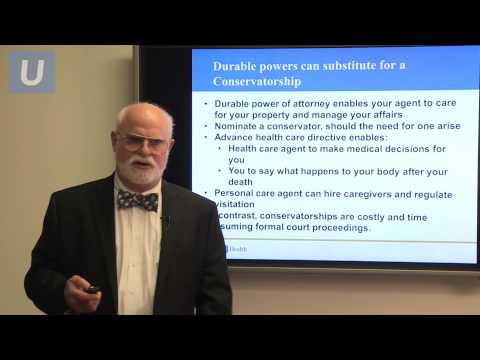 Elder Law: Protecting & Caring for Patients with Dementia | Marc B. Hankin | UCLAMDChatCovers legal aspects of advance care planning, including powers of attorney and asset protection, which are essential for comprehensive planning.
Background
Why Advance Care Planning Matters Now, Not Later
Dementia is a progressive condition that gradually erodes a person’s ability to understand, weigh options, and communicate their wishes. The Alzheimer’s Association advises that advance directives should be completed as soon as possible after a diagnosis of dementia. Waiting until later stages means the person may no longer have the capacity to make or communicate these decisions, leaving family members to guess what they would have wanted. This can create enormous stress, guilt, and conflict among loved ones at an already difficult time. By planning early, you honor your loved one’s autonomy and give them a voice in their own care, even when they can no longer speak.
What Advance Directives Actually Cover
Advance directives are legal documents that let a person document their preferences for medical treatment and end-of-life care. The two most common types are a living will and a durable power of attorney for health care. A living will spells out what treatments a person wants or does not want near the end of life, things like life-prolonging machines, feeding tubes, or resuscitation. A durable power of attorney for health care names a trusted person (a health care agent or proxy) to make medical decisions when the person cannot. These documents are not just for the very end; they also guide care during serious illnesses, infections, falls, or hospitalizations that are common in the middle stages of dementia. As one expert notes, advance directives help with many medical complications long before end-of-life issues arise.
The Conversation Is More Important Than the Paperwork
Many people think filling out a form is enough, but the real value comes from having ongoing conversations about what matters most. A simple advance directive form may only ask about a few scenarios, like being in a coma or a vegetative state, but real life is far more complex. As one care expert explains, the number of decisions at the end of life are far more complicated than what a state form covers. It is much more important to understand what quality of life means to your loved one: Is it most important that they are able to hold their grandbaby one last time, or that they live two more years even if that means being in a hospital bed? These conversations help you and your health care agent make decisions that truly reflect the person’s values, not just check boxes on a form.
Practical tools
4
The Conversation Project Starter Guide
A free, downloadable guide from theconversationproject.org that walks you through step-by-step questions to help your loved one think about and communicate their values.
Five Wishes
A plain-language advance directive (fivewishes.org) that is legally valid in most states and covers who makes decisions, the kind of medical treatment wanted, comfort preferences, how the person wants to be treated, and what they want loved ones to know.
State-Specific Advance Directive Forms (via AARP or American Bar Association)
Find the correct legal forms for your state at aarp.org or americanbar.org; each state has different witnessing and notarization requirements, and you generally do not need a lawyer to complete them.
POLST (Physician Orders for Life-Sustaining Treatment) Form
A medical order signed by a doctor that complements advance directives in the later stages of dementia, especially useful for guiding emergency and hospital care when immediate decisions must be made.
Different situations
Early-stage dementia (mild cognitive impairment)
This is the ideal time to start. Your loved one can still participate fully in conversations and sign documents. Focus on values and preferences while they can articulate them clearly. Complete all advance directives now, before capacity declines. Use the 'Five Wishes' tool to capture personal, emotional, and spiritual wishes alongside medical ones.
Middle-stage dementia (moderate cognitive decline)
Your loved one may still understand simple concepts but struggle with complex decisions. Keep conversations short and concrete. Use simple language: 'If you get very sick, do you want to go to the hospital or stay home with help?' You may need to rely more on what you know about their values from earlier conversations. If they cannot sign documents, you may need to use a 'health care proxy' form that only requires a witness, depending on state law.
Late-stage dementia (severe cognitive decline)
Your loved one can no longer participate in planning. You must rely on any previously expressed wishes or, if none exist, make decisions based on what you believe they would have wanted. The Alzheimer’s Association notes that in the absence of advance directives, family must act in the person’s best interest. Focus on comfort care and avoiding unnecessary hospitalizations. Discuss palliative care and hospice with the doctor.
Spouse as caregiver vs. adult child as caregiver
Spouses often know their partner’s values deeply but may struggle with the emotional weight of making decisions. Adult children may need more guidance to understand their parent’s values. In both cases, use conversation tools to draw out specific wishes. If the spouse is also elderly or has health issues, consider naming an adult child as backup health care agent to ensure continuity of care.
Lewy body dementia or frontotemporal dementia
These types often involve more rapid changes in cognition, behavior, and physical symptoms. Plan even earlier, as decision-making capacity can decline quickly. Discuss preferences for managing hallucinations, agitation, and falls. Also discuss whether they would want treatments like antipsychotics or hospitalizations for infections, as these decisions may arise sooner than in Alzheimer’s.
For the doctor
5
- Ask your loved one’s doctor: 'Given my loved one’s specific type and stage of dementia, what medical decisions are most likely to come up in the next year or two? How can we prepare for those in advance directives?'
- Discuss the pros and cons of do-not-resuscitate (DNR) and do-not-intubate (DNI) orders. These are separate from advance directives and should be reviewed each time your loved one enters a hospital or care facility.
- Ask about palliative care options: 'When would palliative care be appropriate for my loved one? Can we set up a consultation to discuss symptom management and quality of life?'
- Discuss voluntary stopping of eating and drinking (VSED) as an option near the end of life. This is a complex ethical and medical decision that requires careful discussion with the care team.
- If your loved one has a feeding tube or breathing machine mentioned in their living will, ask the doctor: 'Under what circumstances would these be considered medically appropriate or not? How do we ensure our wishes are followed in the hospital?'