Step by step
What not to do
- Do not use DIY online forms or fill-in-the-blank templates; they often miss state-specific requirements and can be rejected by courts.
- Do not wait until a crisis to start planning; if your loved one has lost capacity, you may face a costly conservatorship proceeding.
- Do not accept a generic or non-durable power of attorney; it must be explicitly durable and include authority for Medicaid planning gifts and transfers.
- Do not keep legal documents in a safe deposit box without listing a trusted person as co-owner or providing them a key, otherwise, the box may be sealed at death.
- Do not attempt Medicaid planning or asset transfers without professional help; mistakes can cause penalties, loss of benefits, or legal liability.
Key points
- Get legal documents in place while your loved one still has capacity, this is the only time they can sign them.
- DIY forms are risky and often invalid; invest in an elder law attorney who knows your state's laws.
- Essential documents: durable financial power of attorney, advance healthcare directive, will or trust, and POLST form.
- Keep all documents organized in a secure but accessible place, with digital and printed copies.
- Update documents every few years or after major life changes.
- Don't forget to update your own legal documents as a caregiver.
Videos
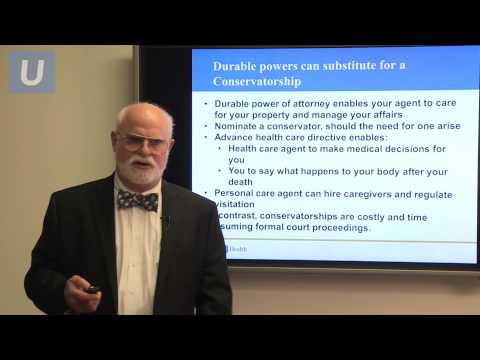 Elder Law: Protecting & Caring for Patients with Dementia | Marc B. Hankin | UCLAMDChatThis video explains the legal tools available to protect dementia patients, including conservatorships, asset protection, and how to avoid spousal impoverishment. It's a deep dive from an expert elder law attorney.
 Elena Sallitto, Esq. Owner & Principal at Stavely & Sallitto Elder LawElena discusses common mistakes people make with wills and estate plans, including the dangers of DIY forms. She emphasizes that 'you don't know what you don't know' and why professional guidance is essential.
 #6.3 What Can Be Done from Far Away: Long Distance Caregiving (3 of 5)This video offers practical advice for long-distance caregivers, including how to gather and organize legal documents remotely. It's a must-watch if you live far from your loved one.
 Caregiver Issues for Elderly AdultsPamela D. Wilson shares tips for talking about caregiver issues and planning for the future, including the importance of having legal documents in place before a crisis. Good for starting conversations with resistant family members.
2 more videos
 How to Avoid Paying for an Elderly Parent's Nursing Home BillThis video covers Medicaid planning and asset protection strategies, including how to properly document and submit applications. It highlights the need for professional help to avoid costly mistakes.
 How to Deal With Dementia and Family ConflictFamily conflict often arises around legal and financial decisions. This video offers strategies for communicating and resolving disagreements, which is crucial when getting everyone on the same page about estate planning.
Background
Why Legal Documents Matter Now, Not Later
Another critical reason to plan early is to protect assets from being drained by long-term care costs. Many families don't realize that even after a loved one passes away, there can be post-death long-term care costs if assets aren't properly structured. An elder law attorney can help you set up trusts or transfer assets in ways that comply with Medicaid rules, so that a healthy spouse isn't left impoverished. For example, under certain federal laws, you can get court orders to gift a home to the healthy spouse or divide assets to protect the family. This kind of planning is not something you can do with a DIY form, it requires a professional who knows the laws in your state.
The Real Risks of DIY Legal Forms
Another hidden danger is that DIY forms don't account for the complexities of dementia care. For instance, a standard healthcare proxy might not give the agent enough authority to make decisions about memory care placement or end-of-life choices. A financial power of attorney might not include the power to gift assets for Medicaid planning, which is a common strategy to protect the family home. An elder law attorney can tailor documents to your specific situation, such as including provisions for a special needs trust if you have a disabled child, or for transferring assets to avoid spousal impoverishment. These are not one-size-fits-all solutions.
Practical tools
3
Elder Law Attorney Meeting Prep Sheet
Before the first consultation, compile:
Also note any immediate concerns, such as an upcoming Medicaid application or a recent dementia diagnosis, so the attorney can prioritize advice and quote fees accurately.
Emergency Kit for Dementia Caregivers
A small bag or box containing:
Keep it near the door so you can grab it quickly for an ER visit or sudden placement.
Legal Documents Checklist for Your Care Notebook
A one-page checklist tracking:
Keep it in your care notebook and update it whenever a document is signed or changed.
Different situations
Early-stage dementia (patient can still participate)
This is the ideal time to get all documents signed. The person can still express their wishes and understand what they are signing. Involve them in every conversation. Use the 'Gentle Conversation Starter' script to reduce fear. Make sure the power of attorney and healthcare proxy are durable and include specific instructions about memory care preferences.
Late-stage dementia (patient cannot sign documents)
If your loved one has already lost capacity, you may need to pursue a conservatorship or guardianship through the court. This is expensive and time-consuming, but it may be the only option. An elder law attorney can help you navigate this process. You may also need to apply for Medicaid to cover long-term care costs. Gather all financial and medical records now.
Spouse as caregiver vs. adult child as caregiver
If you are the spouse, you may have additional rights to manage community property and make medical decisions, but you still need legal documents to avoid court involvement. If you are an adult child, you may face more resistance from your parent about sharing financial information. Be patient and use a trusted third party (like an attorney) to facilitate the conversation. Also, consider your own estate planning to protect your family if something happens to you.
Lewy body dementia or Parkinson's disease dementia
These conditions can cause fluctuating cognition, meaning the person may have good days and bad days. It is critical to get documents signed on a good day when they are lucid. Also, these diseases often involve hallucinations and motor symptoms, so the healthcare proxy should include specific instructions about medications (like antipsychotics) and fall prevention. Work with a neurologist who understands these nuances.
If your loved one is already in a nursing home or on Medicaid
You may need to work with the facility's social worker or a Medicaid specialist to gather the required documentation. Be prepared to provide birth certificates, marriage licenses, financial statements, and proof of assets. When you submit the application, always get a date-stamped receipt. If you are worried about asset protection, consult an elder law attorney before making any transfers, as improper gifts can result in Medicaid penalties.
For the doctor
4
- Ask your loved one's doctor: 'At what point in this disease will my loved one no longer have the capacity to sign legal documents? How can we assess capacity in a way that is valid for legal purposes?'
- Ask the doctor: 'Are there any specific medical conditions or medications that could affect my loved one's ability to make decisions? How can we plan around that?'
- If your loved one has a POLST form, ask the doctor: 'Is this form still appropriate given their current health status? Should we update it?'
- If you are considering a conservatorship, ask the doctor: 'Can you provide a letter or evaluation stating that my loved one lacks capacity? This may be needed for court.'