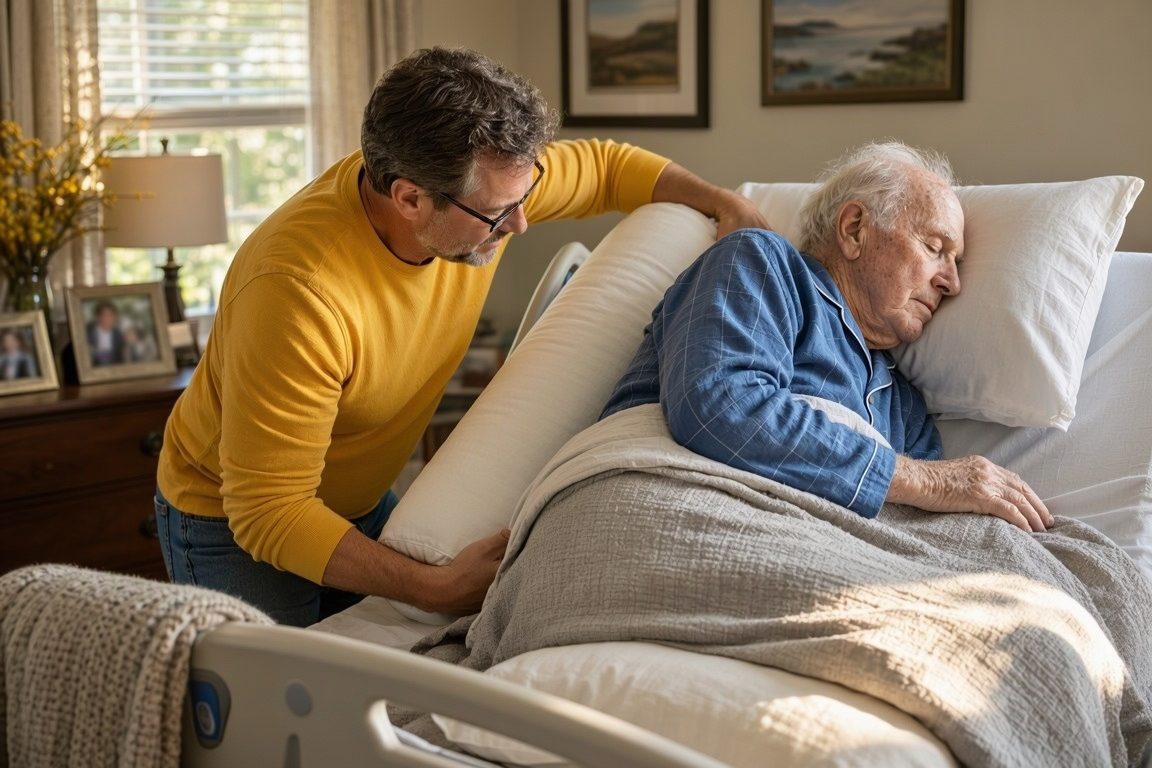
Step by step
What not to do
- Do not use donut-shaped cushions; use a flat pressure-relieving cushion instead.
- Do not massage reddened areas or bony prominences; gently reposition and relieve pressure from the spot.
- Do not leave a loved one in a wet or soiled brief; change every 2 hours or immediately after soiling and apply barrier cream.
- Do not clean skin with harsh soaps or rubbing alcohol; use a gentle, pH-balanced cleanser and pat dry.
- Do not ignore a red spot that does not fade when pressed; increase repositioning frequency and call a doctor if no improvement in a day.
Key points
- Reposition every 2 hours in bed and every hour in a chair to prevent pressure buildup.
- Check skin daily for redness that does not fade, this is the earliest sign of a bedsore.
- Keep skin clean and dry, especially after incontinence, and use a barrier cream.
- Use pressure-relieving surfaces like an alternating air mattress or gel cushion.
- Good nutrition and hydration help skin stay strong and heal faster.
- If you see a bedsore, call the doctor right away, do not wait for it to get worse.
Videos
 Tips to Prevent BedsoresThis video gives practical, visual demonstrations of repositioning techniques and products to prevent bedsores.
 Caregiver Training: Sleep Disturbances | UCLA Alzheimer's and Dementia Care ProgramGood sleep routines reduce nighttime wandering and help you maintain a consistent repositioning schedule.
 What Stage Of Dementia Is Incontinence?Understanding incontinence stages helps you plan for moisture management, a key factor in bedsore prevention.
 How to deal with DEMENTIA and INCONTINENCE WHILE SLEEPINGThis video offers strategies for managing nighttime incontinence to keep skin dry and reduce bedsore risk.


Background
What Are Bedsores and Why Do They Happen?
Bedsores, also called pressure ulcers, are injuries to the skin and underlying tissue caused by prolonged pressure on a bony area. In late-stage dementia, your loved one may be unable to shift their own weight in bed or a chair, so pressure stays on the same spots, often the tailbone, heels, hips, elbows, and shoulder blades. Even a few hours of uninterrupted pressure can begin to damage tissue. The skin may first look red, then blister or break open. If not caught early, bedsores can lead to serious infections like cellulitis, which causes swelling, pain, fever, and can spread to deeper tissues or the bloodstream. This is why prevention is so critical.
Why Late-Stage Dementia Increases the Risk
In late-stage dementia, your loved one may be mostly bedbound or confined to a chair. They may have incontinence, which keeps the skin moist and more vulnerable to breakdown. They may also have poor nutrition or dehydration, which weakens the skin's ability to repair itself. Additionally, they might not be able to tell you they are uncomfortable or in pain. Because of these factors, bedsores can develop quickly, sometimes in just a day or two. But you can take proactive steps to prevent them, and if you do see a red spot, catching it early means it can often heal before an infection sets in.
Practical tools
5
Alternating Air Pressure Mattress Topper
Pad with air cells that inflate and deflate in cycles to constantly shift pressure points. Effective for bedbound individuals.
Wheelchair Pressure-Relief Cushion
Gel or foam cushion to reduce pressure on tailbone and hips; some have a cut-out for the tailbone.
Waterproof Bed Pads (Chucks)
Washable or disposable pads that protect the mattress from moisture; washable versions are more cost-effective long-term.
Barrier Cream or Ointment
Zinc oxide or petroleum-based products that create a protective layer on moisture-prone areas after cleaning.
Pillows and Positioning Wedges
Firm pillows or foam wedges to support back, between knees, and under calves to lift heels off mattress.
Different situations
Late-stage Alzheimer's vs. Lewy body dementia
In Lewy body dementia, your loved one may have more rigidity and difficulty moving, so repositioning may be harder. They may also be more sensitive to touch or have visual hallucinations that make them resist being moved. Use a very calm, slow approach and speak in a low, reassuring tone. In Alzheimer's, they may be more passive but still resist due to confusion. The same repositioning schedule applies, but you may need to use more distraction or redirection.
Spouse vs. adult child caregiver
As a spouse, you may be more physically able to lift and reposition, but you also may be at risk for injury. Use a transfer belt or a slide sheet to reduce strain. As an adult child, you might be younger and stronger, but you may also have less experience. Watch videos on proper lifting techniques and consider asking a home health aide for a few sessions to teach you safe methods.
In a facility vs. at home
In a facility, staff should be doing regular repositioning and skin checks. You can advocate by asking to see the care plan and requesting a pressure-relieving mattress. At home, you are the primary person responsible, so set a timer on your phone to remind you every 2 hours. If you are the only caregiver, consider hiring a respite aide for a few hours a day to help with repositioning.
If your loved one is on Medicaid or has limited income
Some pressure-relieving mattresses and cushions may be covered by Medicaid or Medicare Part B if prescribed by a doctor. Ask your clinician about a 'group 2' or 'group 3' support surface. You can also look for gently used equipment on local buy-nothing groups or through hospice organizations. Many communities have equipment loan programs.
For the doctor
7
- Ask your doctor about prescribing a pressure-relieving mattress or cushion, especially if your loved one is at high risk.
- If you see a bedsore that is more than just redness (blister, open wound, or dark area), discuss treatment options immediately. Do not try to treat it yourself.
- Ask about nutritional supplements like protein shakes or vitamin C and zinc, which can support skin healing. Do not start any supplement without medical advice.
- If your loved one has diabetes or poor circulation, ask how these conditions affect bedsore risk and what extra precautions to take.
- Discuss pain management if your loved one seems uncomfortable during repositioning. They may need a mild pain reliever before a position change.
- Ask your doctor: 'Is it safe to let my loved one sleep without a brief at night to reduce moisture? What monitoring schedule do you recommend?'
- Ask your doctor: 'What specific barrier cream or ointment do you recommend for my loved one's skin type?'