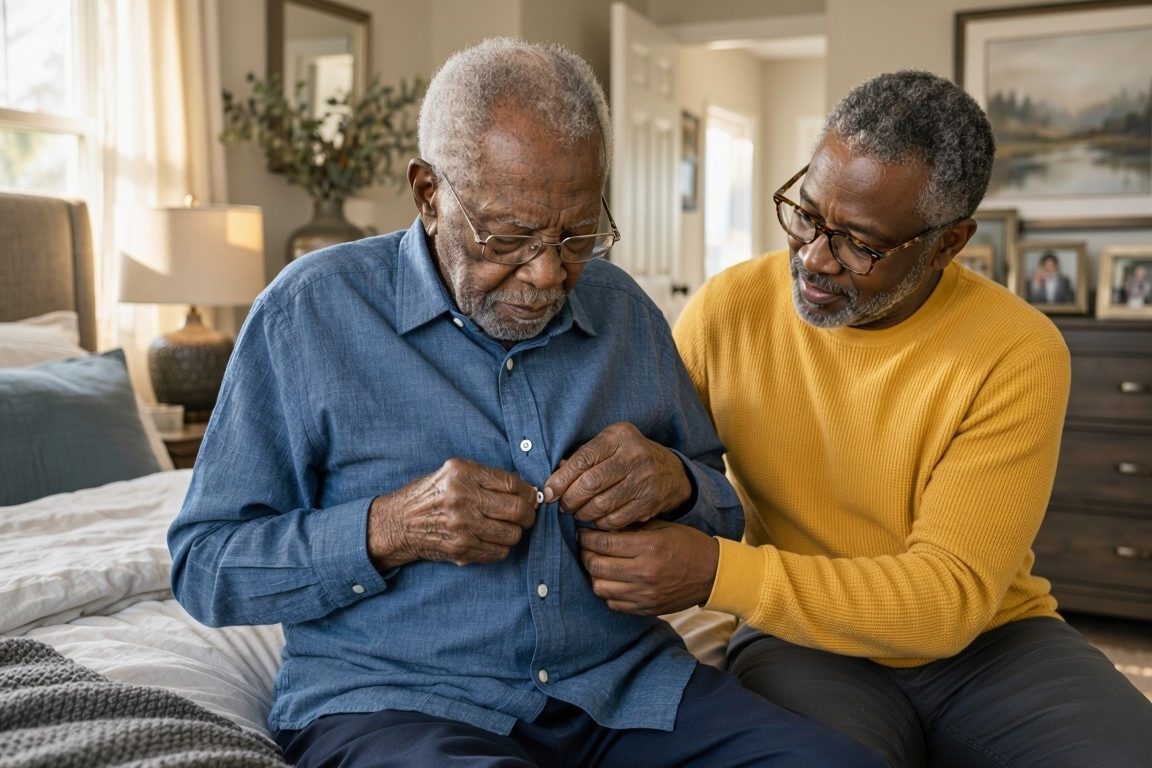
Step by step
What not to do
- Don't talk about them as if they aren't in the room.
- Don't use baby talk, pet names, or a condescending tone; speak to them as an adult.
- Don't take their confusion, anger, or accusations personally.
- Don't let caregiving consume you to the point of exhaustion.
Key points
- Dementia does not take away a person's dignity, our response to their changing abilities either protects or harms it.
- Use the 'broken arm' analogy: don't expect what their brain can no longer do, and adjust your approach accordingly.
- During hands-on care, keep them covered, narrate your actions, and offer choices to preserve their sense of control.
- Never correct or argue, step into their reality and redirect gently.
- Your calm, even tone of voice is one of the most powerful tools you have.
- Take care of yourself with respite and support, a rested caregiver gives more dignified care.
Videos
 Ep. 196: Dementia Does Not Rob a Person of Their Dignity...This video directly addresses the core belief that dignity is not lost to dementia but is preserved or harmed by how we respond. It offers the 'broken arm' analogy and practical mindset shifts.
 6 ways to make dementia care tasks easier: Respect and Dignity in dementia careProvides six concrete, actionable strategies for preserving dignity during hands-on care tasks like bathing, dressing, and toileting. Very practical for daily use.
 5 TIPS FOR TALKING TO YOUR LOVED ONE WITH DEMENTIAFocuses on communication techniques that preserve dignity, such as using a calm tone, offering choices, and avoiding corrections. Essential for reducing conflict.
 "Dementia does NOT rob someone of their dignity"A short, powerful reinforcement of the key message that dignity remains intact. Good for moments when you need a quick reminder or emotional boost.
2 more videos
 Amy Shaw, PA-C Founder of Better DementiaOffers a medical and practical perspective on preserving dignity, including tips for navigating doctor visits and advocating for your loved one.
 An Interview with the Team behind Dancing with Memories (A Children's Book on Dementia)Provides a gentle, humanizing view of dementia that can help you and your family see your loved one as a whole person, not just a diagnosis.
Background
Dignity Is Not Lost: It Is Preserved or Harmed by Our Response
A common and painful belief is that dementia itself robs a person of their dignity. But experts like Teepa Snow and the team at All Home Care Matters challenge this: dementia does not take away a person's inherent worth or dignity. What changes is their ability to do things they once did, and our reaction to that change can either protect or damage their sense of self. Think of it like a broken arm, you wouldn't ask someone with a broken arm to carry groceries, because you can see the limitation. With dementia, the brain is breaking in ways you can't see, but the same principle applies: you stop expecting what their brain can no longer deliver, and you adjust your approach to meet them where they are. This shift from frustration to acceptance is the foundation of dignity-preserving care.
Why Hands-On Care Feels So Threatening to Dignity
When you help someone bathe, dress, or use the bathroom, you are entering their most private, vulnerable space. Dr. Camille Sinclair describes clothing as our 'armor', removing it in front of another person, even a child or spouse, is deeply uncomfortable. For a person with dementia, who may not fully understand why they need help, this can feel like a loss of control, an invasion, or even a humiliation. Their resistance, pushing you away, saying no, becoming agitated, is often not about you, but about their own fear and confusion. The goal is to make them feel as safe, covered, and in control as possible. Every word you say, every gesture you make, either reinforces their personhood or chips away at it.
The Gap Between Expectation and Reality Creates Frustration
All Home Care Matters uses a powerful analogy: imagine you made a dinner reservation, but when you arrive, the restaurant has no record of it. The gap between what you expected and what is real creates frustration. In dementia care, that gap appears constantly, you expect your loved one to remember how to button a shirt, to walk to the bathroom in time, to understand your instructions. When they can't, both of you feel upset. Dignity preservation means closing that gap by lowering your expectations to match their current ability, not their past one. This is not about giving up; it's about meeting them in their reality so that they can succeed, feel capable, and maintain their self-respect.
Practical tools
4
The 'Broken Arm' Reframe
When frustrated they can't do something, ask yourself: 'If they had a broken arm, would I expect this?' This shifts frustration into compassion.
Dignity-Preserving Phrases for Hands-On Care
Use: 'I'm going to keep you covered,' 'You hold this washcloth while I wash your back,' 'You're doing great,' 'I've got you,' 'Would you like to try this first?'
Visual Cues for the Bathroom and Routines
A Short Script for When They Don't Recognize You
Take a breath, stay close, and say softly: 'I'm here. I love you. I'm going to take good care of you.' Do not argue or correct.
Different situations
For Lewy Body Dementia (LBD)
People with LBD are extremely sensitive to tone of voice and may become more confused or agitated if you speak loudly or sharply. Always use an even, calm tone. They may also have visual hallucinations; do not argue about what they see. Instead, say 'That must be unsettling for you. I'm here with you.' Also, they may fluctuate in ability from hour to hour, adjust your expectations moment by moment.
For Frontotemporal Dementia (FTD)
FTD often affects behavior and social judgment first, not memory. Your loved one may say or do things that seem rude or inappropriate. Respond with calm redirection, not correction. Avoid shaming them. Focus on preserving their emotional safety rather than enforcing social norms. Use simple, direct language and avoid abstract explanations.
For Late-Stage Dementia (bedbound, minimal verbal communication)
Dignity now is about physical comfort and sensory connection. Speak to them by name, tell them what you are doing before you do it, and use gentle touch. Keep them clean, dry, and free from pain. Play their favorite music. Assume they can hear and understand more than they can show. Your respectful presence is their dignity.
For an Adult Child vs. Spouse Caregiver
Adult children may struggle with role reversal, it can feel unnatural to help a parent bathe. Acknowledge this discomfort and give yourself grace. Use phrases like 'I'm here to help, Dad, just like you helped me when I was little.' Spouses may feel grief over the loss of their partner's former self. It's okay to feel sad. Both roles benefit from using the same dignity-preserving language, but spouses may need extra support to process their own loss.
For a Person Living in a Facility
Advocate for your loved one's dignity by sharing their life story with staff: their preferred name, hobbies, what calms them, what upsets them. Visit at different times of day to observe care. If you see rushed or impersonal care, speak up kindly but firmly. You are their voice. Also, bring familiar items from home, photos, a favorite blanket, to make their space feel like theirs.
Common questions
1
How can caregivers handle embarrassing behaviors in public?
If your loved one behaves in a way that feels embarrassing in public, take a slow breath and remind yourself their brain is no longer able to judge social norms, try gently redirecting their attention to something pleasant like a nearby flower or a bird, and focus on their comfort instead of others' reactions.
For the doctor
5
- Ask your doctor or occupational therapist about a toileting schedule that fits your loved one's specific needs, especially if they have urinary tract infections (UTIs) or mobility issues that increase fall risk.
- Discuss with your clinician whether pelvic floor exercises (Kegels) are appropriate for your loved one, and if so, how to adapt them for someone with cognitive impairment.
- If your loved one is resisting bathing or becoming aggressive during care, ask your doctor about possible underlying causes like pain, infection, or medication side effects that could be addressed.
- Ask about incontinence products (briefs, pads, bed protectors) that are most appropriate for your loved one's stage and skin health to prevent rashes or infections.
- Discuss with your clinician the use of any medications for anxiety or agitation that might help your loved one feel calmer during care tasks, never start or change medications without medical guidance.