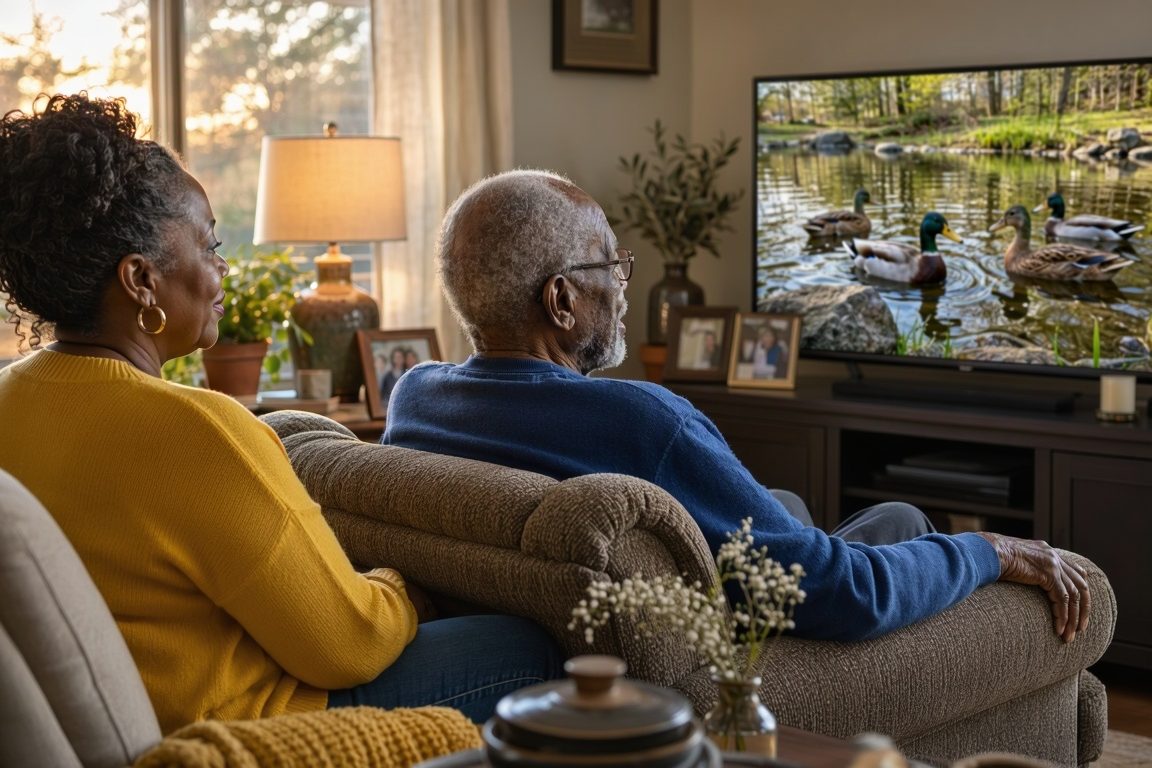
Step by step
What not to do
- Do not use a generic nature video from YouTube without personalization. A random video of a waterfall or forest may not engage the brain's emotional memory. It can feel like 'noise' rather than comfort.Instead, invest time in creating or using a service that tailors the film to your loved one's history.
- Do not start the film during active agitation. If your loved one is already pacing or yelling, they may not be able to focus on a screen. First, use calming words, a gentle touch, or a familiar object to de-escalate. Then, once they are slightly calmer, introduce the film as a transition.
- Do not leave the room while the film plays, especially in early stages. Your presence provides reassurance. If you walk away, they may feel abandoned or confused. Sit nearby, even if you are reading or doing quiet work. Your calm energy reinforces the film's message of safety.
- Do not force the film if they resist. Some days, they may not want to watch anything. Forcing it can create a power struggle.Instead, let the film play silently in the background, or try a different approach (like a short walk or a snack). The film is a tool, not a rule.
- Do not use the film as a substitute for addressing unmet needs. Sundowning can be triggered by hunger, pain, thirst, or needing the bathroom. Always check physical needs first. If they are hungry, offer a snack before the film. If they seem in pain, address that. The film works best when basic needs are met.
Key points
- Personalized nature films work by engaging positive memories and providing a predictable, calming sensory experience during the vulnerable sundowning window.
- Start the film 30 minutes before sundowning typically begins, not during active agitation.
- Use personal content (photos, voice recordings, favorite music) to make the film meaningful, generic videos are less effective.
- Create a calm environment: dim lights, close curtains, reduce clutter, and sit with them during the film.
- Track what works and adjust the film's content and timing based on their responses over days or weeks.
- Combine the film with other calming strategies (e.g., warm drink, gentle touch, quiet activity) for best results.
Videos
 Radio Show VoiceAmericaThis interview with the creator of Memory Lane TV explains how personalized films are made and why they work for sundowning. It includes real examples of patients calming during agitation.
 WCSH6 Memory Lane Channel 6A news segment showing a dementia patient using Memory Lane TV at home. It demonstrates the practical setup and the emotional impact of seeing familiar faces and places.
Background
What Is a Personalized Nature Film and Why Does It Help?
A personalized nature film is a short video, typically three to five minutes, that combines calming nature imagery (like sunsets, forests, or gentle streams) with elements from your loved one's own life: a favorite song, a photo of their dog, a voice recording of a family member, or scenes from a place they loved. This is not generic footage; it is assembled to match their personal history, tastes, and stage of dementia. The goal is to create a 'dream scene' that transports them to a safe, familiar mental space, replacing the anxiety and confusion of sundowning with calm and engagement.
Why Sundowning Happens and How Films Address the Root Causes
Sundowning is not a choice or a sign of 'bad behavior.' It is a neurological event triggered by brain changes that make it hard to process sensory information as daylight fades. The brain struggles to coordinate what the eyes see, the ears hear, and the body feels, leading to confusion, anxiety, and agitation. Shadows from setting sun, dim lighting, and environmental clutter can all worsen this. A personalized nature film works by providing a predictable, low-stimulus visual and auditory experience that bypasses the overwhelmed parts of the brain. The familiar images and sounds act as a 'temporal reference', for example, a sunset film shown at 5 PM gently signals that evening is coming, reducing the disorientation that fuels sundowning. This is not a cure, but a tool to help the brain find its footing in a confusing moment.
The Science of Calm: How Films Reduce Agitation
Research and caregiver reports show that calming videos, especially those with nature scenes and personalized music, can reduce agitation, aggression, and depression in dementia patients. When the brain is overwhelmed, it cannot reason its way out of fear or confusion. A film that triggers positive memories, like the smell of coffee, the sound of a loved one's voice, or the sight of a childhood home, can activate the brain's emotional centers in a soothing way. This is why generic videos often fail: they lack the personal connection that makes the brain feel safe. A film that includes a wedding photo or a favorite pet can evoke a sense of familiarity and comfort that generic nature footage cannot. The key is to use the film as a proactive tool, starting it about 30 minutes before sundowning typically begins, so the brain is already in a calm state when the challenging time arrives.
Practical tools
6
Memory Lane TV
A service that creates personalized films using your loved one's photos, videos, and voice recordings. You upload content (e.g., wedding pictures, pet videos, a family member's voice saying 'I love you'), and they assemble a 3-5 minute film with calming nature footage and music. They offer 'customized sessions' for specific times of day, sunset films for late afternoon, sunrise films for morning. This is ideal for caregivers who want a professional, low-effort solution. Cost varies, but many find it worth the investment for the calming effect.
DIY Personalized Film Checklist
If you prefer to create your own, follow this checklist:
Keep the pace slow, no quick cuts. Test it with them and adjust.
Calm Voice Script for Introducing the Film
Use these exact phrases to set the stage: 'It's getting late in the day. I have something special to show you, a little movie I made for us.' 'Let's sit here and watch the birds. They're so peaceful.' 'Remember that trip to the beach? I found a video that looks just like it.' 'I know the afternoon can feel confusing. Let's watch this together, and then we'll have a cup of tea.' Keep your voice low and slow. Avoid asking questions that require reasoning, like 'Do you want to watch this?' Instead, use gentle invitations.
Environment Setup for Film Viewing
This consistent setup becomes a cue that it is time to wind down, reinforcing the film's calming effect.
Sundowning Tracking Log
Use a simple notebook or a free app (like Carely or Dementia Tracker) to log: (1) Time sundowning symptoms start. (2) What you did (e.g., started film at 4:30 PM). (3) Their response (e.g., calmed within 10 minutes, or remained agitated). (4) Any triggers (e.g., they were hungry, or the room was too bright). Over a week, this log helps you see patterns and adjust the film timing or content. Share this log with their clinician if needed.
Alternative: Calming Music Playlist
If a film is not feasible (e.g., no screen available, or they dislike videos), create a 15-minute playlist of their favorite songs from their youth. Play it at the same time each day. Studies show that 30 minutes of music therapy at least three times a week can reduce agitation. Combine this with a nature sound machine (like a white noise machine with ocean or rain sounds) to create a similar sensory experience. The key is consistency and personalization.
Different situations
Lewy body dementia or Parkinson's dementia
These individuals are often more sensitive to visual stimuli and may experience visual hallucinations. Use films with very gentle, slow-moving images (e.g., a still lake, a sunset with no sudden changes). Avoid any footage that could be misinterpreted (e.g., shadows that look like people). Test a short clip first and watch for signs of distress. If they seem frightened, stop and try a different approach. Also, these conditions often cause more severe sundowning, so the film may need to be used earlier in the afternoon (e.g., 2 PM) and combined with other calming strategies.
Late-stage dementia (bedbound or minimally verbal)
The film can still be effective, but focus on auditory elements. Play the film's audio (e.g., a loved one's voice, soft music) through speakers near their bed. Use a tablet or small screen placed at eye level if they can see. Keep the film very short (2-3 minutes) and repeat it. Use gentle touch (holding their hand) while the film plays. The goal is sensory comfort, not engagement. Monitor for signs of agitation (e.g., grimacing, turning away) and stop if needed.
Spouse vs. adult child caregiver
As a spouse, you may have decades of shared memories to draw from. Use wedding photos, vacation videos, or recordings of your voice saying 'I love you.' The familiarity can be deeply soothing. As an adult child, you may need to ask other family members for photos or stories. Consider recording a message from a grandchild or a sibling. If your loved one is in a facility, coordinate with staff to ensure the film is played at the same time daily. You can also create a 'care package' of films for staff to use.
In a facility or hospice setting
Work with staff to find a quiet room or corner for film time. Use headphones if the environment is noisy (but check that they tolerate them). If they share a room, use a privacy screen. For hospice, focus on very gentle, short films (2-3 minutes) with soft music and a loved one's voice. The goal is comfort, not engagement. Discuss with the hospice team to ensure the film does not interfere with other care. You can also leave a tablet with pre-loaded films for staff to use.
Medicaid or low-budget situations
You do not need expensive services. Use free resources: download free nature videos from sites like Pexels or Pixabay, use a free video editor (e.g., OpenShot or iMovie), and record voice messages on your phone. Borrow a tablet from a library or use an old smartphone. Focus on one or two films that you can refine over time. The key is personalization, not production value. Even a simple slideshow of family photos set to their favorite song can be effective.
For the doctor
6
- If the film seems to increase agitation or cause distress, stop and consult their doctor. Some individuals may be overstimulated by certain images or sounds.
- If sundowning is severe and the film does not help after two weeks, ask their clinician about non-pharmacological alternatives (e.g., light therapy, aromatherapy) or whether medication might be appropriate as a last resort.
- If your loved one has a history of seizures or epilepsy, discuss whether flashing images (even slow ones) could be a trigger. Stick to very static scenes.
- If they have vision or hearing impairments, ask for guidance on how to adapt the film (e.g., larger screen, captions, or louder audio).
- If they are on medications for anxiety or sleep, ask whether the film could be used to reduce the need for those medications, and how to safely adjust doses if needed.
- If hallucinations are present, discuss whether the film might be misinterpreted (e.g., shadows or reflections) and how to choose safe content.