Step by step
What not to do
- Do not leave the home dim or dark during the day. This confuses the brain and can worsen sundowning.Instead, keep the home brightly lit with natural or artificial light throughout the daytime hours.
- Do not use harsh, flickering, or fluorescent lights. These can be overstimulating and cause visual discomfort or agitation.Instead, use steady, warm-toned LED bulbs or incandescent lights that don't flicker.
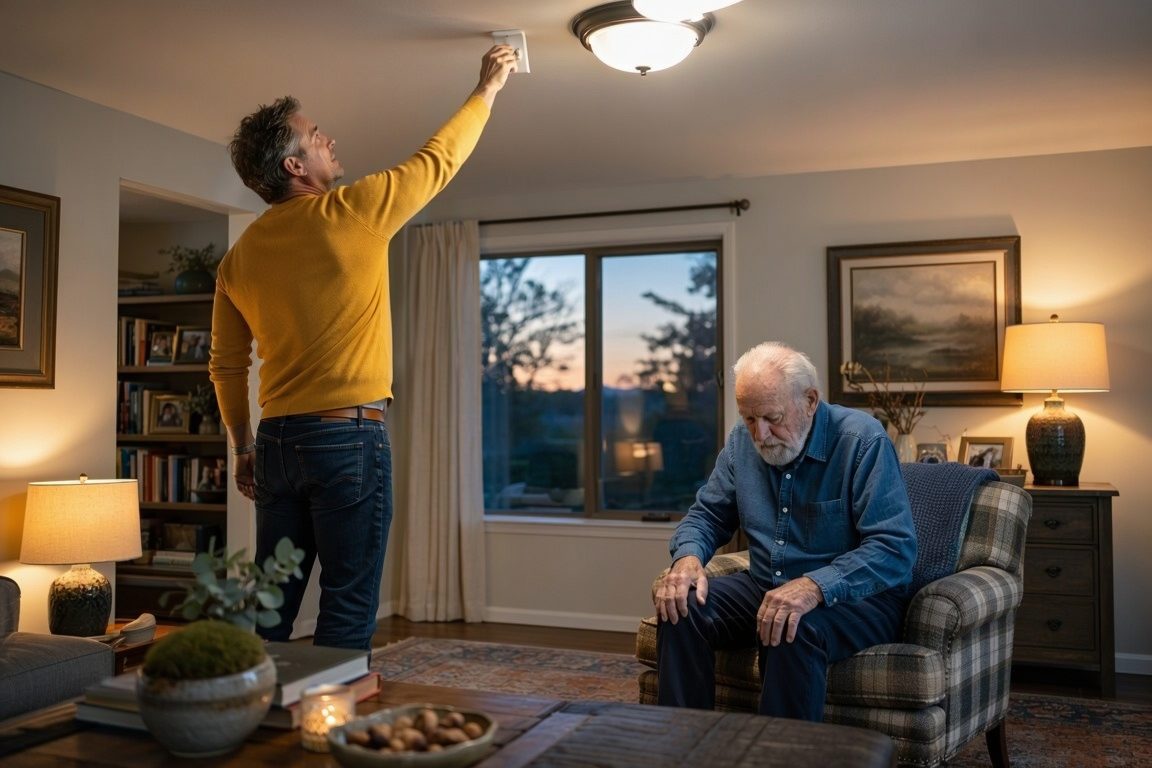
- Do not suddenly switch from bright to dark in the evening. This abrupt change can startle and disorient.Instead, gradually dim lights over 30-60 minutes starting around 4:00 PM to ease the transition.
- Do not let your loved one watch TV or use screens close to bedtime. Blue light from screens suppresses melatonin and delays sleep.Instead, turn off all screens at least one hour before bed and engage in a calming, screen-free routine.
- Do not ignore shadows or glare in the environment. These can cause fear, confusion, and agitation.Instead, use multiple light sources to create even, shadow-free lighting, and use shades or diffusers to reduce glare.
- Do not rely on a single light source in a room. A single lamp can create harsh shadows and uneven lighting.Instead, use multiple lamps or overhead lights to evenly illuminate the entire space.
Key points
- Morning bright light (natural or from a light box) for 10-30 minutes helps reset the circadian rhythm and reduce sundowning.
- Switch to warm, dim lighting (amber or red tones) starting around 4:00 PM to signal the brain that evening is coming.
- Eliminate all screens (TV, tablets, phones) at least one hour before bedtime to avoid blue light disrupting sleep.
- Use blackout curtains in the bedroom for complete darkness at night, and warm nightlights to prevent falls without disturbing sleep.
- Keep lighting even and shadow-free throughout the home to reduce confusion, fear, and agitation.
- Consistency is key: a predictable daily light routine trains the brain over time to expect sleep at night and wakefulness during the day.
Videos
 Sundowning In Dementia: What Role Does Light Play? - Dementia Help HubExplains the science of how light affects the circadian rhythm and sundowning, with practical tips for using light therapy.
 Can Light Exposure Reduce Sundowning In Dementia? - Dementia Help HubDiscusses the evidence for bright light therapy and how to implement it safely at home.
 What Is Sundowning Syndrome And How To Help Dementia Patients? - Dementia Help HubCovers the basics of sundowning and includes lighting as a key management strategy.
 Dementia Worse in the Evening? Sundowning Explained + What to Do in the Moment | Dr. Khushboo VermaProvides actionable in-the-moment strategies for calming sundowning, including lighting adjustments.
2 more videos
 Coping with Sundowning & Sleep Issues as a Dementia CaregiverAddresses caregiver stress and offers a holistic approach to managing sleep and sundowning, with lighting as a core component.
 How to improve sleep in dementiaFocuses on sleep hygiene and the role of light, temperature, and routine in improving sleep quality.
Background
Why Light Matters for the Dementia Brain
The body's internal clock, or circadian rhythm, relies on light to know when to be awake and when to sleep. In dementia, the brain's ability to process these light cues becomes impaired, leading to confusion, agitation, and restlessness in the late afternoon and evening, what we call sundowning. Think of it as the brain losing its sense of time because it's not getting the right visual signals. Bright light exposure in the morning helps kickstart the clock, signaling 'daytime,' while dim, warm light in the evening tells the brain to begin winding down for sleep.
How Shadows and Glare Trigger Confusion
For someone with dementia, shadows and glare are not just visual nuisances, they can be deeply disturbing and even frightening. A shadow on the wall might look like a person or an animal, triggering fear or anxiety. Glare from a bare bulb or a shiny floor can cause disorientation and make it hard to see clearly. This confusion often escalates into agitation, aggression, or a feeling of loss of control. Keeping lighting even, shadow-free, and without harsh contrasts is essential to creating a calm, safe environment.
The Role of Sensory Overload and Evening Wind-Down
A dementia-affected brain works hard all day processing sensory input, noise, activity, conversations. By late afternoon, that brain can hit its limit, making it more vulnerable to sundowning. The right lighting in the evening acts as a powerful cue to start winding down. Warm, amber-toned light (similar to a sunset) signals the brain to produce melatonin, the sleep hormone. This is why switching to dim, warm lights around 4:00 PM can make a significant difference in preventing the evening agitation.
Practical tools
6
Light Therapy Box
A light box that emits light about 30 times brighter than regular indoor lighting (10,000 lux). Use it in the morning for 30-60 minutes, placed at a distance where the light reaches the eyes but is not stared at directly. This mimics natural sunlight and helps reset the circadian rhythm. Look for one that filters out UV rays.
Warm Amber or Red LED Bulbs
Replace standard bulbs in lamps used after 4:00 PM with bulbs that have a color temperature of 2700K or lower (warm white) or even red/amber bulbs. These emit minimal blue light and support melatonin production. Use them in table lamps, floor lamps, and nightlights.
Blackout Curtains
Thick, light-blocking curtains for the bedroom to ensure complete darkness at night. This prevents early-morning light from waking your loved one and helps maintain deep sleep. Choose curtains that are also noise-reducing if possible.
Automatic Dimmer Switches or Smart Bulbs
Install dimmer switches or use smart bulbs (like Philips Hue) that can be programmed to gradually dim and change color temperature throughout the day. Set them to be bright and cool in the morning, then automatically shift to warm and dim in the late afternoon. This removes the need for manual adjustments.
Nightlights with Amber or Red Glow
Place low-wattage amber or red nightlights in hallways, bathrooms, and the bedroom. These provide enough light to prevent falls and reduce fear of the dark without disrupting sleep. Avoid blue or white nightlights.
Morning Light Routine Checklist
A simple checklist to follow each morning:
Post this on the fridge as a daily reminder.
Different situations
Lewy body dementia or Parkinson's dementia
These individuals are often very sensitive to light and may find bright light overwhelming or even hallucinogenic. Start with lower-intensity light therapy (e.g., 2,500 lux) for shorter periods (15 minutes) and monitor for agitation. Use warm, dim lighting earlier in the afternoon (by 3:00 PM) and avoid any flickering lights. Nightlights should be very dim and placed low to avoid casting shadows that might be misinterpreted.
Late-stage dementia (bedbound or very limited mobility)
If your loved one cannot go outside, position their bed near a window so they receive natural light during the day. Use a light therapy box placed on a nearby table for 30 minutes in the morning. Keep the room evenly lit during the day and use blackout curtains at night. A consistent routine of opening curtains in the morning and closing them at dusk can still provide a visual cue.
Spouse caregiver vs. adult child caregiver
Spouse caregivers may need to adapt their own habits (e.g., watching TV in the evening) to support the lighting changes. Consider using headphones for the spouse if they want to watch TV while the loved one is in a different room with dim lighting. Adult children may find it easier to implement smart home technology (timers, smart bulbs) to automate the lighting schedule, reducing the burden of manual adjustments.
Memory care facility setting
Advocate for the facility to use circadian lighting systems that automatically adjust color temperature and brightness throughout the day. Request that your loved one's room has blackout curtains and that staff follow a consistent morning light exposure routine. If possible, bring a personal lamp with a warm bulb for their bedside table to use in the evening.
Medicaid or limited budget
You don't need expensive smart bulbs. Use inexpensive warm-toned LED bulbs (2700K) from a dollar store. Open curtains and blinds fully during the day. Use a free light therapy app on a tablet (placed at a safe distance) as a low-cost alternative to a light box. Blackout curtains can be made by hanging dark blankets over curtain rods.
For the doctor
5
- Ask your doctor if a low dose of melatonin (0.5-3 mg) might be safe and helpful for your loved one, especially when combined with morning light therapy.
- Discuss any medications that might be contributing to sleep issues or sundowning, such as certain antidepressants, antipsychotics, or medications for high blood pressure.
- If sundowning comes on suddenly or worsens, ask the doctor to check for a urinary tract infection (UTI), dehydration, or other medical conditions that can mimic or worsen sundowning.
- Before using a weighted blanket, ask the doctor if it is safe for your loved one, especially if they have respiratory issues, circulatory problems, or are unable to remove it themselves.
- Ask about the possibility of a sleep study if your loved one has severe sleep disturbances, as sleep apnea can contribute to sundowning and cognitive decline.