Step by step
What not to do
- Do not play music constantly in the background; it becomes noise. Use it intentionally for specific times and moods, then turn it off.
- Do not use unfamiliar, fast, or loud songs; they can cause confusion or agitation. Stick to personal favorites from their past.
- Do not force participation. If they resist singing or holding an instrument, let it go, receptive listening still benefits. Let them lead.
- Do not use music during meals if swallowing is a risk; singing or animation can increase aspiration. Keep it quiet, familiar, and low in volume.
- Do not expect a miracle every time. Music is a tool, not a cure; some days it will not work. Try different songs and times without discouragement.
Key points
- Music therapy is a professional, goal-oriented intervention led by a trained therapist; passive listening is a simpler, everyday tool you can use at home.
- Active music therapy (singing, playing instruments) engages the brain more deeply; receptive therapy (listening) calms the nervous system. Both have value.
- Always choose music that is personally meaningful to the person, not just generic 'relaxing' music.
- Observe and document reactions to find what works best for your loved one. Use a simple log.
- Keep sessions short (5-10 minutes) and use music intentionally, not as constant background noise.
- Adapt your approach based on the stage and type of dementia, and always prioritize safety (e.g., avoid music during meals if there is a choking risk).
Videos
 An Interview with Music Therapist Alexis Baker MT-BCHear directly from a professional music therapist about the difference between active and passive music, and how she works with people with dementia.
 The Statistical Case for Music Therapy in DementiaThis video breaks down the research showing that music therapy improves global cognition and reduces depression, with clear numbers you can understand.
 Connecting Through Music in Dementia CareA practical, heartwarming look at how music can create moments of connection even in late-stage dementia.
 The Baffled Brain: Demystifying Dementia Episode 21Teepa Snow explains how music can guide the brain toward calm or alert states, and why passive listening is still valuable.
2 more videos
 Top 5 Indoor Activities for Seniors with Dementia (For Free)Includes simple music-based activities you can do at home without spending money, like dancing and karaoke.
 Ep. 255: Using Music as a PrescriptionExplores how music can be used like a medication, with specific 'doses' and timing for different symptoms.
Background
What Is Happening in the Brain?
Music is not just a pleasant sound; it is a full-brain workout. When we listen to music, different parts of the brain light up at once: the areas that handle rhythm, melody, harmony, and (if there are lyrics) language. This is why a single song can unlock a memory or a feeling that seems otherwise lost. In dementia, the brain is slowly losing connections, but music travels along many pathways at once, so it can often reach parts of the brain that are still healthy. This is why someone who cannot remember what they had for breakfast can still sing along to a song from their youth. The brain stores memories in a web, and music can be the thread that pulls a memory to the surface.
Active vs. Receptive: The Core Difference
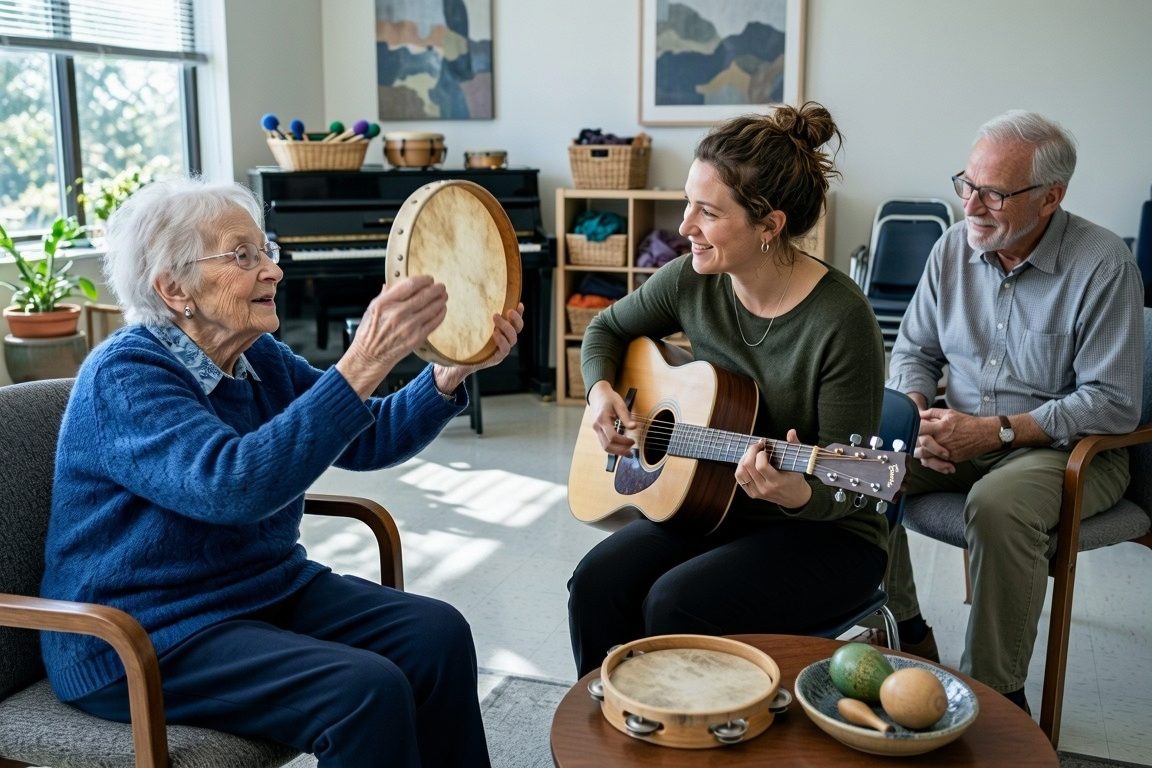
The main distinction between music therapy and simply playing music is the level of active participation. Active music therapy involves the person doing something: singing out loud, tapping a drum, pressing piano keys, or moving rhythmically. This forces the brain to work harder, activating complex networks for hearing, planning, and motor control. Receptive music therapy, on the other hand, is passive listening. The person sits or lies down and lets the music wash over them. This is not 'less than' active therapy; it works through a different pathway. Receptive listening can slow the heart rate, lower blood pressure, and calm the nervous system. Both approaches are valuable, but they serve different goals. A trained music therapist knows how to choose and switch between them based on the person's mood, energy, and needs.
Why a Trained Therapist Matters
A music therapist has at least four years of university training in how to use music to achieve specific clinical goals. They are not just playing songs; they are observing the person's reactions, adjusting the tempo, choosing instruments, and using their voice and presence to invite engagement. A therapist can work with someone who is agitated, withdrawn, or even non-verbal, and find a way to connect. When you play a YouTube video at home, you are providing a passive experience. That is fine for relaxation, but it is not the same as a therapist who can read the room and respond in real time. That said, you can still learn from the therapist's approach: the key is to be intentional, observant, and responsive.
Practical tools
6
Music Snapshot Log
Keep a notebook or phone note. Record date, time, song, mood before/after, and reaction (e.g., 'smiled,' 'tapped foot'). Patterns emerge within a week to guide song choice and timing.
Personalized Mood-Based Playlist
Build 10–15 songs from their youth (streaming service or CD), organize by purpose: 'Calm Down,' 'Wake Up,' 'Happy.' Make a clear favorite your go-to for difficult moments.
Simple Instrument Kit
Keep
in a basket near their chair. The physical act of shaking or tapping is grounding. If they cannot hold it, you play it near them and invite joining.
Calm-Down Protocol
At first sign of sundowning (agitation, pacing), switch to receptive listening with a historically calming song. Sit with them, hold their hand if allowed, and say softly: 'I am here. You are safe. Let us listen to this song together.'
Just-Start-Playing Script
Say: 'I found a song I think you will like. Let us listen together.' Avoid asking 'Do you want to listen?', a confused 'no' is likely. Start music softly and sit beside them; your presence is the invitation.
Headphone Trial (Optional)
If they tolerate headphones, offer a two-minute trial with a familiar, calming song. Watch for discomfort; build duration gradually. Never force on someone who resists.
Different situations
Early stage Alzheimer's or dementia
In early stages, the person can still express preferences and even help create their own playlist. Involve them in choosing songs. Active music therapy (singing, playing an instrument) can be more engaging and may help maintain cognitive function longer. Use music as a way to reminisce and share stories.
Middle to late stage
As the disease progresses, receptive listening often becomes more appropriate. The person may no longer be able to sing or follow instructions. Focus on calming, familiar music. Use it to reduce agitation and support sleep. In late stages, even a gentle hum or a lullaby can provide comfort. Be prepared for the person to fall asleep during music; that is a positive sign of relaxation.
Lewy body dementia
People with Lewy body dementia can be very sensitive to sensory input. Music that is too loud, fast, or complex can trigger confusion or hallucinations. Start with very soft, simple, familiar music. Observe closely for any signs of distress. Receptive listening is often safer than active participation. Discuss with a clinician before using music if the person has a history of severe reactions to sound.
Frontotemporal dementia (behavioral variant)
This type often involves changes in personality and loss of interest (apathy). Music may not have the same emotional pull as in Alzheimer's. Try different genres and observe. Some people with FTD respond well to rhythmic, upbeat music that can help with motivation. Others may be indifferent. Do not force it. Use music as a gentle invitation, not a demand.
Caregiver is an adult child vs. spouse
Adult children may have an easier time being objective and trying new approaches. Spouses may feel a deep emotional connection to 'their' songs and may need to separate their own grief from the person's needs. If you are a spouse, consider asking a friend or another family member to help create the playlist. It can be too painful to hear 'your song' when your partner no longer recognizes you.
In a facility vs. at home
At home, you have full control over the environment and can tailor music to the moment. In a facility, you may need to coordinate with staff. Ask the activities director if they have a music therapist or if you can provide a device with a playlist. Label the device clearly with the person's name and instructions (e.g., 'Play this at 4 PM for sundowning'). Be prepared that staff may not have time for active engagement, so a simple playlist may be the most practical option.
For the doctor
5
- If your loved one has a history of seizures, ask the doctor if music (especially rhythmic or repetitive music) could trigger a seizure. Some types of music can be overstimulating for certain brain conditions.
- If your loved one has severe hearing loss, ask about the safest way to use headphones or amplified speakers. Improper use could cause further hearing damage.
- If your loved one is on medications that affect heart rate or blood pressure, ask if receptive music therapy (which can lower heart rate) might interact with those medications. This is generally safe, but it is good to be aware.
- If your loved one has a history of severe agitation or aggression, ask if a music therapist should be involved before you try active music therapy at home. A therapist can help you avoid triggering a negative reaction.
- If your loved one has difficulty swallowing (dysphagia), ask the doctor or speech therapist about the safety of singing or laughing while eating. You may need to keep music off during meals.