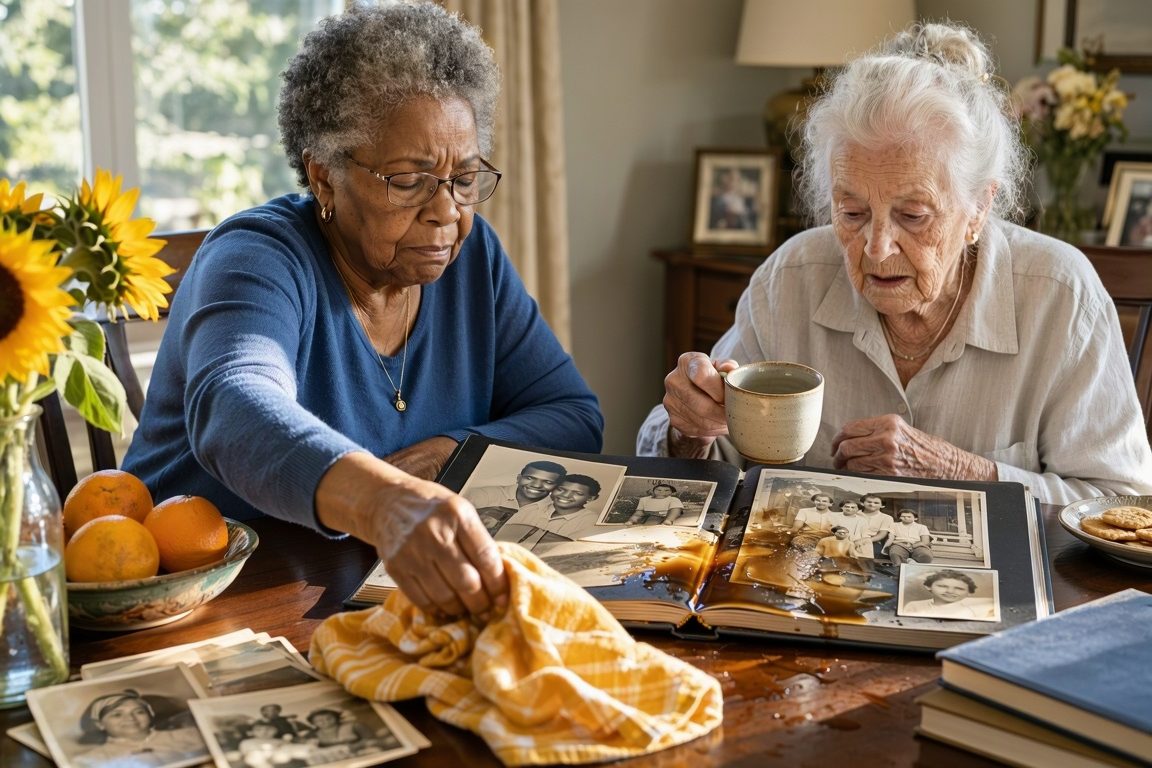
Step by step
What not to do
- Do not yell, scold, or use a harsh tone, people with dementia are highly sensitive to tone and facial expression; a sharp voice will frighten or agitate them.
- Do not try to reason, lecture, or explain why what they did was wrong, they cannot process logic or remember the lesson, and arguing only frustrates both of you.
- Do not take the ruined item personally or hold a grudge, they will not remember the incident but will remember your angry face, and no object is worth damaging the relationship.
- Do not punish or use consequences like taking away privileges, they cannot connect the punishment to the action, and it is ineffective and unkind.
- Do not compare their behavior to how they used to be, this only deepens grief; accept the disease has changed them and meet them where they are today.
Key points
- Your anger is a normal response to an incredibly difficult situation, not a sign of failure.
- Your loved one's behavior is caused by brain damage, not by a desire to upset you.
- Taking a brief pause or leaving the room is a smart strategy, not abandonment.
- Using a calm voice and gentle body language can prevent the situation from escalating.
- Self-care is essential: you cannot pour from an empty cup. Prioritize your own needs regularly.
- Forgive yourself for moments of anger. What matters is how you choose to respond next time.
Videos
 Dementia Caregiver AngerThis video directly addresses the caregiver's own anger, validating the emotion and offering practical strategies to manage it.
 217. 3 Dementia Caregiver Tips: How To Control Anger, Deal With Paranoia & SundowningProvides three concrete tips for controlling anger, which is exactly what you need when you feel a flash of rage.
 What Stage of Alzheimer's is Anger?Helps you understand that anger in your loved one is a symptom of the disease's progression, reducing the personal sting.
 What To Do With A Violent Dementia PatientOffers safety-focused steps for when anger escalates to violence, which is a worst-case scenario you need to be prepared for.
2 more videos
 Dementia and Anger Outbursts (3 Mistakes That You're Making)Highlights common caregiver mistakes that can trigger anger in your loved one, helping you avoid those pitfalls.
 Aggressive Behavior in People with Dementia | Linda Ercoli, PhD | UCLAMDChatA professional, research-based explanation of why aggression happens and how to respond, giving you confidence in your approach.
Background
Why This Anger Happens (And Why It Is Not Your Fault)
Feeling angry when your loved one ruins something is a natural human reaction, especially when you have already given so much of your time, energy, and patience. According to dementia care experts, caregiver anger often comes from a place of exhaustion and loss. You may be mourning the person your loved one used to be, the freedom you once had, or the simple fact that you cannot fix this. When you put your own needs last day after day, resentment builds, and that resentment can explode over a spilled drink or a torn photograph. The anger is not really about the mess; it is about the accumulation of stress, the feeling of being trapped, and the unfairness of the situation. Recognizing that this anger is a symptom of caregiver burnout, not a character flaw, is the first step to managing it.
The Real Reason Your Loved One Ruined Something (It Is Not on Purpose)
It is easy to feel like your loved one is doing things deliberately to upset you, especially when they seem to have moments of clarity. But dementia damages the parts of the brain that control impulse, judgment, and memory. When your loved one knocks over a vase, spills food, or tears a page out of a book, they are not being malicious. They may be frustrated because they cannot complete a simple task, confused by their surroundings, or simply unaware of what their hands are doing. As one expert puts it, people with dementia do not realize they have limitations, and they cannot control their reactions when they feel overwhelmed. The behavior is a symptom of the disease, not a personal attack. Shifting your mindset from 'they are doing this to me' to 'they are struggling with a broken brain' can help you respond with empathy instead of anger.
How Your Own Anger Can Make Things Worse (And What to Do Instead)
Here is a hard truth: your anger can actually trigger more anger and agitation in your loved one. People with dementia are extremely sensitive to tone of voice, facial expressions, and body language. If you walk into the room frowning, sighing loudly, or speaking in a sharp tone, your loved one may pick up on that negative energy and react with confusion or aggression. They may not understand your words, but they will feel your frustration. This can create a vicious cycle where you get angrier, they get more upset, and the situation spirals. The alternative is to take a deep breath, soften your face, and use a calm, gentle voice. Even if you are boiling inside, acting calm on the outside can help de-escalate the moment and keep your loved one from feeling attacked.
Practical tools
4
Pause and Reframe Mantra
Write a short phrase like 'This is the disease, not them' on a sticky note on the fridge or in your phone's notes app. Say it out loud three times before responding to anger.
Five-Minute Break Protocol
When anger rises, calmly say 'I need to check something in the other room. I'll be right back.'
This prevents an outburst.
Mess Kit Preparedness Bag
Keep a small tote stocked with
in an easy-to-reach spot so you can clean up without scrambling for supplies.
Redirect and Connect Script
Memorize blame-free phrases like 'Oh, look at that! Let's fix it together' or 'That was surprising, let's go look at the birds while I clean.' This keeps interaction positive and protects dignity.
Different situations
If your loved one has Lewy body dementia (LBD)
People with LBD often experience vivid hallucinations, delusions, and extreme fluctuations in alertness. They may become angry or paranoid about things that are not real. When they 'ruin' something, it may be because they were reacting to a hallucination (e.g., they thought a shadow was a person). Do not argue about the reality of the hallucination. Instead, validate their fear: 'I can see you are scared. Let's move to a safer spot.' Then clean up later. Also, be aware that LBD can cause sudden changes in blood pressure and mobility; ensure the area is safe from falls.
If you are an adult child caring for a parent
You may have a history of conflict or resentment from childhood that gets triggered. When your parent ruins something, you might feel like a helpless child again. Recognize this dynamic and remind yourself: 'I am the adult now. I can choose how I respond.' It can help to say to yourself, 'This is not the parent who raised me; this is a person with a brain disease.' Consider joining a support group for adult-child caregivers to process these feelings.
If you are a spouse or partner
The loss is profound because you are losing your life partner. When your spouse ruins something meaningful (like a wedding photo or a gift), the grief can be overwhelming. Allow yourself to feel that grief separately from the anger. Set aside time to mourn the loss of your partner as they were. Also, be aware that your loved one may still have moments of clarity and may feel ashamed later. If they seem upset, reassure them: 'It's okay, accidents happen. I love you.'
If your loved one is in the late stages of dementia
In late stages, your loved one may have very limited ability to understand or control their actions. They may not even realize they have made a mess. Your anger is likely coming from exhaustion and grief, not from the behavior itself. Focus on safety and comfort. Use very simple, soothing words. If you feel angry, step away and remind yourself that your loved one is not aware of what happened. Your main job is to keep them calm and clean.
If you are caring for someone with frontotemporal dementia (FTD)
FTD often affects the frontal lobes, which control impulse, judgment, and social behavior. Your loved one may do things that seem deliberately rude or destructive, like throwing food or breaking objects. This is still a symptom of the disease, not a personal attack. They may have lost the ability to feel remorse or understand consequences. Do not try to make them apologize or 'learn a lesson.' Instead, remove triggers (e.g., keep breakables out of reach) and use redirection. Be extra patient with yourself, as FTD behaviors can be especially hard to handle.
For the doctor
4
- If you find yourself feeling angry or resentful most days, talk to your doctor or a therapist about caregiver burnout. They can help you find resources like respite care, counseling, or medication for anxiety or depression.
- If your loved one's behavior is becoming dangerous (e.g., throwing heavy objects, hitting, or breaking windows), discuss with their doctor whether medication adjustments or a change in care setting is needed. Do not try to manage violence alone.
- If you are having thoughts of harming yourself or your loved one, call a crisis hotline immediately (e.g., 988 in the US) and speak to a professional. This is a sign that you need urgent support, not a failure on your part.
- If your loved one is on medications that may be contributing to agitation (e.g., certain sleep aids or antipsychotics), ask their doctor for a medication review. Some drugs can worsen confusion or aggression.