Step by step
What not to do
- Don't turn non-care moments into teaching, if they struggle with a task, don't correct; say 'That's perfect, thank you.'
- Don't ask 'Do you remember?', it pressures and can cause shame; instead narrate what you experience ('This photo makes me think of that picnic').
- Don't force connection when they are agitated or in pain, address discomfort first or try a calming sensory activity (slow hand massage, soft music).
- Don't argue with their version of reality, if they say something untrue, validate the feeling and gently redirect rather than correct.
- Don't expect a big reaction; a quiet glance, shoulder relaxation, or comfortable silence is a win.
Key points
- Schedule at least one 10-15 minute 'care-free' window each day where you do nothing but be together.
- Offer one genuine compliment or kind word daily, something true about them, not about their illness.
- Use gentle, non-care touch like hand massage to build trust and safety.
- Keep activities short (3-5 minutes) and open-ended; the goal is connection, not completion.
- Avoid asking 'Do you remember?', instead, narrate what you are experiencing.
- Take care of your own emotions; if you are frustrated, step away and breathe before re-engaging.
Videos
 Becky Reel, Founder of Reel Home Care ConsultingOffers practical advice on building genuine human connection in care settings, especially for professional caregivers but applicable to family caregivers.
 3 THINGS THAT HELP SOMEONE WITH DEMENTIA BE MORE ACCEPTING OF YOUR CAREDirectly covers the three strategies (non-care activity, compliments, helping without highlighting) that are the foundation of this article.
 Communication Do's & Don'ts in Late Stage DementiaTeaches how to communicate through touch, tone, and presence when words are no longer possible, essential for late-stage connection.
 Experiencing Caregiving as Spiritual Practice with Dr. Edward Smink (Mini-Series Part 3 of 3)Explores how caregiving can be a source of meaning and connection, not just stress, helps reframe non-care moments as sacred time.
2 more videos
 DEMENTIA friendly activities to do indoorsProvides specific, low-prep indoor activities that can be used for non-care moments, especially useful in bad weather or when mobility is limited.
 Lori Lemasters, Founder of Care Partners Resource & AuthorShares caregiver strategies for maintaining relationship and reducing burnout, with emphasis on the emotional side of care.
Practical tools
3
The 'Three-Minute Photo' Ritual
Keep 5-10 happy-time photos in a small album. Set a timer for three minutes, sit beside them, point to one photo and say one simple sentence (e.g., 'There we are at the beach'). Don't ask questions. After three minutes, close the album and say 'That was nice.' The short window reduces overwhelm.
Hand Massage with Lotion
Use a mild, familiar scent (lavender or their old perfume). Warm lotion in your hands, then gently massage their hand, palm, and fingers with slow, firm strokes while saying 'Your hands work so hard, let me take care of them.' This builds positive touch separate from bathing or dressing.
A 'Connection Kit' of Sensory Items
Put together a box with meaningful items:
Bring it out for a few minutes and explore one item together, describing what you see/feel, 'This scarf is so soft; I remember you wearing something like this.'
Different situations
Early stage (still aware of diagnosis)
In early stage, the person may feel embarrassed or frustrated by their memory lapses. Avoid any activity that feels like a test. Instead, ask them to teach you something, a recipe, a card game, a gardening tip. This reinforces their identity as a capable person. Also, be honest about your intention: 'I want to spend time with you that isn't about care. What would you like to do?' This respects their autonomy.
Middle stage (moderate cognitive decline)
In middle stage, they may have trouble initiating or sustaining activities. Keep sessions very short (3-5 minutes) and use simple, repetitive actions like folding towels or sorting items. They may also become restless in the late afternoon (sundowning). Schedule your non-care moment earlier in the day. Use music or gentle touch to soothe agitation before attempting any interaction.
Late stage (non-verbal, limited mobility)
In late stage, focus entirely on sensory connection: hand massage, soft music, brushing hair, or sitting quietly together. Do not expect a response. Your presence and gentle touch communicate safety. Use a calm, low voice and slow movements. Even if they are asleep, sitting beside them and holding their hand can be a profound connection. As one expert noted, 'human warmth and touch next to you really is key' (James L. West Center for Dementia Care).
Spouse vs. adult child caregiver
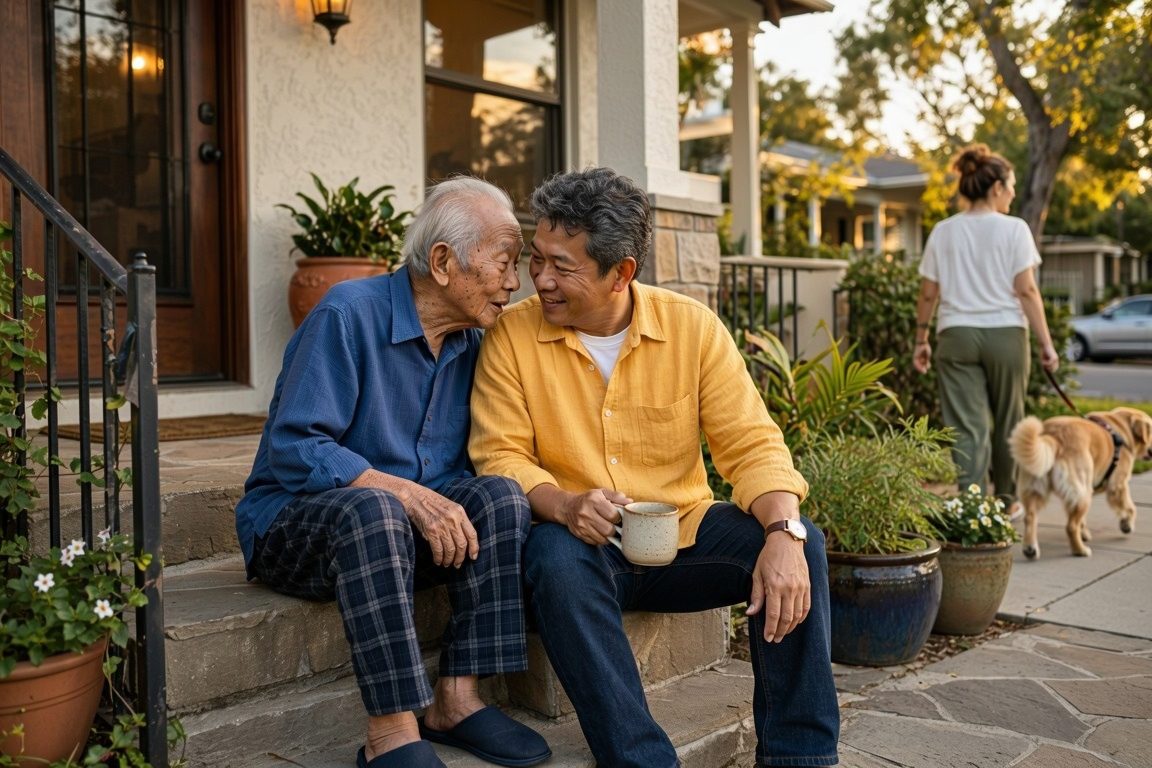
If you are a spouse, you may be grieving the loss of your partner's companionship. It can help to revisit old rituals, like having coffee together in the morning or watching the sunset. These moments honor your history. If you are an adult child, you may feel a role reversal. Try activities that let you be a daughter or son again, not a parent: ask them to tell you a story (even if it is not accurate), or play a game they taught you as a child. This preserves the original relationship dynamic.
In a facility or with hired help
If your loved one is in a facility or has a paid caregiver, your non-care moments become even more precious. Schedule visits at a time when care tasks are already done (e.g., after breakfast). Bring a simple activity like a photo album or a favorite snack. Let the staff know you want to focus on connection, not care. If you are a paid caregiver, consider bringing a small 'connection kit' to use during your shift, a few minutes of hand massage or looking at a photo can transform the relationship from task-based to human (All Home Care Matters).
For the doctor
3
- If your loved one becomes agitated or distressed during non-care moments, discuss with their doctor whether pain, discomfort, or medication side effects might be contributing. Do not assume the agitation is about the activity itself.
- If you are considering using aromatherapy (e.g., lavender essential oil) as part of a sensory connection kit, ask the doctor or pharmacist if it is safe given their current medications and any allergies.
- If your loved one has a history of falls, be cautious with activities that require them to stand or reach. Discuss safe positioning and fall prevention strategies with their physical therapist or doctor before starting any movement-based activity.