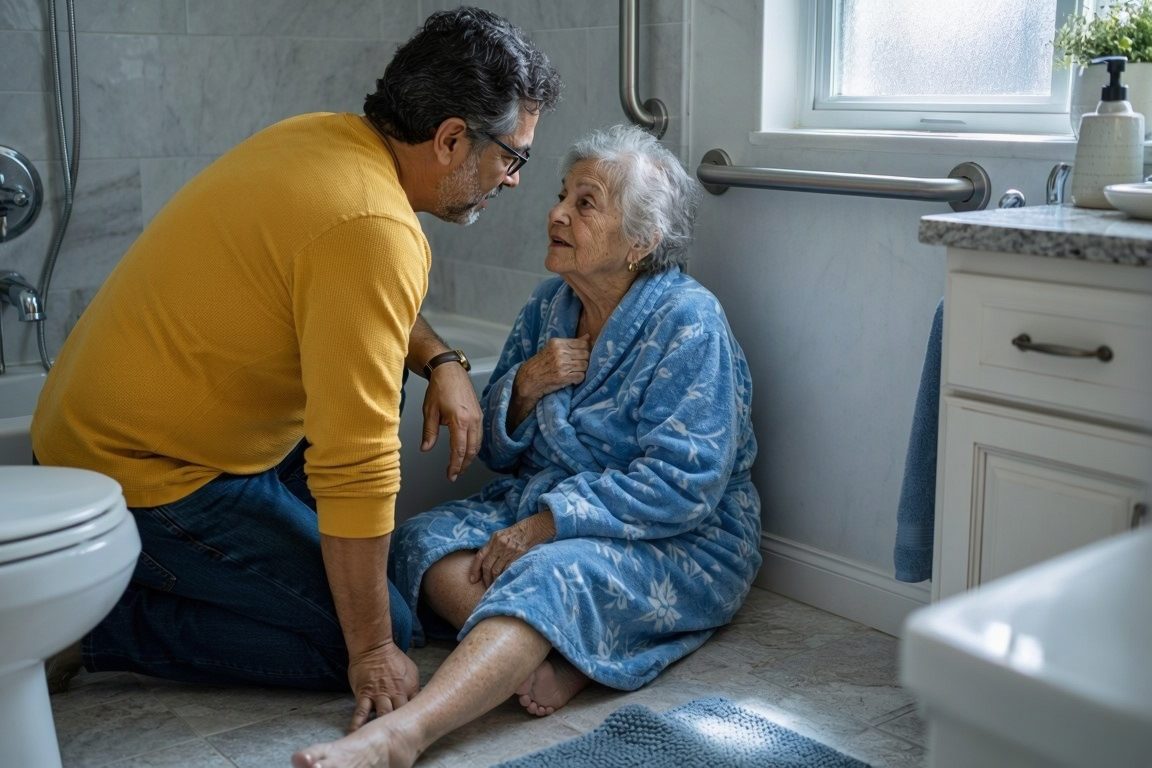
Step by step
What not to do
- Do NOT grab arms or pull by wrists, this can dislocate a shoulder or fracture a wrist. Use a gait belt, chair, or mechanical lift.
- Do NOT yell or scold. A calm voice keeps them cooperative and safe.
- Do NOT try to lift alone if they are heavy or you have back problems. Use a mechanical lift or call for help.
- Do NOT leave them on the floor if they hit their head, are in pain, or can’t move a limb. Call 911, stay with them, and keep them warm and comfortable.
Key points
- Stay calm and use simple, one-step commands like “Roll toward me” instead of long explanations.
- Never pull a person up by their arms, use a gait belt or a chair to support their weight.
- Remove area rugs, clutter, and cords from walkways to prevent future falls.
- Consider a fall mat beside the bed and a low bed height to reduce injury if they fall at night.
- Use a toileting schedule to reduce urgent bathroom trips that often lead to falls.
- Document every fall and share it with their doctor to adjust the care plan.
Videos
 The Baffled Brain: Demystifying Dementia Episode 22 April 24 ,2021This video explains how dementia affects perception and movement, helping you understand why falls happen and how to prevent them.
 095. How to create a safe home for Dementia family membersThis video gives practical home modification tips to reduce fall risks, such as removing rugs and improving lighting.
 Dementia Toileting problemsThis video covers how to set up a toileting schedule, which can prevent falls caused by rushing to the bathroom.
 How to manage incontinence in dementia patientsThis video offers strategies for managing incontinence, which is closely linked to fall risk from urgent bathroom needs.
2 more videos
 7 Reasons People With Dementia Fall (and how to help)This video breaks down the most common causes of falls and gives actionable prevention tips.
 What Do You Do When A Dementia Patient Starts Wandering?This video addresses wandering, which often leads to falls, and offers environmental and communication strategies to keep them safe.
Background
Why Falls Happen in Dementia
Falls in dementia are rarely just about being clumsy. The brain changes that come with the disease affect how a person sees, plans, and moves. For example, a person with dementia may have trouble judging depth or seeing contrast, a dark rug in front of a door might look like a black hole or a step, causing them to hesitate or trip. They may also forget they need a walker, or try to use one with wheels without locking it, which can tip forward. Another common trigger is the urgent need to use the bathroom. Because dementia can dull the sensation of a full bladder, a person may wait too long, then rush to get up and fall. Understanding these reasons helps you respond with patience instead of frustration.
The Danger of Rushing or Pulling
When you see someone on the floor, your instinct might be to grab their arms and yank them up. This can cause serious injury, to their shoulders, wrists, or to your own back. A person with dementia may also be confused or scared, and being pulled can make them panic or resist. Instead, the goal is to work with their body’s natural movement and keep them calm. Using a calm, simple voice and breaking the task into one-step commands, like “roll toward me” instead of “roll over so I can help you sit up”, reduces confusion and increases cooperation. Remember, dementia progresses, so a technique that didn’t work last month might work today.
Practical tools
3
Gait Belt
A wide belt with handles that fastens around the person’s waist. You grip the handles to help them stand or pivot, never pull their arms. Available at medical supply stores.
Hydraulic Stand Lift
Mechanical lift from floor or chair. Prices $600–$3,000. Place a hard board under the base on carpet. Consult a doctor or home health company to decide if it suits your situation.
Bedside Fall Mat
A thick padded mat beside the bed. If the person falls at night, they land on the mat instead of the hard floor, especially useful for those who wander after dark.
Different situations
Lewy body dementia or Parkinson’s dementia
These conditions often cause stiffness and trouble with balance. Use extra caution when helping them up, they may need more time to move. Avoid pulling on their arms, as they may have rigidity. A gait belt is especially helpful here. Also, be aware that they may have visual hallucinations that make them afraid of you or the chair; use a calm, familiar voice and approach slowly.
Late-stage dementia (bedbound or very weak)
If the person cannot bear weight or follow commands, do not try to lift them from the floor. Call 911 or use a mechanical lift. Keep the bed low to the ground and use fall mats. Focus on comfort and preventing pressure sores. Discuss with your clinician about using a hospital bed with half rails (not full rails, which can trap a person).
Spouse vs. adult child caregiver
A spouse may have physical limitations (e.g., back problems) and should not attempt to lift alone. Use a lift or call for help. An adult child may be stronger but should still use proper technique. Both should prioritize their own safety, you cannot help if you are injured. Also, a spouse may feel more emotional distress seeing their partner fall; take a moment to breathe before acting.
In a care facility
Staff should follow facility protocols for falls. Use a gait belt and call for backup if needed. Document the fall and notify the charge nurse. Ensure the person’s bed is low, and consider a bed alarm that alerts staff when the person tries to get up.
Limited financial resources (Medicaid or low income)
You can still make low-cost changes: remove rugs, use a sturdy chair instead of a lift, and place a thick yoga mat or folded blankets beside the bed as a fall mat. Ask your local Area Agency on Aging or home health provider about loaner equipment like gait belts or walkers. A classic silver walker with tennis balls is inexpensive and often safer than a wheeled model.
Common questions
6
How can I use antecedent-behavior-consequence to address sleep problems?
Note the time and place before bedtime, then gently guide them to a calming activity like folding towels or listening to soft music, and praise any quiet rest to reinforce that pattern.
What can I do when a person with dementia hollers or swears before falling asleep?
Say calmly, 'I hear you are tired,' then offer a warm drink or a slow hand rub, keeping your voice low and avoiding any scolding or reasoning.
How do I prevent skin breakdown in a bed-bound loved one with end-stage dementia?
Check their skin every two hours, especially on heels, hips, and back, and turn them gently using a draw sheet, keeping the skin clean and dry with a barrier cream.
How can I get a resistant, high-risk person up in the morning safely with limited time?
Start by sitting them up with their legs over the edge of the bed, let them dangle for a minute, then use a gait belt to help them stand, saying 'Stand up now' as you lift together.
What can I do to stay asleep after waking up at night?
Get out of bed, use the bathroom if needed, then return to a dark, quiet room and focus on slow breathing for a few minutes before trying to sleep again.
How should I physically assist someone to get up from bed without injury?
Place one arm under their shoulders and the other under their knees, then swing their legs off the bed in one smooth motion, keeping your back straight and letting your legs do the lifting.
For the doctor
5
- Ask your doctor or physical therapist: Is a hydraulic stand lift appropriate for my loved one’s weight and mobility level?
- Ask your doctor: Are there any medications that could be causing dizziness or increasing fall risk?
- Ask your home health company: What is the safest type of walker for a person with dementia who forgets to lock brakes?
- Ask your clinician: Should we consider a bed alarm or a low hospital bed to reduce fall risk at night?
- Ask your doctor: Is a toileting schedule safe for my loved one, especially if they have kidney issues or take diuretics?