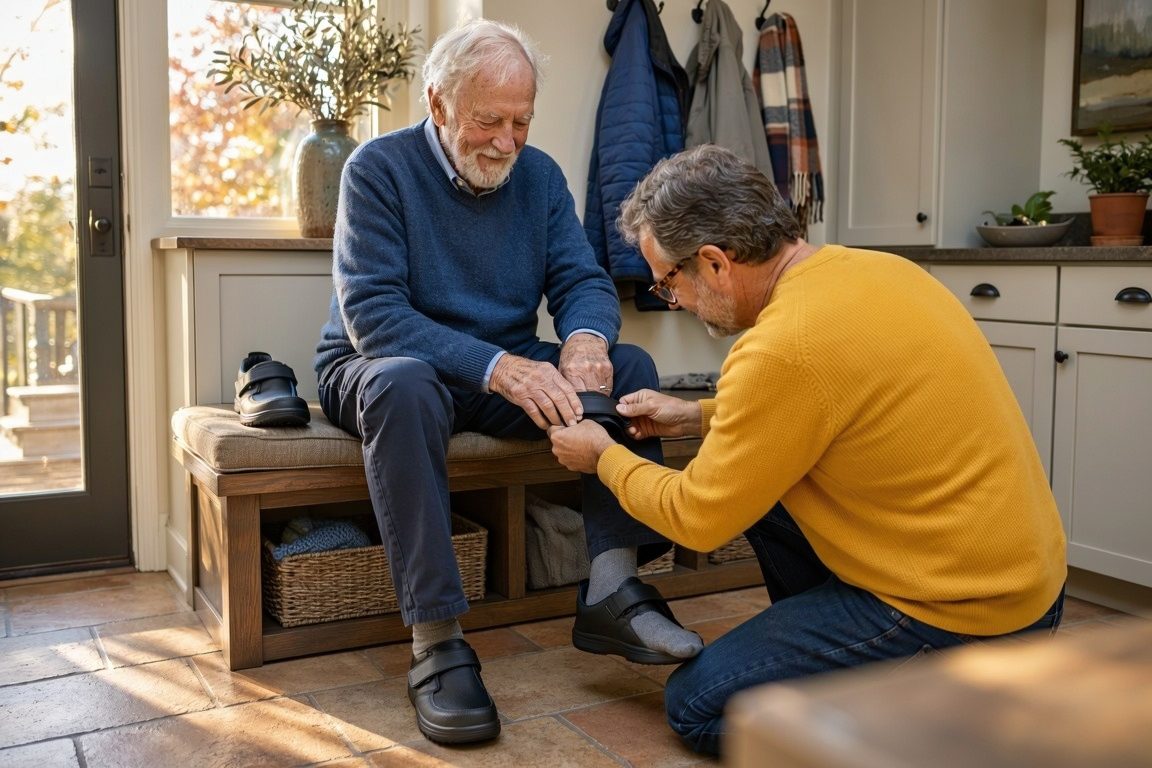
Step by step
What not to do
- Do not give multiple verbal instructions at once. Common mistake: saying 'Put your arm in here, now lift your head, now pull the shirt down.' For a person with aphasia, this is overwhelming and impossible to process.Instead, use one short phrase at a time, paired with hand-under-hand guidance. Let the touch do the talking.
- Do not grab their hand or pull them. If you take their hand forcefully, they may feel controlled or frightened, leading to resistance or agitation. Hand-under-hand is an invitation, not a command. If they pull away, stop, wait, and try again with a lighter touch or a different angle.
- Do not rush. Rushing increases anxiety and confusion. If you are in a hurry, the person will sense it and may shut down. Plan extra time for dressing, at least 15-20 minutes. If you are pressed for time, simplify further: use a pullover dress or loose pants instead of a buttoned shirt.
- Do not assume they cannot help because they cannot speak. Aphasia does not mean they cannot move or understand touch. By removing the task entirely and dressing them fully, you rob them of autonomy and can increase feelings of helplessness. Always start with hand-under-hand and see how much they can do.
- Do not ignore signs of pain or stiffness. If their arm is stiff or they wince when you move it, forcing the motion can cause injury.Instead, pause and do gentle range-of-motion exercises first. If pain persists, consult their clinician, it could be a sign of arthritis, a new injury, or a condition like Lewy body dementia that affects movement.
- Do not use the same approach every time without adjusting. What works one day may not work the next. If hand-under-hand is met with resistance, try a different approach: hand them the shirt and say nothing, or use a visual cue like pointing to the sleeve. Flexibility is key.
Key points
- Hand-under-hand bypasses aphasia by using touch instead of words to guide movement.
- Always approach slowly, from the front, and use a calm, low tone of voice.
- Break dressing into tiny steps, each one guided by your hand under theirs.
- If they resist, stop and wait; never force the movement.
- Adaptive clothing with magnets or Velcro can make hand-under-hand more successful.
- Personalize the approach based on the dementia type, stage, and relationship.
Videos
 PAC Live @ 5 - Hand Under HandThis video demonstrates the hand-under-hand technique in real time, showing how to use it for dressing and other tasks. It is especially helpful for seeing the gentle, non-verbal cues that work well with aphasia.
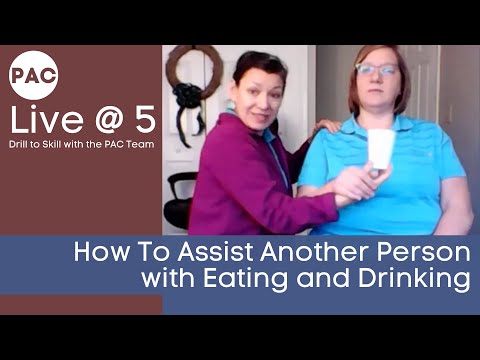 How To Assist Another Person with Eating and DrinkingWhile focused on eating, this video explains the muscle memory and initiation benefits of hand-under-hand, which directly apply to dressing. It reinforces the idea of triggering synapses through touch.
 How to Help a Person Living with Dementia to Get Dressed and UndressedThis video provides a full walkthrough of dressing assistance, including tips for adapting to different stages and types of dementia. It pairs well with the hand-under-hand technique.
 Understanding the signs of paranoia, hallucinations and delusional behaviors w/ Lucy Barylak Sept 12This video helps you recognize when a person with aphasia might be experiencing fear or confusion that is not verbalized. It offers strategies for using touch to calm and redirect, which complements hand-under-hand.
2 more videos
 Assisting with Activities of Daily Living in Dementia CareThis video covers a range of ADLs, including dressing, and emphasizes the importance of preserving autonomy. It shows how hand-under-hand fits into a broader person-centered care approach.
 Live Q & AThis Q&A session addresses common caregiver questions about challenging behaviors and techniques like hand-under-hand. It provides real-world troubleshooting advice.
Background
What is happening when aphasia meets dressing?
Aphasia is an impairment in language that can affect a person's ability to speak, understand speech, read, or write. In dementia, it often results from damage to the brain's language centers, making it hard for your loved one to process your words like 'put your arm in here' or 'lift your head.' At the same time, apraxia, a related condition, can disrupt the brain's ability to plan and sequence the steps needed to dress, even if the person knows what a shirt is. The parietal lobe, which helps us understand where our body is in space, and the frontal lobe, which plans movement, can both be affected. So when you say 'put on your jacket,' your loved one may look at the jacket but have no idea how to proceed, not because they are being stubborn, but because the neural pathways for that action have broken down. Hand-under-hand works because it provides physical guidance that bypasses these broken language and planning circuits, using touch to trigger the muscle memory that still remains.
Why hand-under-hand is especially effective for aphasia
Hand-under-hand is a technique where you place your hand under your loved one's hand, gently guiding their movements rather than doing the task for them. This approach is powerful for aphasia because it does not rely on verbal instructions. Instead, it uses the sense of touch and shared movement to communicate. When you place your hand under theirs and begin the motion of pulling up a sleeve or buttoning a shirt, you are physically demonstrating the action in a way their brain can follow. This can 'trigger those synapses' and help them initiate the movement themselves, as described in Teepa Snow's work on eating assistance. The technique also reduces anxiety: the gentle, supportive touch can 'put the person in a different headspace' and make them feel safe and connected, rather than pressured or confused. For a person with aphasia, who may feel isolated by their inability to communicate, this non-verbal connection is especially reassuring.
Practical tools
6
The 'Let's do it together' phrase
Instead of giving commands, use inclusive language like 'Let's find the sleeve together' or 'We are going to put this on now.' This frames the task as a shared activity, reducing pressure. Pair it with hand-under-hand touch. Practice saying these phrases in a calm, low tone before you start.
Adaptive clothing with magnetic closures
Look for shirts and pants with magnetic buttons or Velcro closures instead of traditional buttons or zippers. Brands like 'Magnetic Me' or 'Silvert's' offer adaptive clothing that looks normal but is easier to manage. This reduces the need for fine motor skills and makes hand-under-hand guidance more successful.
A dressing checklist with pictures
Create a simple visual checklist: a picture of a shirt, then pants, then socks, in order. Place it on the wall near the dressing area. Point to each picture as you complete the step, using hand-under-hand to guide their hand to point as well. This provides a non-verbal cue for what comes next.
A warm, quiet dressing space
Set up a specific area for dressing with good lighting, a comfortable chair, and minimal noise. Keep the room warm, cold can cause stiffness and resistance. Use a nightlight if dressing in the early morning or evening. This environment reduces sensory overload and makes hand-under-hand more effective.
A timer or song for pacing
Use a gentle timer or a calming song (e.g., 3-5 minutes) to pace the activity. Say, 'Let's see if we can get the shirt on before the song ends.' This adds a playful element and reduces the feeling of being rushed. Hand-under-hand can be used to guide the rhythm of the movements.
A mirror for visual feedback
Place a full-length mirror nearby. After each step, guide their hand to touch the clothing in the mirror, saying, 'Look, you did that.' This reinforces their participation and can boost their sense of agency. For a person with aphasia, visual feedback is often more powerful than verbal praise.
Different situations
Lewy body dementia (LBD)
In LBD, movement problems like stiffness, shuffling, and balance issues are common. Hand-under-hand may need to be even slower and more gentle. Before dressing, do gentle range-of-motion exercises for the arms and legs to reduce stiffness. Also, be aware that people with LBD can have sudden changes in alertness or hallucinations, if they seem confused or frightened, stop and use a calming touch on their shoulder instead of proceeding. Avoid rushing, as falls are a higher risk.
Late-stage dementia (e.g., severe Alzheimer's)
In late stages, the person may have very limited ability to initiate movement. Hand-under-hand may become more of a full assist: you place your hand under theirs and do most of the work, but still keep their hand in contact with the clothing. The goal shifts from participation to maintaining a sense of connection and dignity. Use soft, adaptive clothing that is easy to put on (e.g., front-closure bras, pull-on pants). Keep verbal communication to a minimum, use touch and facial expressions instead.
Spouse vs. adult child caregiver
A spouse may have a longer history of shared routines and may find it easier to use familiar touch and phrases (e.g., 'Remember how we used to help each other dress?'). An adult child may need to be more patient and avoid a parent-child dynamic. If the person with aphasia is your parent, avoid baby talk; instead, use respectful, adult language. Hand-under-hand can feel more natural if you frame it as 'Let me help you with this' rather than 'Let me do this for you.'
In a facility (e.g., nursing home or assisted living)
In a facility, you may have less control over the environment. Work with staff to ensure consistency: share this hand-under-hand approach with the care team. Request that the same caregiver helps with dressing each time to build trust. If the person is in a shared room, use a privacy screen or curtain to reduce distractions. Bring familiar clothing from home to make the task more comforting.
Medicaid or limited resources
If adaptive clothing is not affordable, you can modify existing clothing: replace buttons with Velcro strips, use elastic waistbands, or cut off tags that cause irritation. For hand-under-hand, you do not need special tools, just your hands and patience. Use items you already have, like a soft blanket to warm the clothes, or a chair with arms for stability. Focus on the technique, not the products.
For the doctor
3
- If the person has new or worsening stiffness, pain, or difficulty moving their arms or legs, ask their doctor if it could be related to Lewy body dementia, Parkinson's, or arthritis, and whether any medication adjustments might help.
- If the person becomes agitated or aggressive during dressing despite using hand-under-hand, discuss with a clinician whether there might be an underlying medical issue (e.g., urinary tract infection, pain, or medication side effect) that needs evaluation.
- If the person has frequent falls during dressing or undressing, ask their doctor about a physical therapy evaluation for balance and strengthening exercises, or whether a bedside commode or other equipment might reduce fall risk.