Step by step
What not to do
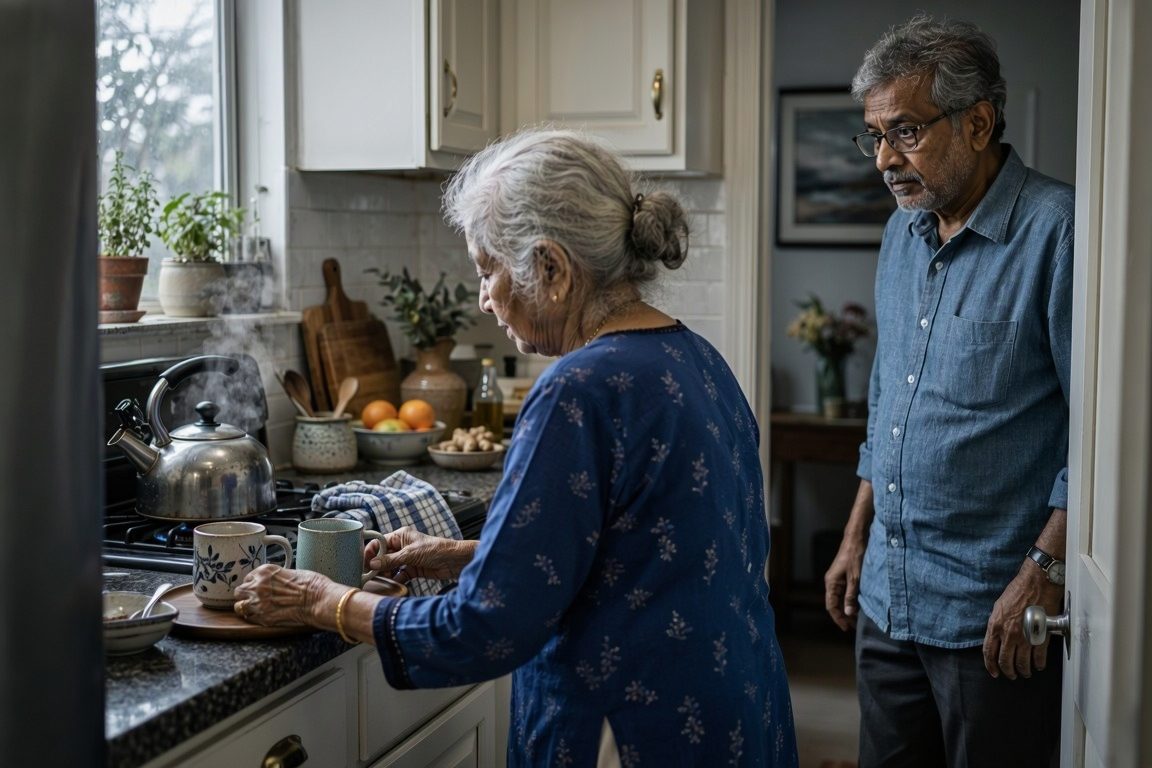
- Do not allow the person to use the stove, oven, or microwave unmonitored, even with safety devices in place.
- Do not leave pot handles sticking out over the stove edge, as they can be knocked or pulled down, causing burns.
- Do not use frayed cords, extension leads, or multi-plug adapters in the kitchen, as they increase fire and shock risk.
- Do not store cleaning chemicals, bleach, or flammable items like cooking sprays near the stove or heat sources.
- Do not keep metal utensils near the microwave or toaster, and avoid using metal-rimmed mugs in the microwave.
- Do not use old appliances without safety certifications or those that spark or smell when in use.
Key points
- Three out of ten home fires start in the kitchen, and older adults with dementia are at much higher risk of dying in a kitchen fire.
- Memory loss and poor judgment mean your loved one may forget to turn off the stove, leave flammable items near heat, or not recognize a fire hazard.
- Simple steps like installing stove knob covers, unplugging small appliances, and using GFCI outlets can prevent most kitchen fires and electrical accidents.
- Never leave a hot stove or oven unattended, even for a moment. Always turn off the burner before leaving the kitchen.
- Keep a fire extinguisher in the kitchen and know how to use it, but do not expect your loved one to be able to use it.
- Personalize your approach based on the stage of dementia and the specific symptoms your loved one has, such as movement problems or visual hallucinations.
Videos
 Kitchen Safety Tips for SeniorsThis video provides a clear, visual walkthrough of common kitchen hazards for seniors, including fire and electrical risks, and offers practical solutions.
 What Are Common Safety Risks For Dementia Patients? - Dementia Help HubThis video explains the general safety risks for people with dementia, including kitchen dangers, and helps you understand why these risks are higher.
 How Do You Ensure Home Safety For Dementia Patients? - Dementia Help HubThis video offers a broader look at home safety, including kitchen modifications, and gives you a framework for creating a safer environment.
 How Does Dementia Affect Safety?This video discusses how dementia changes a person's perception and behavior, which directly relates to why kitchen fire and electrical risks increase.
2 more videos
 095. How to create a safe home for Dementia family membersThis video provides a room-by-room guide to dementia-proofing a home, with specific tips for the kitchen that you can implement right away.
 123. Replay: How to create a safe home for Dementia family membersThis is a replay of the previous video, offering the same practical advice in a slightly different format, which may help reinforce the key points.
Background
Why the kitchen becomes a high-risk zone
According to the National Fire Protection Association, three out of ten home fires start in the kitchen, more than any other room. Adults over 65 have a 2.7 times higher risk of dying in a kitchen fire than younger people. For someone with dementia, the danger is even greater because they may forget they left the stove on, not recognize that a burner is hot, or not know how to use a fire extinguisher or how to get out of the house if a fire starts. They might also leave flammable items like dish towels or paper towels too close to the stove, or wear loose sleeves that can catch fire easily.
How dementia affects fire and electrical safety
Dementia can impair a person's sense of balance, depth perception, judgment, and problem-solving skills. This means they might not notice a hot surface, a spilled liquid near an electrical outlet, or a frayed cord. They may also have trouble reading warning labels or remembering that certain items (like a glass bowl) are not safe on a stovetop. Visual changes can make it hard to see a small flame or a glowing burner. Additionally, they may not feel pain or temperature changes as acutely, so a burn can happen without them realizing it until it's serious.
The hidden electrical dangers
Beyond fire, there is a real risk of electrocution. Outlets near the sink that lack a ground fault circuit interrupter (GFCI) can be dangerous if water splashes on them. Appliances like toasters, blenders, and microwaves that are left plugged in can be turned on accidentally or cause a short circuit if they fall into water. Also, the person with dementia might try to use a metal utensil in a toaster or pour water on a grease fire, not understanding the danger. These risks increase as the disease progresses, so it's important to address them early.
Practical tools
5
Stove Knob Covers or Safety Lock
Plastic covers that snap over stove knobs, or a magnetic lock that prevents the knob from turning; both allow a caregiver to unlock the burner but stop the person from accidentally igniting the stove.
GFCI Outlet (Ground Fault Circuit Interrupter)
A safety outlet that cuts power instantly if it detects water contact, preventing electrocution; must be installed by an electrician near any sink or water source in the kitchen.
Temperature-Limiting Faucet or Pressure-Balancing Valve
A faucet attachment or valve that limits water temperature to a safe maximum (e.g., 120°F) so the person cannot scald themselves by turning the hot tap fully on.
Automatic Shut-Off Plug or Timer
A plug adapter with a built-in timer that turns off power to an appliance after a set time (e.g., 30 minutes), reducing the risk of unattended appliances causing a fire.
Smoke Alarm with Remote Monitor
A smoke detector that sends a notification to a caregiver's phone or base station, ensuring a fire is detected even if the person cannot hear the alarm or respond.
Different situations
Early-stage dementia (mild cognitive impairment)
Your loved one may still be able to cook safely with supervision. Focus on removing distractions, using automatic shut-off appliances, and creating a routine where you check the kitchen together after each meal. Do not take away their independence entirely; instead, offer to be a 'sous chef' and gradually introduce safety tools as needed.
Middle-stage dementia (moderate cognitive decline)
At this stage, judgment and memory are more impaired. It is safer to remove stove knobs, unplug all small appliances, and lock cabinets with dangerous items. Consider disconnecting the stove or gas line if your loved one repeatedly tries to cook. You may also need to supervise all kitchen activities closely.
Late-stage dementia (severe cognitive decline)
The person may no longer be able to use the kitchen at all. Focus on preventing access: lock the kitchen door, use a childproof gate, or install a lock that requires a key. Keep the kitchen well-lit and free of clutter to reduce confusion if they do wander in. All electrical items should be unplugged and stored away.
Lewy body dementia or Parkinson's disease dementia
These conditions often involve movement problems, such as tremors or stiffness, which increase the risk of dropping things or falling. Also, visual hallucinations can make it hard to distinguish a real flame from a hallucination. Use extra caution with open flames and consider using only electric appliances. Ensure good lighting to reduce shadows that might be misinterpreted.
If you are an adult child caring for a parent
You may face resistance from your parent, who wants to maintain their independence. Approach the conversation with empathy: 'I know you love cooking, and I want you to keep doing it safely. Let's try these new knob covers together.' Offer to cook together, and gradually take over more tasks as needed. Be patient and pick your battles.
For the doctor
4
- Ask your doctor: 'Is it safe for my loved one to be near a hot stove or electrical appliances, given their history of seizures or fainting spells?'
- Ask your doctor: 'Should my loved one be allowed to use the kitchen unsupervised, considering their medications that cause dizziness or drowsiness?'
- Ask your doctor: 'Are there any electrical precautions needed for my loved one's pacemaker or other implanted device, especially regarding GFCI outlets?'
- Ask your doctor or an occupational therapist: 'What is the safest way to disconnect the gas line to the stove, and what alternatives can I offer for meal preparation?'