Step by step
What not to do
- Do not push through resistance, agitation, or discomfort, stop and try a different approach later to preserve trust.
- Do not expect cognitive gains in late-stage dementia; the goal is comfort, preserved mobility, and quality of life.
- Do not give multi-step instructions, say 'Lift your arm' while guiding, not 'Do ten arm circles.'
- Do not overlook non-verbal pain signals (grimacing, moaning, breath-holding, pulling away); consult a clinician if pain is suspected.
- Do not leave the person unattended during exercise, especially if balance or walking is involved.
Key points
- Exercise benefits people at every stage of dementia, including late-stage, by improving mobility, mood, and quality of life.
- For mild cognitive impairment, aim for 150 minutes of moderate activity per week, including strength training once or twice a week.
- For late-stage dementia, focus on gentle range-of-motion exercises, chair-based movements, and comfort. Even 20 minutes twice a week can help.
- Use a warm, inviting approach, never ask 'Do you want to?' Instead, say 'Come with me!' or 'I have something special to show you.'
- Music, especially from the person’s young adult years, can naturally cue movement and improve mood.
- Always get medical clearance before starting any exercise program, and stop if the person shows signs of pain, fatigue, or agitation.
Videos
 Neuroplasticity- The brain's ability to heal and growThis video explains how the brain can change and grow throughout life, which is the scientific foundation for why exercise helps even in dementia.
 Discover the Cranium Crunches Workbook by Activity Connection with Co-Author Dr. Rob WinninghamThis video introduces cognitive stimulation activities that can be paired with physical exercise for a holistic approach.
 HOW TO REDUCE YOUR RISK OF DEMENTIA (and slow down dementia for your loved one)This video provides practical lifestyle strategies, including exercise, to reduce dementia risk and slow progression.
 Cognitive Activities for Dementia and Older AdultsThis video offers ideas for combining mental and physical activities, which is especially helpful for early-stage dementia.
2 more videos
 Caregiver Support Session: Slowing Down Dementia Progression: An exploration of interventionsThis session reviews evidence-based interventions, including exercise, and offers support for caregivers.
 Can You PREVENT Dementia? The REAL Answer Explained | Dr. Khushboo VermaThis video explains the role of exercise in dementia prevention and management, with a focus on realistic expectations.
Background
Why Exercise Helps the Brain and Body at Every Stage
Exercise does more than strengthen muscles and improve heart health. When we move, our bodies release a chemical called brain-derived neurotrophic factor (BDNF), which acts like fertilizer for the brain. BDNF travels to memory centers, especially the hippocampus, and can actually help regrow brain cells. Studies show that people with mild to moderate Alzheimer’s who exercised regularly maintained their ability to eat, walk, dress, and use the toilet longer than those who did not. Even for those with mild cognitive impairment, the potential for improvement is remarkable, because the brain remains capable of change and growth throughout life.
What Changes in Late-Stage Dementia and Why Exercise Still Matters
In late-stage dementia, the person may lose the ability to walk, get out of bed, or even swallow. They may no longer speak in full sentences and may have difficulty communicating pain or discomfort. At this point, the goal of care shifts to comfort, dignity, and quality of life. Exercise in this stage is not about building strength or improving cognition; it is about preserving what mobility remains, reducing stiffness and contractures, improving circulation, and providing gentle sensory stimulation. Research has shown that even 20 minutes of exercise twice a week can improve mobility and independence in people with fairly advanced dementia. The key is to be patient, adjust as you go, and celebrate small victories.
Practical tools
3
Chair Yoga or Tai Chi Routine
A 10-minute seated routine:
Use a sturdy, wheel-less chair. Free videos or a physical therapist can tailor it.
Range-of-Motion Checklist for Bed-Bound Care
Daily gentle movements, stopping at pain or resistance:
Medical Clearance and Safe Space Checklist
Get doctor clearance before starting. Before each session:
Different situations
Lewy body dementia
People with Lewy body dementia often have fluctuating cognition, visual hallucinations, and Parkinson-like symptoms (rigidity, tremors). Exercise should focus on balance and fall prevention. Avoid overstimulation, keep sessions calm and predictable. Use gentle, slow movements. If rigidity is severe, consult a physical therapist for passive range-of-motion exercises.
Late-stage dementia (bed-bound or wheelchair-bound)
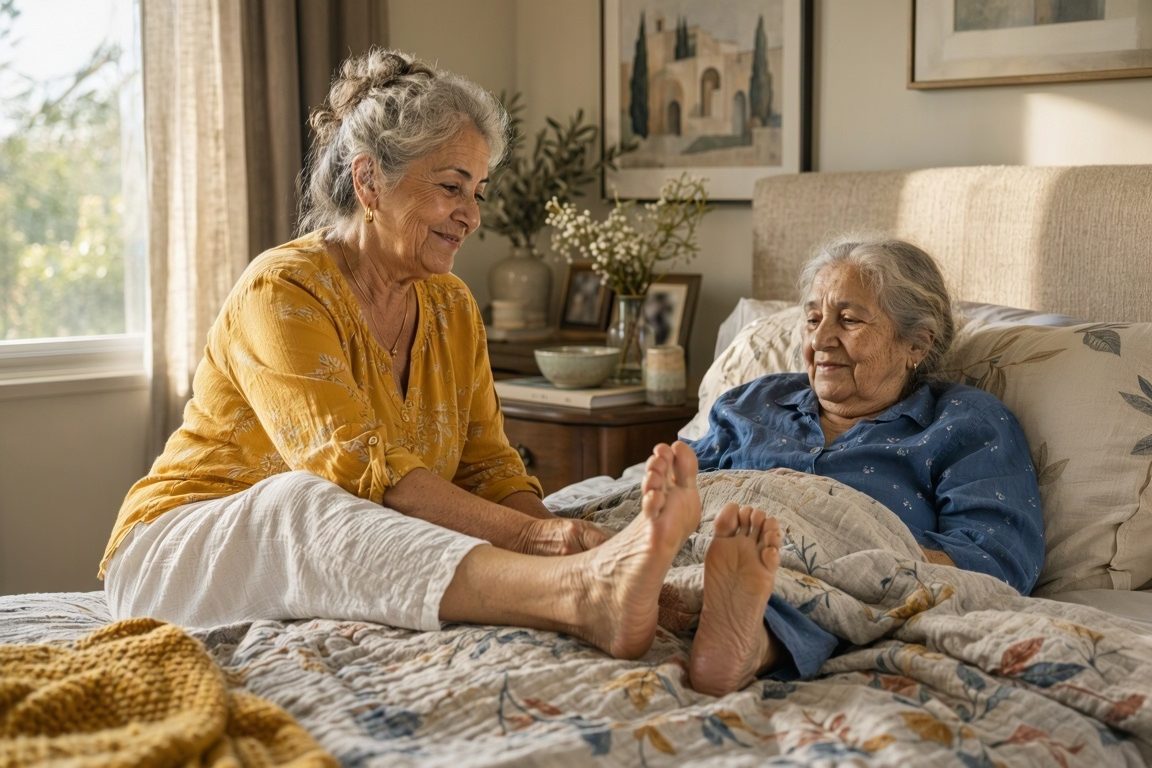
Focus entirely on comfort and gentle movement. Use passive range-of-motion exercises (you move their limbs for them). Watch for contractures (muscle tightening) and pressure sores. Change position every 2 hours. Use pillows for support. The goal is to prevent stiffness and maintain dignity, not to improve function.
Spouse vs. adult child caregiver
Spouses may find it emotionally harder to 'lead' exercise because of role reversal. Adult children may feel more comfortable directing activities. Both should remember: you are not a personal trainer, you are a loving companion. If either feels overwhelmed, consider hiring a home health aide or physical therapist for guidance.
Living in a facility (nursing home or memory care)
Ask the facility’s activities director or physical therapist about group exercise classes. Many offer chair yoga, walking groups, or music-based movement. You can also visit during exercise times to participate together. If the person is resistant, ask staff to try a different time of day or a one-on-one session.
Medicaid or limited resources
You do not need expensive equipment. Use household items: soup cans as weights, a sturdy chair for support, a hallway for walking. Free exercise videos are available on YouTube (search 'chair yoga for seniors' or 'dementia exercise'). Many senior centers offer free or low-cost classes. Call your local Area Agency on Aging for resources.
For the doctor
5
- Ask the doctor: 'Is it safe for my loved one to start a new exercise routine? Are there any movements or activities they should avoid?'
- Ask the doctor or physical therapist: 'What is the best type and duration of exercise for my loved one’s current stage and health conditions?'
- If the person has heart disease, high blood pressure, or a history of falls, ask: 'What precautions should we take during exercise?'
- If the person is on medications that affect balance or heart rate, ask: 'Could exercise interact with their medications?'
- If incontinence is an issue, ask: 'Are there specific pelvic floor exercises or bladder training techniques that are safe to try?'