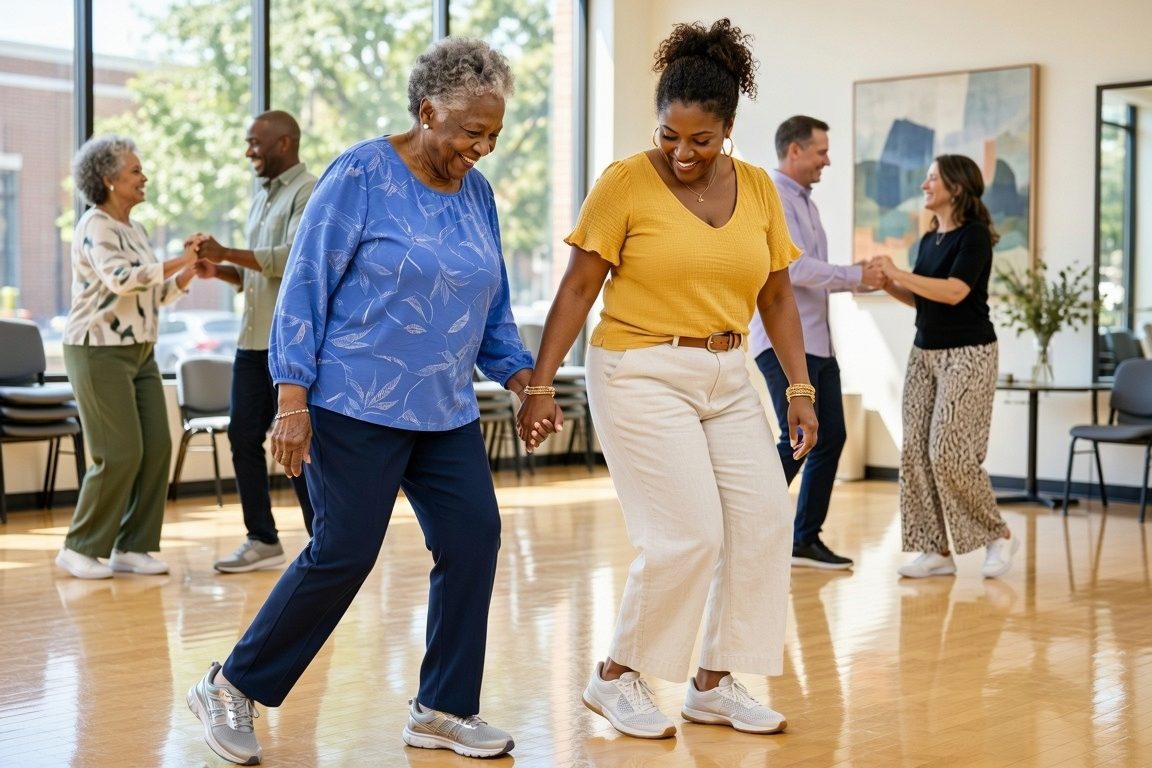
Step by step
What not to do
- Don't assume they can follow complex steps. People with dementia have dynamic abilities, what worked five minutes ago may not work now.Instead, watch their cues: if they look confused, simplify to just swaying or clapping. Let them lead the pace.
- Don't force participation if they resist. Pushing can increase agitation and fear.Instead, model the dancing yourself with joy and invite them: 'I'm going to dance to this song, you can join if you want.' Often they will once they see you having fun.
- Don't use music that is too fast or unfamiliar. Fast tempos can overwhelm and cause anxiety. Stick to familiar songs from their era, the 1940s, 50s, or 60s for many older adults. Ask family members or look at old record collections for clues.
- Don't ignore fall risks. Slippery floors, loose rugs, or backless shoes are dangerous. Always use well-fitting, non-slip shoes (avoid high heels or slippers). Clear the area of furniture. If balance is poor, dance in a chair or with a sturdy support nearby.
- Don't expect them to initiate dancing. People with dementia often have poor initiation, they may sit and stare even if they'd enjoy moving. You need to start the activity and invite them warmly. Say: 'Come on, let's try this together' rather than waiting for them to suggest it.
- Don't stop if they repeat the same dance every time. Repetition is fine, they don't remember doing it, so it feels new each time. If it's working and they're engaged, just do it again. Consistency builds comfort and routine.
Key points
- Dancing reduces dementia risk by engaging multiple brain areas simultaneously, boosting neuroplasticity and cognitive reserve.
- Start with familiar, loved music from their youth, music is processed throughout the brain and often remains accessible.
- Modify for ability: seated, standing with support, or bed-bound, everyone can participate in some way.
- Focus on connection and joy, not perfect steps. Use touch, eye contact, and praise.
- Keep sessions short (5-15 minutes) and watch for signs of fatigue or overstimulation.
- For prevention, make dancing a weekly habit with novelty and challenge, try new styles and songs.
Videos
 Reduce Your Risk of Dementia (Here’s Why It Works)Explains the neuroscience of why dancing is so effective for prevention, including how it activates the hippocampus and prefrontal cortex.
 PAC Live at 5 - DancingShows real examples of people with dementia dancing together, emphasizing connection, rhythm, and community.
 How to Use a Positive Physical Approach to Assess Abilities with Someone Living with DementiaTeaches the respectful approach technique that is essential before initiating any activity, including dancing.
 How to keep a dementia patient busyOffers practical tips for engaging someone with dementia in activities, including using music and movement.
2 more videos
 Top 5 Indoor Activities for Seniors with Dementia (For Free)Provides free, low-cost activity ideas including dancing, with modifications for different ability levels.
 Depression and Dementia in Older AdultsDiscusses how depression and dementia interact, and why joyful activities like dancing can improve mood and reduce feelings of worthlessness.
Background
Why Dancing Is a Brain-Building Super-Activity
Dancing is unique because it forces your brain to do many things at once: you have to remember steps, coordinate your body to music, balance, anticipate what comes next, and correct mistakes in real time. This multi-tasking fires up the hippocampus (the first area affected in Alzheimer's), the prefrontal cortex (which handles planning and decision-making), and your motor and sensory areas. As one hospice nurse explains, 'Dancing uses many parts of the brain simultaneously,' which is exactly why it supports neuroplasticity, your brain's ability to form new connections and keep existing ones strong.
The Social and Emotional Side of Dancing
Dancing isn't just physical exercise, it's a social exercise that builds connection, community, and human touch. When you dance with someone, you're moving rhythmically together, which can reduce feelings of isolation and depression. For people with dementia, who often feel worthless or guilty about their condition, dancing offers a way to express joy and competence without needing words. The rhythmic movement also helps with strength, balance, and mood, all critical for preventing falls and maintaining independence.
How Dancing Reduces Dementia Risk Over Time
The key to prevention is novelty and challenge. Doing the same walk or same exercise routine every day doesn't push your brain to build new pathways. Dancing, especially learning new dances or improvising, forces your brain to create new patterns, coordinate movement with sound, and integrate sensory information. This 'cognitive reserve' helps your brain compensate for damage later. As one expert notes, 'Taking something as challenging as a new dance class' is what really supports neuroplasticity and reduces dementia risk.
Practical tools
6
The 'Music Memory' Playlist
Create a playlist of 10-15 songs from their young adulthood (ages 15-30). Use streaming services or old CDs. Include songs from weddings, dances, or family gatherings. Label the playlist with a photo of them from that era. Play it during calm times, not just during dancing, it can soothe agitation and spark memories.
Chair Dance Script
Keep a simple script nearby: 'Let's sit and move to this song. First, tap your feet. Now clap your hands. Now sway side to side. Great! Now let's do it all together.' Use a calm, encouraging voice. Repeat the same script each time for consistency.
Safety Checklist Before Dancing
Before each session:
This prevents falls and makes the experience positive.
Prop Basket
Fill a small basket with lightweight items:
Offer one item at a time during dancing. The sensory input and holding something can reduce anxiety and increase engagement. Rotate items to keep it novel.
The 'Positive Physical Approach' for Dancing
Approach from the front, at eye level, with a warm smile. Extend your hand slowly and say their name. Wait for them to acknowledge you. Then say: 'I'd love to dance with you. Is that okay?' This respectful approach reduces startle and builds trust. If they say no, accept it and try later.
Fall Prevention Gear
Consider a gait belt (with clinician guidance) for added stability during standing dances. For wheelchair users, ensure brakes are locked. Use a walker with tennis balls on the back legs for easy gliding. Always have a chair nearby for quick sitting.
Different situations
For prevention (no dementia diagnosis yet)
Focus on novelty and challenge. Take a new dance class (ballroom, salsa, line dancing) at least once a week. Vary the music and steps. The goal is to build cognitive reserve through learning. Also consider dancing alone to your favorite songs for 10-15 minutes daily, it's still beneficial for neuroplasticity.
Early-stage dementia (still mobile and verbal)
Use familiar music from their youth. Keep sessions short (5-10 minutes) and simple. Dance face-to-face so they can mirror your moves. Use props like maracas. If they get confused, slow down and simplify. Praise effort, not perfection. Avoid correcting mistakes, just keep moving.
Middle-stage dementia (needs more support)
Dance seated in a sturdy chair. Focus on upper body movements: clapping, arm waves, shoulder rolls. Use a tambourine or scarf. Keep the same song and routine each time for comfort. Watch for signs of fatigue or agitation, stop if they seem overwhelmed. The goal is connection, not exercise.
Late-stage or bed-bound
Dance by moving their arms or legs gently to music while they lie in bed. Sing softly along. Use hand massage to the rhythm. Even swaying their head or tapping their fingers can provide sensory stimulation and comfort. Always check for pain or discomfort first.
For caregivers themselves (prevention)
You are at higher risk due to stress and genetics. Make dancing a self-care ritual. Join a class, dance in your kitchen, or use a dance video game. Even 10 minutes a day can reduce your dementia risk. It also lowers stress and improves mood, double benefit.
For the doctor
5
- Ask your doctor or physical therapist if the person is cleared for physical activity, especially if they have heart conditions, recent surgery, or balance issues.
- Discuss fall risk and whether a gait belt or walker is appropriate during dancing.
- If the person has severe agitation or aggression, ask if music or movement therapy might trigger or calm them, everyone responds differently.
- For bed-bound individuals, ask about passive range-of-motion exercises that can be done to music to prevent contractures and maintain joint health.
- If the person has Lewy body dementia, ask about sensitivity to music volume or tempo, as some people with LBD can become overstimulated.