Step by step
What not to do
- Do not argue or try to prove them wrong. Saying 'No, you don't need to go to work, you retired 10 years ago' will only make them feel confused and defensive.Instead, validate the feeling and redirect: 'I know you're worried about being late. Let's check the schedule together after we have some breakfast.'
- Do not use a commanding or demanding tone. Phrases like 'You have to get up now' or 'Stop being difficult' trigger a fight-or-flight response.Instead, use a gentle request: 'I could really use your company in the kitchen right now. Will you come with me?'
- Do not take over completely without warning. Grabbing the toothbrush out of their hand or suddenly undressing them is frightening and humiliating.Instead, offer to do it together: 'Let me help you with that: I'll hold the brush and you can guide my hand.'
- Do not bribe or threaten. Saying 'If you don't take a bath, I won't take you to see your sister' creates anxiety and resentment.Instead, use positive reinforcement after the task: 'After we finish here, let's have a cookie together.'
- Do not assume that what worked yesterday will work today. Dementia symptoms fluctuate. Be ready to adapt your approach in the moment. If they resist one method, try another without frustration.
- Do not neglect your own self-care in the process. If you are exhausted, you will have less patience for creative problem-solving. Accept help from others, use respite care, and take breaks so you can show up with a calm, creative mindset.
Key points
- Arguing about facts with someone with dementia never works, it only increases their distress and your frustration.
- The most effective approach is to join their world, validate their feelings, and gently redirect to a safe activity.
- Frame care tasks as joint activities or favors to you, preserving their sense of purpose and dignity.
- Use simple language, offer choices, and prepare the environment to reduce confusion and resistance.
- If your loved one resists your help but accepts a professional's, that's okay, use it as a tool, not a failure.
- Take care of yourself first: a rested, calm caregiver is far more creative and effective at problem-solving.
Videos
 How to not argue with someone with dementiaThis video directly addresses the core skill of avoiding arguments by joining their world and using creative redirection.
 Careblazer Q and A: Your dementia caregiver questions answeredProvides real-world answers to common caregiver dilemmas, including how to handle resistance to help.
 Dementia Communication Tips for strange behaviorTeaches specific communication techniques for when your loved one is acting in ways that seem irrational, which is key to creative problem-solving.
 267. How to Stop Burning Out as a Dementia Caregiver: By Using What You're Actually Good AtHelps you identify your own strengths and use them to approach care tasks more creatively and sustainably.
2 more videos
 Why Does Caring for Elderly Parents Make Me Mean?Addresses the caregiver's own emotional reactions, which is essential for staying calm and creative during difficult moments.
 Dementia and Anger Outbursts (3 Mistakes That You're Making)Highlights common mistakes that lead to arguments and offers alternatives, directly supporting the 'what not to do' section.
Background
Why arguing happens and why it doesn't work
When you see your loved one struggling, maybe they can't find the right button on their shirt or they're trying to use the remote as a phone, your instinct is to step in and fix it. But for someone with dementia, that help can feel like an accusation of failure. Their brain still holds a strong sense of their past competence, and when you say 'Let me do that,' they hear 'You can't do anything right anymore.' This triggers a protective response: denial, anger, or withdrawal. The more you push, the more they resist, and the argument becomes a power struggle that leaves both of you exhausted and disconnected.
The real goal: partnering, not taking over
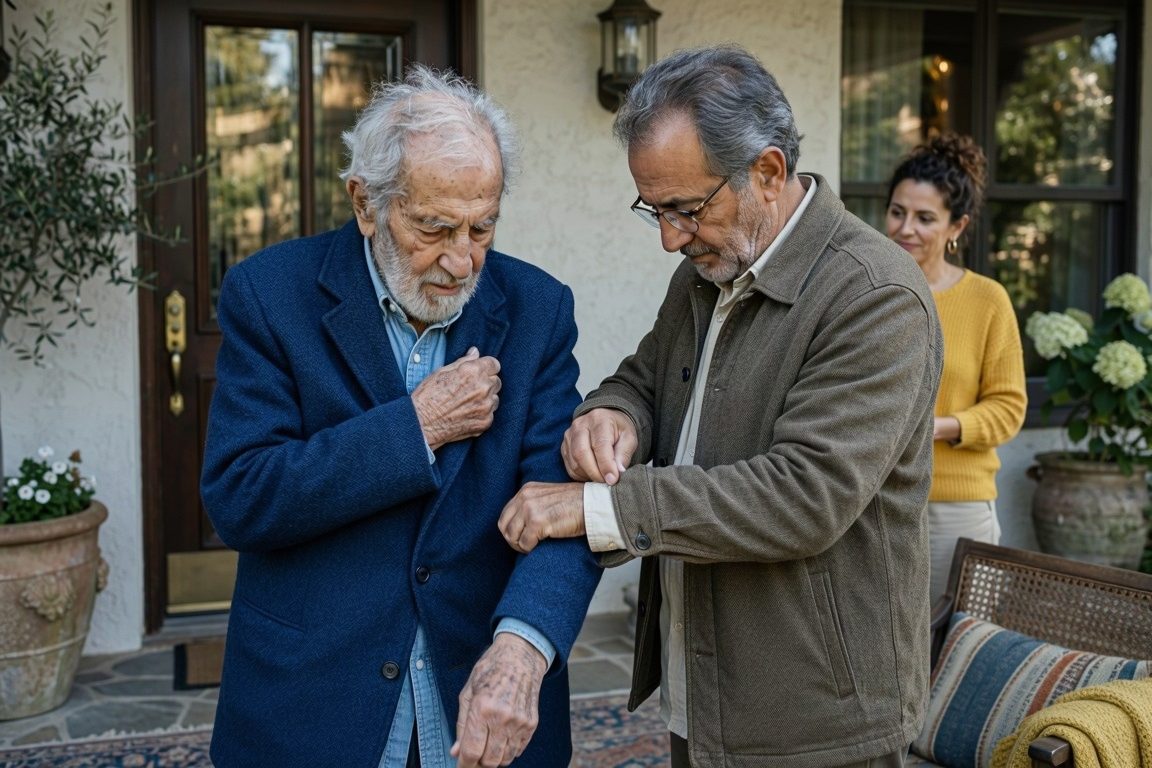
The most effective approach is to shift from 'doing for' to 'doing with.' This means finding ways to provide the help they need without highlighting their mistakes. For example, instead of saying 'You're putting your shirt on backwards, let me fix it,' you might say 'I need to check something in the laundry room, want to come with me and we can both get dressed?' You're not lying; you're creating a joint activity that naturally includes the care task. This preserves their dignity and makes them feel like an equal partner, not a patient. Over time, this builds trust and makes them more open to your suggestions.
The power of joining their world
When your loved one is fixated on something, like trying to leave for work at 2 a.m. or insisting they need to cook dinner when the stove is off, arguing about the facts only deepens their confusion and agitation. Instead, you can 'join their world' by validating their reality and then gently redirecting. For instance, if they think they need to go to work, you might say 'I know you're worried about being late. Let's get your shoes on together, and then we can have a cup of coffee first, your boss always said you were the best at starting the day right.' This validates their feeling (urgency) while steering them toward a safe activity. It's not about agreeing with the delusion; it's about meeting them where they are emotionally and guiding them to a better place.
Practical tools
6
The 'Join Their World' Script
A mental script for when they are fixated on something untrue or unsafe. Step 1: Validate the feeling ('I can see you're worried about being late.'). Step 2: Offer a small, safe action that aligns with their reality ('Let's put on your shoes together.'). Step 3: Redirect to a neutral activity ('Then we can have some tea and look at the clock together.'). This script works for wandering, sundowning, and many other challenging behaviors.
The 'Favor' Frame
Instead of saying 'You need to eat,' say 'I made too much soup and I hate wasting it. Could you help me finish it?' This turns a care task into a collaborative favor, preserving their sense of purpose and competence. Use this for meals, medications (if safe), and light household tasks.
The 'Two-Choice' Menu
Prepare two acceptable options for any care task. For bathing: 'Do you want to take a bath now or after your favorite TV show?' For dressing: 'Do you want to wear the blue shirt or the red one?' This gives them a sense of control while ensuring the task gets done. Write the options on a small whiteboard if they have trouble remembering.
The 'Uniformed Helper' Strategy
If your loved one consistently resists your help but cooperates with a professional, consider hiring a home health aide for specific tasks like bathing or grooming. The uniform and professional demeanor can make the task feel less personal and more like a routine appointment. This is especially useful for toileting and bathing, which are intimate and often resisted.
The 'Music & Routine' Setup
Create a playlist of their favorite songs from their 20s and 30s. Before a potentially difficult task (like bathing or changing clothes), play the music for 5-10 minutes. The familiar tunes can improve mood and reduce anxiety. Pair this with a consistent routine: same time, same order, same gentle phrases each day.
The 'Environmental Prep' Checklist
Before you ask for cooperation, set the stage:
This reduces sensory overload and makes the task feel simpler. For meals, use contrasting plate colors (e.g., white plate on a dark placemat) to improve visibility.
Different situations
Lewy body dementia
People with Lewy body dementia often have visual hallucinations and extreme sensitivity to medications. Avoid arguing about what they see, instead, validate the feeling ('That must be scary') and redirect. Use a calm, slow approach; sudden movements or loud voices can trigger confusion. Also, be aware that they may have 'good days' and 'bad days' with cognition, so flexibility is key.
Late-stage dementia
In late stages, verbal communication may be very limited. Focus on nonverbal cues: gentle touch, a warm smile, and simple one- or two-word phrases ('Time for bath'). Use hand-over-hand guidance for tasks. The goal is comfort and safety, not independence. Accept that you will need to do most of the task for them, but still frame it as 'we' are doing it together.
Spouse vs. adult child caregiver
Spouses often have a longer history of shared roles and may find it harder to shift from partner to caregiver. It can help to explicitly say 'I'm still your partner, and we're going to figure this out together.' Adult children may need to establish a new authority role gently, using phrases like 'The doctor said we should try this' to depersonalize the request.
In a facility or with hired help
If your loved one is in a facility or receiving in-home care from a professional, you can still use these techniques during your visits. Coordinate with staff to ensure consistency. For example, if they resist bathing, ask the aide to use the 'favor' frame: 'I need help testing the water temperature, can you come with me?'
Medicaid or limited budget
If you cannot afford hired help, lean heavily on community resources: adult day centers, volunteer respite programs, and church or senior center support groups. Use the 'uniformed helper' idea by asking a volunteer or student nurse to assist with specific tasks. Many communities have free or low-cost services for dementia caregivers.
For the doctor
4
- If your loved one's resistance is accompanied by new or worsening aggression, paranoia, or hallucinations, discuss with their doctor, this could indicate an infection, medication side effect, or progression of the disease.
- If you are considering using a medication to help with agitation or sleep, ask the doctor about the risks and benefits, especially for people with Lewy body dementia who are sensitive to many drugs.
- If your loved one refuses to eat or drink for more than a day, consult their clinician to rule out medical causes like infection, pain, or swallowing difficulties.
- If you feel overwhelmed, depressed, or unable to cope, talk to your own doctor or a therapist. Caregiver burnout is real and treatable, and you deserve support.