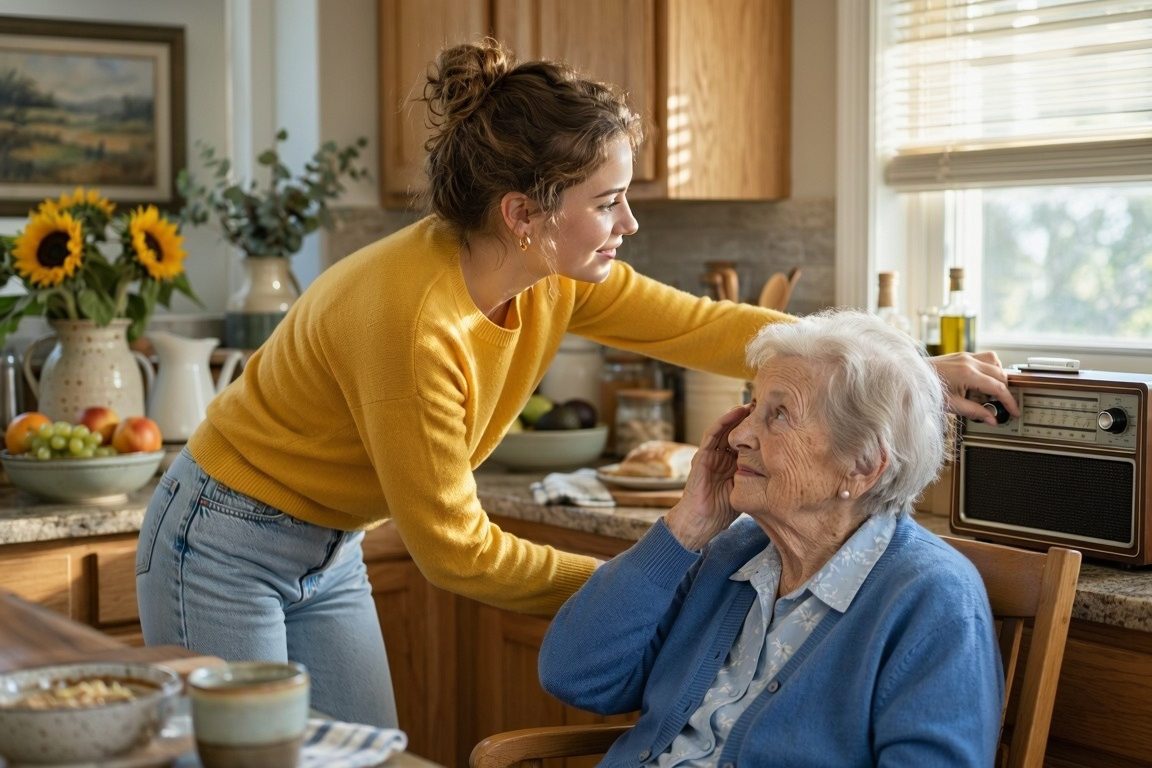
What not to do
- Do not argue or correct delusions, this raises cortisol for both of you.
- Do not use sudden loud sounds, like a blender or vacuum, within 30 minutes of sundowning.
- Do not change the furniture layout unless it improves safety, familiarity reduces confusion.
Key points
- Your own calm is the most powerful tool. Use deep breathing and the CALM acronym to reset before interacting.
- Reduce sensory triggers: soften lights, lower noise, warm the room, and cover mirrors.
- Use 'timely warnings' and ask for permission before starting care tasks to reduce startle and distress.
- Redirect agitation with a simple, meaningful activity or a small snack rather than arguing or correcting.
- Monitor unmet needs like hunger, thirst, or bathroom needs before assuming the behavior is 'just dementia.'
- Create a consistent daily routine to lower anxiety and help regulate the internal clock.
Videos
 How To Manage Caregiver Stress Effectively? - Dementia Help HubThis video covers the foundation of caregiver stress management, which is essential before you can create a calm environment for your loved one.
 Manage dementia caregiver stress: 4 tips to cope with difficult dementia behaviorsOffers four practical, acronym-based tips (CALM) that you can use in the moment to handle difficult behaviors without losing your cool.
 How To Manage Sundowning: Unconventional Caregiver Tips For Dementia.Provides specific environmental strategies for the late afternoon and evening, when agitation often peaks.
 What Is Sundowning In Dementia Care? - Dementia Help HubExplains the science behind sundowning, helping you understand why environmental changes are so effective.
2 more videos
 Should You Force a Loved One with Dementia to Bathe?Demonstrates how to use environmental warmth, lighting, and music to make bathing a less stressful experience.
 When a Loved One with Dementia is Screaming or CryingTeaches how to respond to high-distress moments with calm, validation, and environmental adjustments.
Background
Why the Environment Matters So Much
As dementia progresses, the brain loses its ability to filter and make sense of sensory information. A sound that seems normal to you, a TV, a running dishwasher, a door closing, can feel overwhelming or even threatening to your loved one. Their brain may struggle to connect the dots, leading to confusion, fear, and a fight-or-flight response. This is why a calm, predictable environment is not a luxury; it is a core part of care. Research shows that reducing sensory triggers like loud noises, harsh lighting, or cold temperatures can prevent agitation before it starts. The goal is to create a space where their brain feels safe and understood, not bombarded.
The Role of Your Own Stress as a Trigger
Your emotional state is part of the environment, too. When you are stressed, your body language, tone of voice, and even your breathing change. Your loved one can pick up on this tension, and it can escalate their own distress. That is why the first step in creating a calm environment is often calming yourself. Simple techniques like taking a few deep breaths before entering the room, or stepping away for a minute when you feel overwhelmed, can reset the entire interaction. Caregivers who practice self-care and stress management are better able to provide the steady, reassuring presence that their loved one needs. Remember, your calm is contagious.
Sundowning and the Internal Clock
Many people with dementia experience increased agitation in the late afternoon or evening, a phenomenon called sundowning. This is linked to changes in the brain's internal clock, fatigue, and the buildup of sensory input over the day. The environment can either worsen or ease this. Ensuring plenty of natural light during the day helps regulate the sleep-wake cycle. Then, as evening approaches, dimming lights, reducing noise, and creating a quiet, dark sleep space can signal to the brain that it is time to wind down. Addressing physical needs like hunger, thirst, or pain before they escalate is also crucial. A simple glass of water or a trip to the bathroom can prevent a full-blown episode.
Practical tools
3
Soft-touch nightlight with warm bulb
Place in the hallway and bathroom; choose a 2700K bulb (amber) to avoid glare and melatonin disruption.
Visual timer clock
A large-display clock with red/blue sections showing time passing helps orient without verbal reminders.
Bathroom space heater with auto-shutoff
Use a ceramic model placed on a stable surface 3 feet away from water to pre-warm the room safely.
Different situations
Lewy body dementia
People with Lewy body dementia are often very sensitive to medications and may have visual hallucinations. Avoid strong scents, as they can worsen hallucinations. Use very soft, warm lighting to reduce shadows that might be misinterpreted. Keep the environment extremely quiet and predictable. If hallucinations occur, do not argue; instead, acknowledge their experience and gently redirect to a safe, familiar activity.
Late-stage dementia
In late stages, the person may be bed-bound or have very limited communication. Focus on physical comfort: keep the room at a warm, consistent temperature, use soft music, and provide gentle touch like hand-holding or a light back rub. Speak in a calm, low voice even if you think they cannot hear you. Reduce all unnecessary noise and light. The goal is sensory comfort, not engagement.
Spouse vs. adult child caregiver
Spouse caregivers often have a longer history and deeper emotional bond, which can make it harder to step away. Use the CALM acronym frequently. Adult children may feel guilt about setting boundaries. Remember that taking a break is not abandonment; it is essential for long-term care. Both roles benefit from using 'timely warnings' and asking for permission before care, as this respects the person's dignity.
In a facility (nursing home or assisted living)
You may not control the entire environment, but you can advocate. Ask staff to dim lights in the evening, play calm music in the common area, and avoid loud announcements near your loved one's room. Bring familiar items from home: a soft blanket, a photo, a small lamp. Visit during calm times of day. If your loved one is agitated, ask staff to use a warm approach and to check for unmet needs first.
Medicaid or limited resources
You do not need expensive tools. A warm blanket from home, a free nature sounds app on your phone, a lamp from a thrift store, and a simple notebook all work. Focus on what you can control: your own calm, the lighting, and the routine. Many of the most effective strategies, like using a calm voice, giving warnings, and redirecting with a snack, cost nothing.
For the doctor
3
- If sundowning or agitation does not improve with environmental changes, ask your doctor about whether melatonin or other sleep aids might be appropriate. Always use these under medical supervision.
- If your loved one has a history of aggression or is a danger to themselves or others, discuss behavioral interventions and possible medication options with their healthcare provider. Do not try to manage severe aggression alone.
- If you are feeling overwhelmed, depressed, or anxious, talk to your own doctor or a counselor. Caregiver depression is common and treatable. You deserve support.