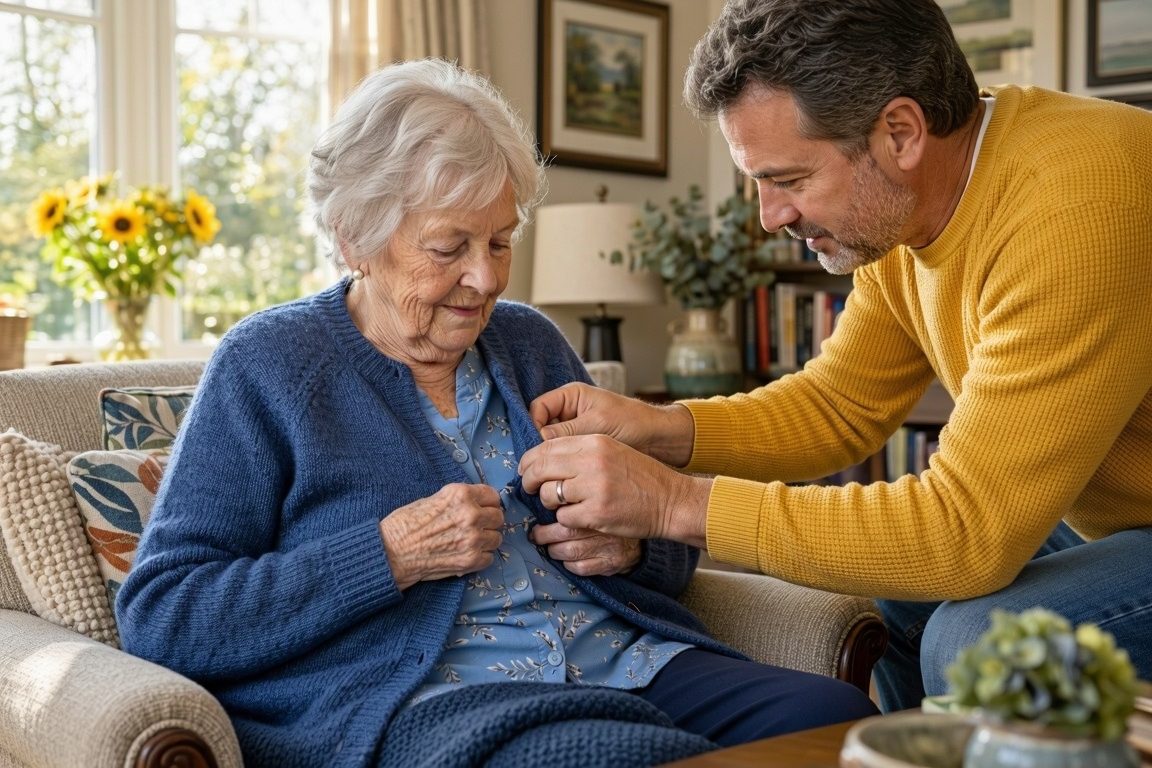
Step by step
What not to do
- Don't buy clothing with many small buttons or zippers. They are frustrating for someone with arthritis or dementia.Instead, choose magnetic or Velcro closures. The struggle with buttons can trigger agitation and refusal to dress.
- Don't leave the entire closet available. Too many choices overwhelm the brain.Instead, limit options to two shirts or two pants at a time. Say, 'Would you like the blue shirt or the green one?' This gives a sense of control without overload.
- Don't rush or force dressing. If the person resists, stop and try again in 10 minutes or later in the day. Forcing can lead to a power struggle and increase agitation. Use distraction: offer a snack, a walk, or a favorite song before trying again.
- Don't ignore signs of pain or discomfort. If the person winces or pulls away when you try to put an arm through a sleeve, stop and check for stiffness, a sore shoulder, or a too-tight shirt. Perform gentle stretches first or choose a looser-fitting garment.
- Don't use busy patterns or dark colors that can be visually confusing. Solid, light-colored fabrics are easier to see and process. Avoid stripes or checks that can create visual illusions or make it hard to find the armhole.
- Don't leave coats, hats, or keys in plain sight if the person tends to wander or leave the house. Store these items out of view to reduce the urge to go out.Instead, keep a 'going-out' bag with essentials in a locked closet.
Key points
- Replace buttons with magnetic closures and zippers with elastic waistbands to reduce frustration.
- Limit clothing choices to 2-3 options per item to avoid overwhelming the person.
- Dress lower body first, then upper body, to follow a natural automatic sequence.
- Use bright, even lighting and labeled drawers to reduce visual confusion.
- Involve the person in the process with simple choices and gentle narration.
- Adapt existing clothing with Velcro, elastic, or no-tie laces before buying new items.
Videos
 Jimmy Zollo, Co-Founder of Joe & Bella Discusses the Importance of Adaptive ClothingThis video directly explains the benefits of adaptive clothing features like magnetic buttons and three-zipper pants, with real-world examples from a company that specializes in this area.
 Assisting with Activities of Daily Living in Dementia CareThis video demonstrates step-by-step dressing assistance techniques, including how to use adaptive clothing and involve the person in the process.
 How to Notice a Person's Procedural Pattern and Provide SupportThis video helps caregivers recognize the person's natural dressing sequence (e.g., lower body first) and adapt their approach accordingly.
 How Dementia Changes What They SeeThis video explains visual changes in dementia, such as difficulty distinguishing patterns or shadows, which is crucial for choosing solid-colored, well-lit clothing and environments.
2 more videos
 What to do when a person with dementia refuses care: 6 simple strategiesThis video offers strategies for handling dressing refusal, including distraction, offering choices, and checking for pain or discomfort.
 How to Help a Person Living with Dementia to Get Dressed and UndressedThis video provides a full walkthrough of dressing and undressing techniques, including how to use adaptive clothing and maintain dignity.
Background
Why Dressing Becomes Harder: The Hidden Challenges
As we age, especially with conditions like Parkinson's or arthritis, fine motor skills decline. Buttons, zippers, and small snaps become nearly impossible to manipulate. For someone living with dementia, the problem isn't just physical, it's also cognitive. The brain struggles to sequence the steps of dressing (e.g., 'first the left arm, then the right, then the buttons'). This can lead to confusion, frustration, and resistance. The person may not be able to explain why they're upset, but the clothing itself is often the culprit: too many choices, too many fasteners, or fabrics that feel unfamiliar or uncomfortable.
The Emotional Weight of Clothing: Identity and Dignity
Clothing is deeply tied to identity. A person with dementia may still recognize themselves in the mirror when wearing a familiar shirt or a favorite color. But if the clothing is hard to put on or looks 'different' (like hospital-style adaptive wear), it can erode that sense of self. The goal is to find adaptive features that look normal, like a shirt that opens with magnets but still looks like a classic button-down. This preserves dignity while making dressing easier for both of you. As one expert noted, 'being able to look in the mirror and recognize yourself has a deeply meaningful impact on an individual's everyday life.'
The Role of Environment and Routine
Dressing doesn't happen in a vacuum. The environment matters: a cluttered closet with mixed seasons and styles overwhelms the brain. Bright, even lighting reduces shadows that can be misinterpreted as holes or objects. A consistent routine, same time, same order of steps, builds procedural memory. And involving the person in the process, even with small tasks like holding a sleeve or choosing between two shirts, maintains their sense of agency. These environmental tweaks are just as important as the clothing itself.
Practical tools
6
Magnetic Button Shirts (e.g., MagnaReady, Joe & Bella)
These shirts look like regular button-downs but use hidden magnets instead of buttons. They allow for quick, one-handed fastening and reduce the need for fine motor skills. Ideal for Parkinson's, arthritis, or dementia. Available in various colors and styles. Tip: Buy two so one can be washed while the other is worn.
Adaptive Pants with Elastic Waist and Three-Zipper System (Joe & Bella)
These pants have a full elastic waistband for easy pull-on and a patented three-zipper design that allows incontinence brief changes without removing pants completely. This is especially useful for car trips or when out of the house. They also have high pleats to hide the brief's bulk.
No-Tie Elastic Shoelaces (e.g., Hickies, Lock Laces)
Replace regular laces with elastic ones that turn any shoe into a slip-on. They stretch to fit the foot and don't need tying. This reduces bending and frustration. Choose shoes with low-cut tops and non-slip soles for safety.
Velcro Closure Adaptations (e.g., for bras, belts, or shoes)
These are available at adaptive clothing stores or online. They reduce the need for fine motor skills and speed up dressing.
Dignity Bib (DIY or store-bought)
A large, absorbent bib that covers the chest and lap during meals. It protects clothing from spills and reduces the need for full outfit changes. You can make one from a towel with a snap closure around the neck. Store-bought versions look like a scarf or vest to maintain dignity.
Labeled Drawers and Closet Organizers
Use large-print labels (with words and pictures) on drawers for 'shirts,' 'pants,' 'socks,' etc. This helps the person find items independently. Remove cabinet doors if needed to make contents visible. Use clear bins for accessories. This reduces visual confusion and promotes independence.
Different situations
For someone with Parkinson's or arthritis (dexterity issues)
Emphasize magnetic closures and elastic waistbands over any type of button or zipper. Use adaptive tools like button hooks or zipper pulls if the person still wants to wear traditional clothes. Consider larger, easy-grip zipper tabs. Perform gentle hand stretches before dressing.
For someone in late-stage dementia (limited mobility or bedridden)
Use clothing that opens fully in the back (like hospital gowns) or has side snaps for easy dressing while lying down. Use adaptive pants with the three-zipper system for incontinence care. Keep the person warm with layers that are easy to remove. Use a 'bed bath' technique with no-rinse wipes to minimize clothing changes.
For a spouse vs. an adult child caregiver
Spouses may feel more comfortable with intimate tasks like dressing, but they may also be more emotionally attached to the person's former style. Gently introduce adaptive clothing by saying, 'This shirt has magnets that make it easier for you to put on yourself.' Adult children may need to be more directive but should always ask permission: 'May I help you with your shirt?'
For someone in a facility (nursing home or assisted living)
Coordinate with staff to ensure clothing is labeled with the person's name. Use clothing that is easy for staff to manage (e.g., back-zip dresses for women, elastic-waist pants for men). Avoid clothing that looks too 'hospital-like' to preserve dignity. Provide a few favorite pieces from home to maintain identity.
For someone on Medicaid or with limited budget
Adapt existing clothing: replace buttons with Velcro strips, add elastic to waistbands, or use no-tie laces. Buy adaptive clothing secondhand from thrift stores or online marketplaces. DIY solutions: cut a slit in the back of a shirt and add Velcro for easy on/off. Use large safety pins to fasten buttons if needed.
For the doctor
5
- If the person has a history of falls or balance issues, ask the doctor or physical therapist about the safest type of footwear (e.g., non-slip soles, low heels).
- If the person has skin tears or fragile skin, ask about clothing materials that are gentle (e.g., cotton, bamboo) and avoid rough seams or tags.
- If incontinence is a concern, ask the doctor about the best type of absorbent brief and whether adaptive pants with a zipper system are appropriate.
- If the person has a feeding tube or other medical device, ask about clothing with easy access openings (e.g., snap-front shirts or side-zip pants).
- If the person is on medications that affect body temperature (e.g., some antidepressants or antipsychotics), ask about layering strategies and breathable fabrics.