
Step by step
What not to do
- Don't throw items away without the person's knowledge; use a 'Maybe' basket and involve them in sorting whenever possible.
- Don't rearrange furniture or move favorite decorations suddenly; make changes gradually.
- Don't argue about why they need to get rid of something; redirect gently with phrases like 'Let's put this in the Maybe box for now.'
- Don't leave hazardous items accessible (cleaning products, medications, sharp tools, spoiled food).
Key points
- Start in unused rooms to minimize distress, and focus on safety hazards first (tripping, fire, spoiled food).
- Involve the person in simple, one-step tasks like folding towels or sorting papers to give them a sense of purpose and control.
- Use the 'Maybe' basket method to avoid the shock of sudden loss, never throw things away without the person knowing.
- Work in small, 15-minute sessions on one area at a time to avoid overwhelming both of you.
- Create clear, straight walking paths through the house and remove throw rugs to prevent falls.
- Ask for help from family, friends, or paid caregivers, you don't have to do this alone. Check VA benefits if eligible.
Videos
 House of Hazards: An Alzheimer's Proofing Case Study: Grandma's HomeThis video shows a real-life example of a severely cluttered home and explains how to approach cleaning without causing distress, starting in unused rooms.
 What Stage Of Dementia Is Incontinence?While focused on incontinence, this video offers general strategies for handling sensitive care tasks with dignity, which applies to cleaning around personal items.
 Alzheimer's and Wandering - Professional Caregiver WebinarThis webinar explains how clutter and overstimulation can trigger wandering, and offers tips for creating a calm, safe environment.
 What Helps Dementia Patients With Toileting?This video provides practical advice for toileting challenges, which often go hand-in-hand with cleaning and decluttering bathrooms.
2 more videos
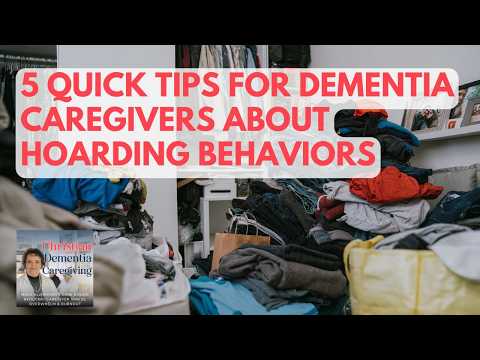 160. 5 Quick Tips for Dementia Caregivers About Hoarding BehaviorsThis video directly addresses hoarding in dementia, offering tips on when to involve the person and how to focus on safety without causing distress.
 #10.5 Dealing with Alzheimer's: Caregiver Stress (5 of 6)This video covers caregiver stress management, which is essential when tackling a big cleaning project, reminding you to take breaks and seek support.
Background
Why Clutter Happens and Why It Matters
In Alzheimer's, especially in middle and late stages, a person may begin to hold onto items or stop cleaning because their brain is changing. The clutter can become a source of comfort, it gives them a sense of control and familiarity in a world that feels increasingly confusing. For some, hoarding behaviors emerge as a way to cope with anxiety or a need for security, rooted in past experiences or hobbies. As one expert notes, 'they experience anxiety and that's part of the reason that they're holding on to stuff is it gives them Comfort it gives them a sense of control' (source 5). At the same time, the person may simply lack the cognitive ability to organize or clean as they once did, leading to stacks of items, spoiled food, and safety hazards like blocked walkways or fire risks.
The Risks of a Cluttered Home for Someone with Dementia
A cluttered home is not just an eyesore, it's a safety hazard. Tripping over throw rugs, extension cords, or piles of items can cause falls, which are especially dangerous for older adults. Spoiled food in the fridge can lead to illness. Stacks of papers and boxes near heat sources or stoves create a fire risk. Additionally, a chaotic environment can overstimulate someone with Alzheimer's, making them more anxious, agitated, or prone to wandering. As one source explains, 'individuals with Alzheimer's disease can become easily upset when in a noisy or crowded environment and if that happens they may try to escape from the chaos and as a result they will wander' (source 8). Cleaning and decluttering, done carefully, can actually reduce these triggers and create a calmer, safer space.
Why Your Approach Matters More Than the Mess
The biggest mistake caregivers make is trying to clean quickly or secretly. If you throw things away without involving the person, you may trigger intense anxiety, anger, or even aggression. The person may feel violated or confused, because those items hold meaning you can't see. As one expert warns, 'a person who is afflicted with Alzheimer's disease may become agitated or irritated if you attempt to change the living environment in any way' (source 13). The key is to go slowly, involve them when possible, and focus on safety first. You are not just cleaning a house, you are preserving their dignity and sense of home.
Practical tools
4
The 'Maybe' Basket
Use two baskets labeled 'Keep' and 'Maybe.' Place uncertain items in 'Maybe,' leave it in a corner for a few days, then discreetly donate or discard if unclaimed.
Exact Phrases to Say When Decluttering
Say: 'I could really use your help folding these towels' or 'Let's put this in the Maybe box for now.' Avoid 'We're throwing this away' or 'You don't need this.'
Home Safety Checklist
Download the Alzheimer's Association Home Safety Checklist and use it room by room:
Simple Folding or Sorting Activity
Gather a basket of towels or socks and ask the person to help fold; if they finish, quietly unfold and refold to extend the activity without rush.
Different situations
Late-stage Alzheimer's / bedridden or very limited mobility
Focus almost entirely on safety: clear all walkways, remove all throw rugs, lock up all hazards. The person may not be able to participate in sorting. Work in their bedroom and bathroom first. Use a Hoyer lift or ask for help if you need to move furniture. Keep the room familiar but free of clutter. You may need to hire a home care worker or use VA benefits for heavy cleaning.
Middle-stage Alzheimer's / still somewhat active
Involve the person as much as possible. Use the folding towels activity, ask them to sort items into 'keep' and 'maybe' piles, or have them rip up old papers. Keep tasks to one or two steps. Work in short bursts. If they become agitated, stop and try again later. Focus on creating clear walking paths and removing tripping hazards.
Adult child caregiver (living with the person or visiting)
You have the advantage of knowing the person's history and preferences. Use that to choose meaningful activities, if they loved gardening, ask them to sort seed packets or dried flowers. If they were a teacher, ask them to stack books. Also, remember to take care of yourself: join a support group, use respite care, and don't feel guilty if you need to step away. 'We can only do what we can do' (source 2).
Home care worker (paid caregiver)
Always ask the family or the person's primary caregiver before moving or discarding anything. Respect the person's routines and favorite items. Use the 'Maybe' basket and involve the person in simple tasks. If the person becomes agitated, stop and redirect to a calming activity. Document what you did and report any safety concerns to the family.
Person has hoarding behaviors (common in Alzheimer's)
Hoarding is often driven by anxiety and a need for control. Do not throw things away without involving the person. Use the 'Maybe' basket and go very slowly. Focus on safety first: clear paths, remove spoiled food, and check for fire hazards. If the person becomes very distressed, consider consulting a geriatric care manager or therapist who specializes in hoarding (source 5).
For the doctor
4
- If the person becomes extremely agitated, aggressive, or has a history of violence when you try to clean, discuss with their doctor whether medication or a behavioral health consult might help.
- If you find large amounts of spoiled food or evidence of unsafe eating (e.g., eating non-food items), ask the doctor about swallowing assessments or dietary interventions.
- If the person is on medications that need to be taken at specific times, and you are reorganizing the kitchen or bathroom, ask the pharmacist or doctor how to safely store and administer those meds during the cleaning process.
- If you are considering moving the person to a new room or facility due to the clutter, discuss this with their physician, care team, or a social worker first, as 'moving a person with Alzheimer's disease from familiar surroundings may cause increased agitation and confusion' (source 10).