Step by step
What not to do
- Do not plan a surprise party. A sudden gathering of people and noise can be deeply frightening and disorienting for someone with dementia.Instead, prepare them gently in advance: 'Tomorrow we are going to have a little visit and some cake. It will be just us and your sister.'
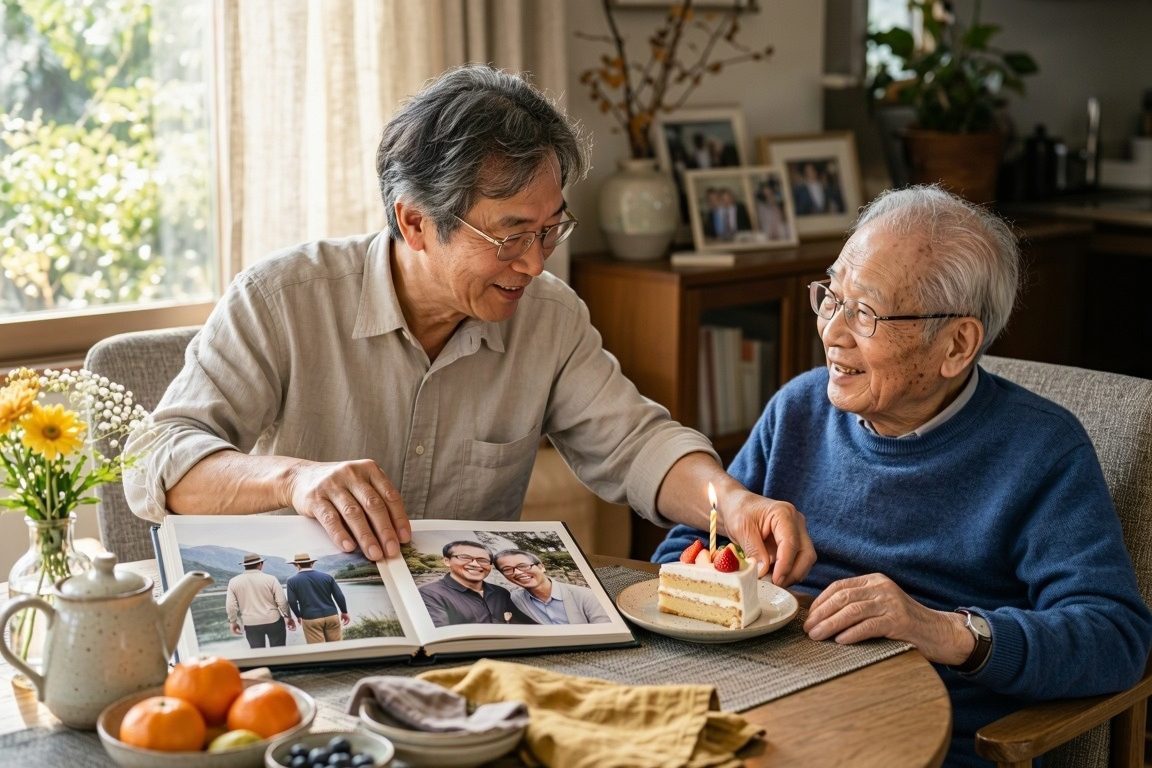
- Do not ask them to blow out candles or make a wish if they seem confused about the ritual. This can create embarrassment or anxiety.Instead, simply light one candle on a cupcake and say, 'Look, a candle for you. We are celebrating you today.' If they do not engage, that is fine, just enjoy the treat together.
- Do not force them to open gifts in front of others. The act of unwrapping can be confusing, and the pressure to show gratitude can be stressful.Instead, open one gift quietly with them later, or give a gift that is immediately usable, like a cozy blanket or a music player with their favorite songs.
- Do not correct them if they think it is a different occasion or if they call you by the wrong name. The goal is connection, not accuracy. If they say, 'Is this Christmas?' you can respond, 'It is a special day for you. I am so happy to be here with you.'
- Do not serve alcohol or caffeine, as these can worsen confusion, agitation, or sleep problems. Offer a non-alcoholic sparkling cider or a favorite non-caffeinated drink instead. Always check with their clinician about any dietary restrictions.
- Do not expect them to remember the celebration afterward. The joy is in the moment, not in the memory. If they do not recall it the next day, that does not mean it did not matter. Your calm, loving presence during the event is what counts.
Key points
- Plan the celebration around your loved one's daily routine, not a traditional party schedule.
- Keep the guest list very small, one or two calm, familiar people, and prepare them in advance about what to expect.
- Use familiar music, simple activities (like decorating pre-made cookies), and a quiet environment to reduce overstimulation.
- Have a 'designated angel' to help redirect if your loved one becomes confused or agitated, so you can enjoy the moment.
- End the celebration before fatigue sets in, 30 to 45 minutes is often plenty.
- Focus on the joy of the present moment, not on whether they remember the event later.
Videos
 Quick Tips: The Holidays and DementiaOffers fast, practical tips for adapting any celebration to dementia, including timing and activity ideas that apply directly to birthdays.
 How to survive the holidays as a dementia caregiverProvides emotional support and concrete strategies for reducing caregiver stress during celebrations, which is crucial for a successful birthday.
 Dementia and The HolidaysCovers how to adjust traditions and expectations, a key mindset shift for birthday planning.
 6 Tips for Successful Holiday Visits!Includes the 'designated angel' concept and tips for preparing guests, both directly applicable to a birthday gathering.
2 more videos
 What are Dementia Friendly Gift ideas? Top 10 gift guide for someone with dementiaHelps you choose a simple, meaningful birthday gift that brings joy without confusion.
 What Is A Good Gift For Someone Who Has Alzheimer's?Offers gift ideas that focus on sensory comfort and familiarity, perfect for a dementia-friendly birthday.
Background
Why Traditional Birthday Parties Can Overwhelm a Person with Dementia
A typical birthday party, with a crowd of guests, loud music, bright decorations, and an expectation to socialize, can be deeply disorienting and exhausting for someone living with dementia. The disease affects the brain’s ability to process multiple stimuli at once, making a busy environment feel chaotic and frightening. Your loved one may become agitated, withdrawn, or confused, not because they don't appreciate the gesture, but because their brain cannot filter out the noise and activity. This is not a rejection of you or the celebration; it is a neurological response to overload. Understanding this helps you reframe the goal: not to throw a perfect party, but to create a moment of genuine connection that feels safe and familiar.
The Emotional Core: Honoring Their Identity and History
For a person with dementia, the present moment can be slippery, but long-term memories, especially from childhood and young adulthood, often remain vivid. A birthday celebration is a powerful opportunity to tap into those preserved memories and affirm their identity. Instead of focusing on the current date or their age, you can celebrate the person they have always been: their favorite music from their twenties, a recipe their mother made, a hobby they loved. This approach, sometimes called 'legacy caregiving,' shifts the focus from what has been lost to what remains. It also gives you, the caregiver, a chance to feel connected and purposeful, even when the disease makes other interactions difficult. The birthday becomes a ritual of love, not a test of memory.
The Role of Routine and Timing in Reducing Anxiety
People with dementia thrive on routine. A sudden change in the day's schedule, like a party in the afternoon when they usually nap, can trigger confusion and irritability. The key is to plan the celebration around their existing rhythm, not the other way around. If your loved one is most alert and calm in the morning, have a small celebration then. If they become restless in the evening, avoid any festivities after dinner. By honoring their internal clock, you reduce the likelihood of agitation and increase the chance of a peaceful, enjoyable experience. This is not about giving up on celebration; it is about being smart about when and how you celebrate.
Practical tools
6
The 'Just Right' Activity Script
A short set of phrases to use when introducing an activity: 'I am so glad you are here with me today. We are going to do something fun together. Look at this [cookie dough / flowers / puzzle]. Would you like to help me?' Keep your tone warm and slow. If they say no, simply say, 'That is okay. I will do it, and you can watch.' This removes pressure and invites participation on their terms.
The Familiar Music Playlist
Music from that era often triggers positive emotions and can reduce agitation. You can also give this as a gift, a 'music box' they can use all year.
The Quiet Corner Setup
This gives them a safe retreat without feeling punished.
The Pre-Made Cookie Decorating Kit
Buy
Set everything out on a tray before the celebration begins. This activity requires no baking, no measuring, and no waiting. Your loved one can decorate one cookie or ten, whatever feels right. The focus is on the sensory experience of frosting and sprinkles, not on the finished product.
The 'Designated Angel' Role Card
Before the celebration, choose one guest (not the primary caregiver) to be the 'angel.' Give them a simple card that says: 'Your job is to gently redirect if [name] seems confused or upset. Offer a favorite object, guide them to the quiet corner, or start a familiar song. Do not correct or argue. Just be a calm, loving presence.' This frees you to enjoy the moment.
The One-Gift Rule
Instead of a pile of presents, give one meaningful gift that can be used immediately. Good options: a cozy throw blanket, a music player with their playlist, a large-print photo book of family, or a simple fidget blanket. Wrap it in a single layer of tissue paper (not noisy wrapping paper) so unwrapping is easy. Say, 'This is for you. I thought you might like it.'
Different situations
Late-stage dementia (when the person is mostly non-verbal or bed-bound)
Scale back to a very brief, sensory-focused moment. Play their favorite song softly, hold their hand, and place a small, familiar object (like a soft scarf or a smooth stone) in their hand. Say, 'Happy birthday. I love you.' The celebration might last only 5–10 minutes. Do not expect any response; your presence is the gift. Avoid any food or drink unless cleared by a clinician.
Lewy body dementia (with visual hallucinations or movement issues)
Keep the environment very simple and uncluttered. Avoid patterned tablecloths or busy decorations that might be misinterpreted. Use soft, warm lighting. If hallucinations occur, do not argue, simply say, 'I see you are looking at something. Let's move to the other room.' Plan the celebration for a time when they are least likely to have episodes (often mid-morning). Have a 'designated angel' ready to help with any sudden confusion or falls.
Spouse as caregiver (vs. adult child)
As a spouse, you may feel a deep sense of loss on their birthday. It is okay to grieve privately. Consider having a separate, quiet moment for yourself, light a candle, look at old photos, or call a friend. During the celebration, focus on what remains: their presence, their favorite song, the way they smile. You might say, 'I am so glad I get to spend this day with you.' If you feel overwhelmed, ask a trusted family member to be the 'designated angel' so you can step away briefly.
Living in a care facility
Coordinate with the staff to find the best time for a visit. Ask them about your loved one's current routine and favorite activities. Keep the celebration in their room or a quiet common area. Bring a familiar item from home (like a favorite blanket or photo). Let the staff know about any dietary needs. If your loved one is easily overstimulated, a 20-minute visit with a single treat and a song may be more meaningful than a longer party.
Frontotemporal dementia (with behavior or language changes)
Be prepared for possible disinhibition or unusual behaviors. Keep the celebration very short (15–20 minutes) and low-key. Avoid any activity that requires following instructions. Instead, offer a simple sensory experience: a favorite food, a soft texture, or a familiar song. If they become agitated, do not take it personally, end the celebration calmly and try again another day. The goal is a positive moment, not a traditional party.
For the doctor
4
- Ask your loved one's doctor or geriatrician: 'Are there any dietary restrictions I should be aware of for a birthday treat? For example, should I avoid sugar, salt, or certain textures due to swallowing difficulties?'
- Ask: 'Is it safe for my loved one to have a small amount of a favorite alcoholic drink (like a sip of wine) on their birthday, or should I avoid it entirely?'
- Ask: 'My loved one sometimes becomes very agitated in the afternoon. Are there any medications or strategies you recommend to help them stay calm during a short celebration?'
- Ask: 'If my loved one has trouble swallowing, what are safe textures for a birthday treat, for example, pudding, ice cream, or a soft cookie?'