Step by step
What not to do
- Do not rely on a brief doctor's office visit to decide. A 15-minute checkup cannot assess real-world driving skills. Many doctors may err on the side of caution due to liability concerns, while others may not have the training to evaluate driving safety.Instead, seek a specialized driving evaluation from a certified rehabilitation specialist.
- Do not assume that driving only on familiar routes is safe. Dementia affects executive function, which means even a short, familiar trip can become dangerous if the person fails to stop at a stop sign or misjudges a turn. Familiarity does not compensate for lost judgment and reaction time.
- Do not confront your loved one with a list of their mistakes immediately after a ride. This can cause shame, anger, or defensiveness.Instead, wait for a calm moment and use gentle, caring language. The goal is to protect them, not to win an argument.
- Do not ignore small signs like new dents, getting lost, or confusion at intersections. These are early warnings that the person's driving skills are declining. Waiting for a major accident is too late.
- Do not try to handle this alone. Reach out to other family members, the person's doctor, or a dementia support group. You may also consider contacting your local Area Agency on Aging for resources. The emotional and practical burden of this decision is heavy, and you deserve support.
Key points
- Dementia impairs the brain's executive functions needed for safe driving, including judgment, reaction time, and spatial awareness.
- A ride-along observation is the first step: watch for failure to stop, lane drifting, confusion at intersections, and near-misses. Always have a safety stop-condition: if you feel unsafe, ask to pull over immediately.
- Do not rely on a brief doctor's visit; seek a specialized driving evaluation from a certified rehabilitation specialist.
- You can report an unsafe driver to your state DMV, but this step has permanent legal consequences and should be taken with guidance from a doctor or elder law attorney.
- Avoid using hidden kill switches, dummy keys, or hiding the car without professional oversight. Instead, work with a doctor or dementia-care specialist to develop a safe and respectful transition plan.
- The conversation about stopping driving should be gentle, use 'I' statements, and offer alternative transportation options.
Videos
 Find out if your loved one with dementia is safe to drive!This video provides a practical, step-by-step guide on how to assess driving safety, including what to look for during a ride-along and how to use state reporting systems.
 SIGNS YOUR LOVED ONE WITH DEMENTIA IS NOT SAFE TO DRIVEFocuses on specific warning signs you can observe while riding with your loved one, such as difficulty staying in lanes, missing stop signs, and getting lost.
 Driving Under the Influence...of Dementia | Teepa's ClipsTeepa Snow explains the brain changes that make driving dangerous and why the person often doesn't realize they are unsafe, helping you approach the issue with empathy.
 When Should a Person with Dementia Stop DRIVING? ~ ABCs of Dementia FAQsAnswers common questions about timing and offers strategies for having the conversation and taking action, including the use of kill switches and dummy keys.
2 more videos
 The Baffled Brain: Demystifying Dementia Episode 17 March 20, 2021Discusses the emotional impact of losing driving privileges and provides communication techniques to reduce resistance.
 Debra Dementia Live!Offers real-life caregiver experiences and practical tips for managing the transition away from driving.
Background
Why driving becomes dangerous in dementia
Dementia doesn't just affect memory; it attacks the brain's executive functions, which are critical for safe driving. These include the ability to anticipate consequences, plan and organize, and react quickly to unexpected events like a child running into the street or a car suddenly braking. As one expert explains, a person with dementia may still manage the mechanics of driving, turning the wheel, pressing the gas, but lose the ability to judge when to slow down, stay in their lane, or merge safely. This is why even someone who only drives to the pharmacy or church can be a danger: familiar routes don't require less skill, they just hide the decline until a crisis happens.
The hidden risk: the person often doesn't know they're unsafe
A key challenge is that the part of the brain that allows a person to recognize their own limitations is also damaged by dementia. This means your loved one may genuinely believe they are driving fine, even when they are swerving, missing stop signs, or getting lost. As one source notes, the person's brain thinks they are doing okay because the self-awareness center is impaired. This is not stubbornness or denial, it's a symptom of the disease. Understanding this can help you approach the conversation with compassion rather than frustration.
Why doctors' assessments may not be enough
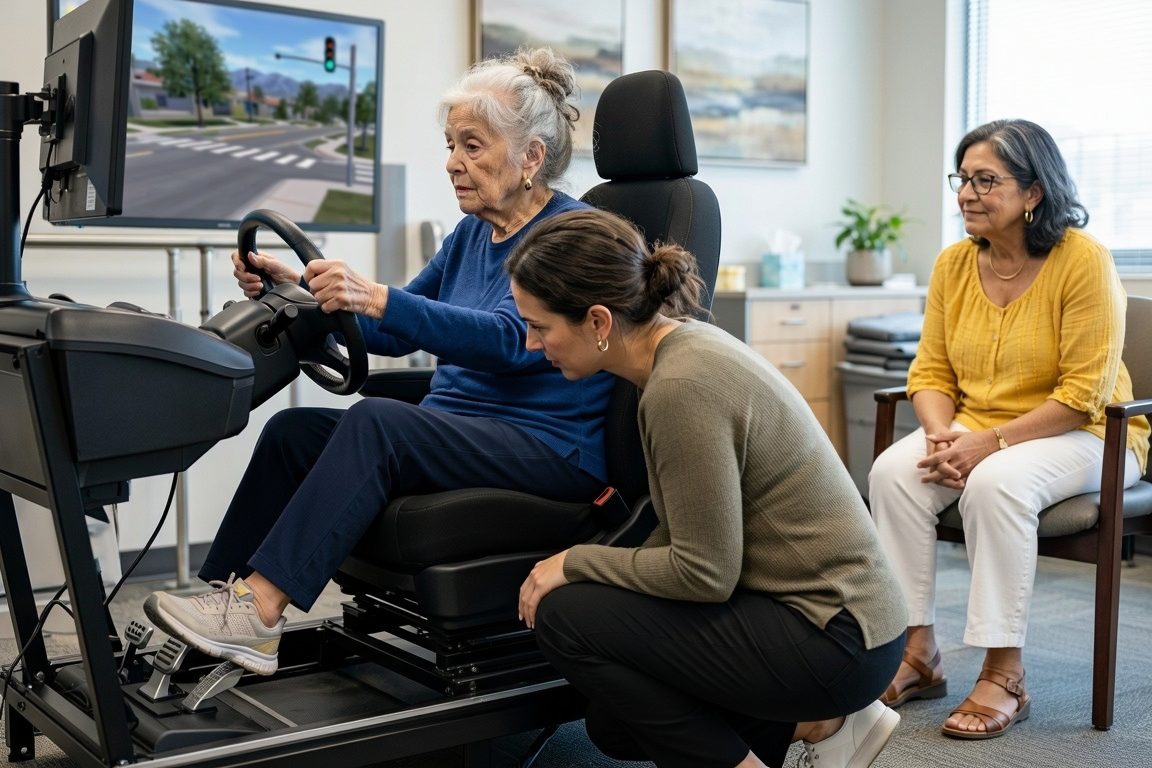
Many family caregivers assume a doctor's office visit will determine driving safety, but that is often not the case. A brief checkup cannot replicate the complex demands of real driving. Some doctors may be cautious and recommend stopping driving simply to avoid liability, even if the person is still relatively safe. Conversely, a person with mild dementia may perform well in a clinic but struggle on the road. That's why a specialized driving evaluation, either a simulator or an on-road test with a certified driving rehabilitation specialist, is the gold standard. You can find one through the Association for Driving Rehabilitation Specialists (ADED).
Practical tools
4
Ride-along observation checklist
Print or write down a simple checklist to use during a ride-along. Include items:
Mark yes/no for each and note any specific incidents.
State DMV reporting form
Search online for 'report an unsafe driver [your state]' and find the official form. Fill it out with specific observations (e.g., dates, incidents) and submit it. The DMV will then take over the process, which can include a driving test or license suspension. This removes the burden from you and places it with a neutral authority. **Important:** This step has permanent legal consequences and should ideally be taken with guidance from an elder law attorney or social worker.
Driving rehabilitation specialist directory
Visit the Association for Driving Rehabilitation Specialists (ADED) website to find a certified specialist in your area. These professionals provide comprehensive evaluations that include simulator tests and on-road assessments. The cost varies but is often covered by insurance or Medicare if prescribed by a doctor.
Alternative transportation plan
Before taking away the keys, create a list of alternative transportation options: family members who can drive, local senior ride services, public transit, or ride-sharing apps like Uber or Lyft (with a family member's help to book). Present this plan to your loved one as a way to maintain their independence, not as a punishment.
Different situations
Early-stage dementia (still aware of limitations)
In early stage, your loved one may still have insight and can participate in the decision. Have an open conversation about the risks and ask them to consider a driving evaluation voluntarily. They may agree to stop driving if you present it as a proactive safety measure. Use the ride-along checklist together and discuss findings calmly.
Middle-stage dementia (limited insight)
In middle stage, the person likely cannot recognize their own deficits. You will need to take more direct action, such as working with a doctor or dementia-care specialist to develop a safe transition plan. Avoid lengthy explanations; instead, use simple, reassuring statements like 'The car is being fixed' or 'I'll drive you today.' Focus on maintaining their routine and dignity.
Lewy body dementia or Parkinson's disease dementia
These conditions often cause visual hallucinations, fluctuating cognition, and movement problems (e.g., stiffness, tremors). These symptoms can make driving extremely dangerous even in early stages. Pay extra attention to changes in vision, reaction time, and ability to turn the steering wheel or press pedals. A driving evaluation is strongly recommended early on.
Spouse vs. adult child caregiver
A spouse may find it harder to assert authority over driving decisions, as the relationship is more equal. An adult child may need to step in more firmly, especially if the spouse is also elderly or in denial. In either case, involve other family members to share the responsibility and avoid one person bearing the entire emotional burden.
Living in a rural area with limited public transit
If your loved one lives in a rural area where driving is essential for errands and medical appointments, stopping driving can feel devastating. Work with local senior services, faith-based groups, or volunteer driver programs to create a reliable transportation network. Consider moving to a more accessible location if possible.
For the doctor
6
- Ask your loved one's doctor if they can prescribe a formal driving evaluation through a certified driving rehabilitation specialist. This is often covered by Medicare or insurance.
- If your loved one has had a recent accident or near-miss, discuss with the doctor whether a neurological assessment is needed to evaluate changes in cognition or vision that affect driving.
- If your loved one is taking medications that cause drowsiness, dizziness, or confusion (e.g., sedatives, anticholinergics), ask the doctor if these could be contributing to driving difficulties and if alternatives exist.
- If your loved one has a history of seizures, fainting, or sudden confusion, discuss with the doctor whether these conditions make driving unsafe regardless of dementia stage.
- Ask your doctor: 'Are there any safe, non-deceptive strategies to prevent driving if my loved one resists? Should I consult an elder law attorney before taking any restrictive measures?'
- Ask your doctor: 'What are the legal and ethical considerations for reporting an unsafe driver to the DMV? Can you recommend a social worker or elder law attorney to guide me through this process?'