
Step by step
What not to do
- Don't say 'I need help' without specifics. This overwhelms people and invites vague offers that never materialize.Instead, say 'I need someone to pick up Mom's prescription at CVS on Thursday at 2 p.m.'
- Don't ask in a group setting (family dinner, group text) where everyone assumes someone else will step up.Instead, ask one person privately. This creates clear accountability.
- Don't wait until you're drowning to ask. People can sense desperation and may feel pressured or resentful.Instead, ask early and often, when you still have energy to explain calmly.
- Don't reject offers of help because 'no one can do it like I do.' This isolates you and burns you out.Instead, accept imperfect help. Your loved one will be fine if the towels are folded differently.
- Don't assume people know what you need. They can't read your mind. One caregiver learned this the hard way: 'I walked back into the living room and heard my mother say to my aunt, "Oh no, we don't need any help." I almost ripped the phone out of her hands.' Be explicit.
Key points
- Vague requests get vague results. Be specific: what, when, where, how long.
- Match the task to the person's strengths and availability.
- Make the ask one-on-one, not in a group.
- Prepare helpers for dementia behaviors: explain that your loved one may refuse help but still needs it.
- Accept imperfect help. Your loved one will be fine.
- Repeat the process: choose a person, choose a task, make the ask. Keep going.
Videos
 Caregiving HelpThis video walks you through the exact process of choosing a person, choosing a task, and making the ask. It's practical and encouraging.
 MAKE A DIFFERENCE FROM AFAR - How to Provide Care to Parents from a DistanceIf you have long-distance family members, this video shows how to turn their good intentions into concrete help like research, phone calls, or bill paying.
 GET THE HELP YOU NEED (When siblings won't help with elderly parents)This video addresses the painful dynamic of siblings who don't step up. It offers scripts for having honest conversations and setting boundaries.
 An Interview with Dementia Expert and Educator Teepa SnowTeepa Snow explains the 'triad' approach: how to introduce a helper gradually so your loved one accepts them. Essential for when your loved one refuses help.
2 more videos
 Bonus Live Q & AReal caregivers ask questions about getting help. You'll hear practical solutions for common roadblocks like guilt, refusal, and lack of family support.
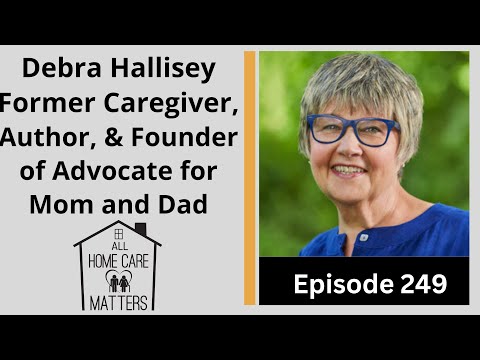 Debra Hallisey - Former Caregiver, Author, & Founder of Advocate for Mom and DadDebra shares her own story of learning to ask for help, including the moment she realized she couldn't do it alone. Inspiring and relatable.
Background
Why Vague Requests Fail
When you say 'I need help' or 'Can you do something for Mom?' people want to help but don't know what to do. They may feel overwhelmed, unsure of their skills, or afraid of doing something wrong. Dementia adds complexity: your loved one may appear fine during short visits, so helpers don't see the daily struggle. As one expert notes, 'What you saw was her social self. I love that part, too. When guests leave, though, her confusion comes back and she gets frustrated.' Without a concrete ask, helpers default to offering generic comfort or nothing at all.
The Power of a SMART Request
A SMART request turns a wish into an action. It's Specific: 'Can you pick up Mom's prescription at CVS on Thursday at 2 p.m.?' instead of 'Can you help with errands?' It's Measurable: 'I need two hours of respite every Wednesday afternoon' so you can track whether it happened. It's Achievable: asking a neighbor to sit with your loved one for 30 minutes while you shower is realistic; asking them to manage medications is not. It's Relevant: match the task to the person's strengths, your retired aunt who loves research can look into adult day programs, while your athletic nephew can take your loved one for a walk. It's Time-bound: 'Could you do this every Tuesday for the next month?' gives a clear end point and reduces guilt for everyone.
How Dementia Changes the Ask
Dementia makes it hard for your loved one to accept help from others. They may refuse a sitter or insist they don't need anything. This means you need to prepare helpers in advance. Explain that the person's brain is changing: 'Mom may say she's fine, but she needs supervision in the afternoons when she gets confused. Please don't take her refusal personally.' Also, your own brain may resist asking because you've been trained to be the expert. One caregiver coach reminds us: 'You need to know what you need, advertise what you need, and accept what you need.' That third step, accepting, is often the hardest.
Practical tools
6
The SMART Request Script
Print this and keep it by your phone: 'Hi [Name], I'm reaching out because I need help with [specific task]. It would help me so much if you could [action] on [day] at [time] for [duration]. Would that work for you? If not, is there another time that works?' Example: 'Hi Aunt Pat, I'm reaching out because I need help with Mom's afternoon restlessness. It would help me so much if you could sit with her on Wednesdays from 2 to 3 p.m. for the next month. Would that work for you?'
The Task Inventory Checklist
Create a simple list of 10-15 tasks you do weekly. Next to each, write the name of a person who could do it, the time commitment, and any special skills needed. Update it monthly as needs change. This turns vague overwhelm into a concrete menu of options you can offer helpers.
The 'Help That Helps' Calendar
Use a shared online calendar (Google Calendar, Cozi) where helpers can sign up for specific slots. Label each slot with the task (e.g., 'Sit with Mom 2-3 p.m. Tuesday') and a brief note ('Bring a magazine, she likes looking at pictures'). This reduces back-and-forth and gives people ownership.
The 'No Guilt' Thank-You Note
After someone helps, send a quick text or note: 'Thank you so much for [specific task]. It made a real difference because [specific benefit]. I appreciate you.' This reinforces the behavior and builds a culture of gratitude, making future asks easier.
The 'What Would Make Sense' Matching Tool
For each potential helper, ask yourself:
Match the task to their strengths and availability. Your retired neighbor might love a standing coffee date; your busy sibling might prefer to handle online bill pay from home.
The 'Three-Minute Ask' Video Script
If you're nervous about asking, record a short video (2-3 minutes) explaining the situation and the specific help you need. Send it to one person at a time. This lets you control the message and gives the recipient time to process without feeling put on the spot.
Different situations
Lewy body dementia or Parkinson's dementia
These conditions often involve visual hallucinations, fluctuating cognition, and movement issues. When asking for help, emphasize that the person may have good days and bad days. Ask helpers to be flexible: 'If Mom is having a rough day, we may need to reschedule. I'll let you know by 10 a.m.' Provide a brief list of calming activities (listening to music, looking at a fish tank) and things to avoid (sudden movements, arguing about hallucinations).
Late-stage dementia (bedbound, minimal communication)
Help now focuses on physical care: turning, feeding, hygiene. Ask for help with specific, short tasks: 'Could you come over for 20 minutes to help me turn Dad in bed?' or 'Could you sit with him while I shower?' Be very clear about what the helper should NOT do (e.g., 'Please don't try to feed him, I'll handle that'). Consider asking for help with household chores (laundry, dishes) so you can focus on direct care.
Adult child caregiver vs. spouse caregiver
Adult children often feel guilt about 'burdening' siblings. Use the 'educational approach': 'I know you saw Mom smiling today, but in the afternoons she gets scared and tries to leave. It's hard for me to manage alone. Could you call her at noon to check in?' Spouses may feel they 'signed up for this.' Remind yourself that accepting help is not failing, it's sustaining your ability to care. Ask for respite: 'I need 20 minutes every Thursday to go for a walk. Could you stay with him?'
Long-distance family members
They can't do hands-on care, but they can handle administrative tasks: research adult day programs, manage online bill pay, coordinate meal deliveries, or call your loved one daily for a 10-minute chat. Be specific: 'Could you research three adult day centers near Mom and send me a comparison by Friday?' or 'Could you call her every day at noon to remind her to take her medication?' This gives them a concrete way to contribute without being physically present.
When your loved one refuses help from others
This is common. Use the 'triad' approach: introduce the helper gradually while you're present. Have the helper arrive with a simple activity (looking at a photo album, folding laundry) and let them engage while you stay in the room. Over several visits, gradually step out for 5, then 10, then 20 minutes. Explain to the helper: 'She may say she doesn't need help, but please just sit with her and chat. Your presence is the help.'
For the doctor
4
- If your loved one has aggressive behaviors or wandering, ask your doctor about safety strategies before asking others to sit with them.
- If you're considering hiring paid help, ask your clinician about local resources or referrals to home care agencies.
- If your loved one has swallowing difficulties or complex medication needs, discuss with the doctor what tasks are safe to delegate to family helpers.
- If you're feeling overwhelmed or depressed, talk to your clinician about caregiver support groups or counseling.