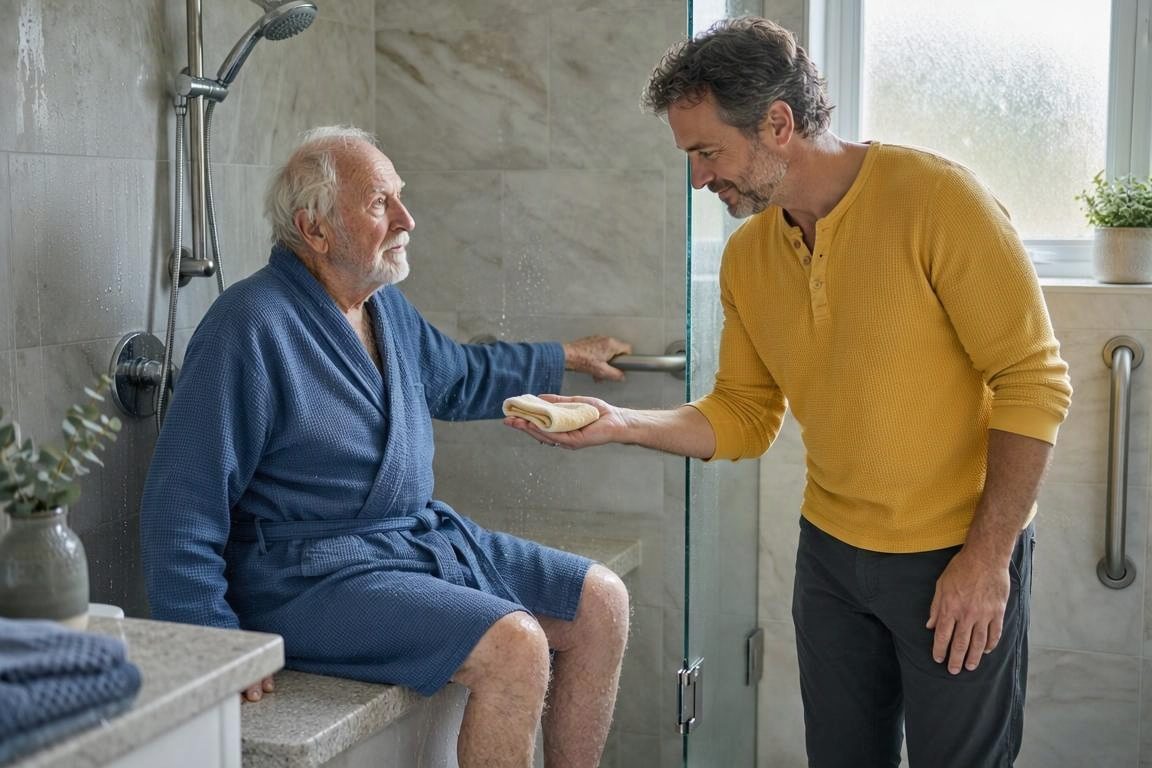
Step by step
What not to do
- Do not argue or force. If you say 'You need a shower' and they refuse, arguing will only escalate the situation.Instead, drop it and try again later. Forcing can cause trauma and make future baths even harder.
- Do not surprise them. Never suddenly announce bath time or grab them by the arm. Approach slowly, explain what you are going to do, and give them time to process. A sudden approach can trigger a fight-or-flight response.
- Do not leave them alone in the bathroom. Even if they seem okay, they can slip, fall, or become confused. Stay within arm’s reach, and never leave them unattended in the tub or shower.
- Do not use cold water or a cold room. A person with dementia often feels cold, and a chilly bathroom will make them resist undressing. Warm the room to at least 75°F (24°C) and use warm water. You should feel slightly warm yourself.
- Do not criticize or shame. Never say 'You smell' or 'You haven’t bathed in a week.' This will only humiliate them and damage trust.Instead, focus on positive reasons: 'This will help you feel fresh and comfortable.'
- Do not insist on a full bath every day. For many people with dementia, a full bath once or twice a week is enough, with sponge baths or wipe-downs in between. Daily full baths can be exhausting and unnecessary.
Key points
- Bathing resistance is not defiance, it is a brain-based response to sensory changes, fear, and loss of dignity.
- Prepare everything before you approach: warm room, warm water, all supplies within reach.
- Use positive, inviting language and avoid asking yes/no questions. Say 'Let’s get you fresh' instead of 'Do you want a bath?'
- Break the task into small steps: start with face and hands, then partial bath, then full bath on another day.
- Use tools like a shower chair, handheld showerhead, no-rinse wipes, and warm towels to make the experience safer and more comfortable.
- If you are struggling, ask for help from a professional caregiver, therapist, or home health aide.
Videos
 Dementia Bathing Tips: 8 tips to make bathing easierThis video gives concrete, step-by-step tips that align with the advice in this article, including preparation, distraction, and using the right products.
 Secrets for How to BATHE A Person with Dementia Without a FIGHT! The ABC's of FAQ's for DementiaThis video covers the emotional and practical aspects of bathing, with real-life examples and product recommendations that can reduce resistance.
 Nothing’s Working? Try These 3 Dementia Behavior FixesWhen standard approaches fail, this video offers alternative strategies for responding to challenging behaviors, including bathing refusal.
 How To Help Someone Have a Better Bathing ExperienceThis video focuses on creating a positive, dignified bathing experience, with tips on environment, communication, and safety.
2 more videos
 6 ways to make dementia care tasks easier: Respect and Dignity in dementia careThis video offers general principles for all care tasks, including bathing, with an emphasis on maintaining the person’s dignity and autonomy.
 Ep. 152 - When It's Our Turn to Care for Mom or DadThis episode provides a broader perspective on caregiving challenges, including bathing, with emotional support and practical advice for family caregivers.
Background
Why Bathing Becomes So Hard
For someone with dementia, the simple act of bathing can feel like an attack. Their brain is changing in ways that make water feel like stabbing pain, the bathroom feel like a cold, unfamiliar place, and your help feel like a violation of their privacy. The part of the brain that processes how things feel against the skin, the insula, starts to degrade, so a gentle warm stream can feel painful. The parietal lobe, which helps navigate space, can misfire, making stepping into a tub or shower feel terrifying, like stepping into a dark hole.
It’s Not Just About Hygiene: It’s About Dignity
Nobody likes being told what to do, especially about something as personal as washing. Your loved one may not remember when they last bathed, so your reminder feels like an accusation. They may also have grown up in an era when a weekly bath was the norm, and their brain is reverting to that old habit. The loss of dignity, having someone else see them naked, touch them, or tell them they smell, can trigger anger, fear, or withdrawal. This is not defiance; it is a protective response.
Sensory and Environmental Triggers
The bathroom itself can be overwhelming. The sound of running water, the echo, the bright lights, the cold air, all can feel like sensory overload. People with dementia also have trouble regulating body temperature, so they often feel cold. Asking them to undress when they are already chilly is a non-starter. The fear of slipping, the confusion about which faucet is hot or cold, and the inability to understand why they need to get wet all add to the resistance.
Practical tools
6
Exact Phrases to Say
Instead of 'Time for your shower,' say: 'Let’s get you all nice and fresh for the day.' Instead of 'You need to wash,' say: 'I’ve got the water all warm, let’s get you comfortable.' If they resist, say: 'I know this feels strange, but I’m right here with you. We’ll go slow.' Always use a calm, warm tone.
Bath Preparation Checklist
Before you approach your loved one:
No-Rinse Bathing Products
Products like 'Rinse-Free Shampoo Caps' (e.g., Shampoo Cap brand) and 'No-Rinse Body Wash' (e.g., Nivea or Cetaphil) allow you to clean without water. You can also use 'Bath Wipes' (e.g., Medline or Dignity brand) for a quick sponge bath. These reduce the need for a full shower and are less intimidating.
Shower Chair or Bath Bench
A sturdy shower chair (e.g., Drive Medical or Medline) lets your loved one sit while bathing, reducing fear of falling and making the process safer. A bath bench that straddles the tub edge is also helpful. Always ensure it is non-slip and weight-rated.
Handheld Showerhead
A handheld showerhead (e.g., Waterpik or Delta) lets you control the water flow and direction. You can avoid spraying their face, which is often a trigger. Use a gentle, low-pressure setting.
Warm Towel and Robe
Warm a towel in the dryer for a few minutes before the bath. After the bath, wrap them in the warm towel or a soft robe immediately. This helps them feel cozy and reduces the shock of getting out of the water.
Different situations
Lewy Body Dementia
People with Lewy body dementia often have severe sensitivity to water temperature and depth perception issues. Use very warm water (not hot), a shower chair, and a handheld showerhead. Avoid any sudden movements or loud noises. They may also have fluctuations in alertness, so choose a time when they are most awake and calm.
Late-Stage Dementia
In late stages, your loved one may be bedbound or unable to sit up. Use bed baths with no-rinse wipes or foam soap. Keep them covered with a sheet or towel to maintain dignity. Use a waterproof pad under them. You may need two people to help with turning and cleaning. Focus on comfort, not perfection.
Spouse vs. Adult Child Caregiver
A spouse may feel more comfortable with intimate care, but the spouse may also feel embarrassed or resentful. If the spouse is struggling, consider hiring a home health aide for bath days. An adult child may need to be extra sensitive to the parent’s dignity, use a same-gender caregiver if possible, and always knock and announce yourself.
In a Facility or with Medicaid
If your loved one is in a nursing home or assisted living, the staff should follow a person-centered care plan. Ask for a consistent caregiver who knows your loved one’s preferences. Medicaid may cover bathing supplies like no-rinse wipes or a shower chair. You can also request a physical therapy evaluation to address mobility issues.
Cultural or Religious Considerations
Some cultures or religions have specific modesty requirements. For example, a Muslim or Orthodox Jewish person may need to be covered during bathing. Use a towel or sheet to cover private areas. If possible, have a same-gender caregiver. Respect their need for privacy and dignity above all.
For the doctor
5
- Ask your doctor if a physical or occupational therapy evaluation is appropriate to assess bathing safety and recommend equipment.
- Discuss whether your loved one has any skin conditions (e.g., fungal infections, pressure sores) that require special bathing products or frequency.
- If your loved one has a history of falls, ask about a shower chair, grab bars, and a non-slip mat. A doctor can write a prescription for these items.
- If your loved one becomes extremely agitated or aggressive during bathing, ask about non-pharmacological strategies or, as a last resort, medications to reduce anxiety. Never medicate without a doctor’s guidance.
- Ask about the use of no-rinse products if your loved one has sensitive skin or allergies.