Step by step
What not to do
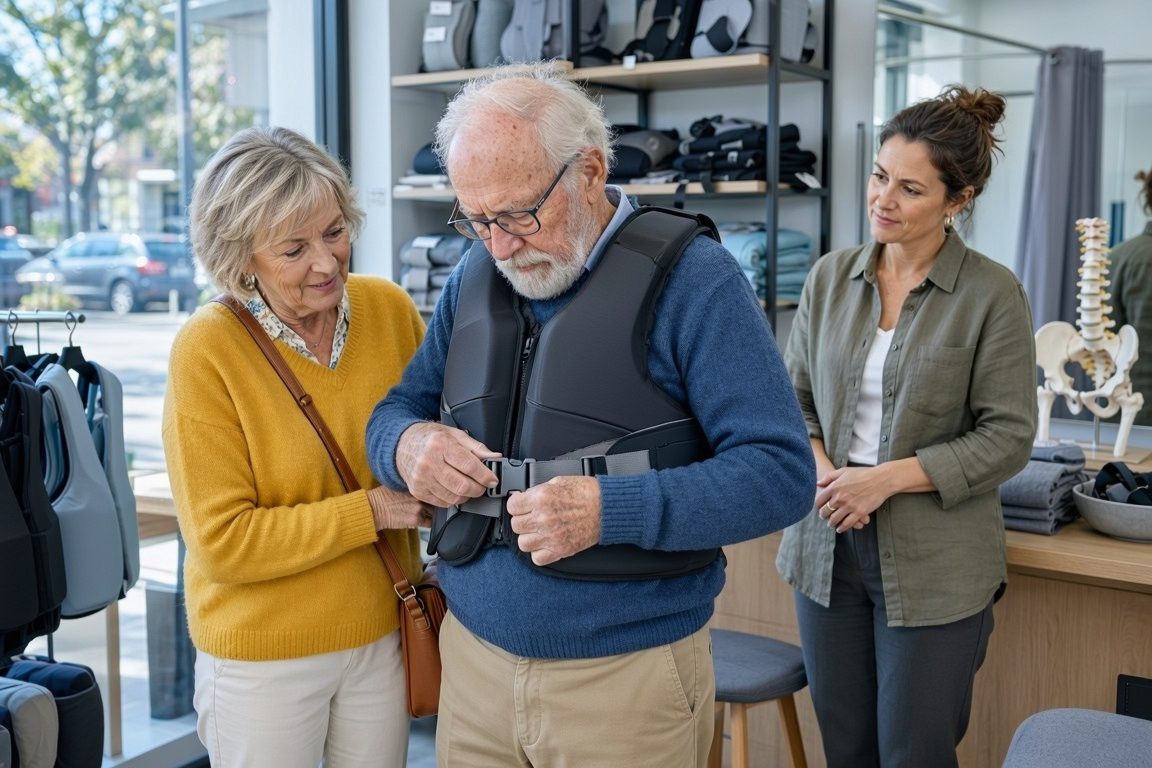
- Do not treat an airbag vest as a first solution or substitute for real fall prevention; it inflates on impact but cannot stop the fall itself and may confuse or agitate someone who does not understand why they are wearing it.
- Do not dismiss a first fall as bad luck, one fall roughly doubles the chance of another. Treat every fall as a wake-up call to recheck the home, review medications, and talk with the doctor about what may have changed.
- Do not try to catch or grab a falling person unless trained; this can injure you both. Guide them gently toward the floor or a nearby chair if safe, protect their head if possible, and do not move them until sure they are not hurt; then use a gait belt or call for help to get them up.
Key points
- Falls are not inevitable. Nearly half of older adults with dementia fall, but you can significantly reduce the risk by focusing on the home environment, supervision, and medication management.
- An airbag vest is a reactive device that does not prevent falls. It may be uncomfortable, confusing, and difficult to use for someone with dementia. Prioritize prevention over protection.
- The single most effective step is to remove all loose rugs and clutter from walkways. This simple action removes a major tripping hazard.
- A history of falls is the strongest predictor of future falls. After any fall, do a thorough home safety check and review medications with the doctor.
- Work with a physical therapist to choose the safest walking aid. A simple, non-wheeled walker is often safer than a wheeled model for someone with dementia.
- Use a gait belt with handholds to assist with transfers and walking. It gives you better control and reduces the risk of injury to both of you.
Videos
 7 Reasons People With Dementia Fall (and how to help)This video explains the specific reasons why people with dementia fall, including gait changes, medication side effects, and environmental hazards. It gives you a clear understanding of the root causes so you can address them directly.
 What Are Common Safety Risks For Dementia Patients? - Dementia Help HubThis video covers common safety risks like falls, wandering, and bathroom hazards. It provides practical, low-cost solutions for making the home safer, which is the foundation of fall prevention.
 Steady Steps: Practical Strategies for Managing Falls in DementiaThis video offers concrete strategies for managing fall risk, including the use of gait belts and proper assistance techniques. It is a great follow-up to this article for learning hands-on skills.
 Ep. 201: Are Falls Just a Fact of Life with Dementia?This video challenges the idea that falls are unavoidable and discusses proactive measures. It reinforces the message that you can take meaningful action to reduce fall risk.

Background
Why Falls Are So Common in Dementia
Another key factor is that a person who has fallen once is twice as likely to fall again. This means the first fall is a strong warning sign that something in the environment or the person's condition needs to change. It is not a signal to simply buy a protective device. Instead, it is a signal to look closely at the home, the person's physical state, and the daily routine. The goal is to prevent the fall from happening in the first place, not just to cushion the impact after the fact.
Practical tools
3
Weekly Home Safety Checklist
A simple list to walk through each week: check every room for
Write down what you find and fix it on the spot, tape down a curling rug, add a nightlight to a dark hallway, so a vague worry becomes a concrete action.
Gait Belt (Padded Belt with Handholds)
A padded belt that fastens around the person's waist with sturdy handholds on the outside, used during transfers and short walks. Say, 'I'm going to put this belt on so I can help you stand safely; it will be snug but comfortable,' then hold a handhold and guide them. It gives real control and avoids injury risk from pulling on an arm or clothing.
After a Fall Quick-Reference Card
Keep a simple card on the fridge or bedside table listing, in large print:
This short list prevents guessing in the panic of the moment and ensures correct information reaches the doctor later.
Different situations
Lewy Body Dementia (LBD)
People with Lewy body dementia often have significant fluctuations in attention and alertness, as well as visual hallucinations and Parkinson-like movement issues (stiffness, shuffling, tremors). Their fall risk is very high because of these movement problems. An airbag vest might be even more problematic here because the person may not understand the device and may try to remove it, or the vest's inflation could startle them and worsen confusion. Focus even more on removing clutter and improving lighting, as visual hallucinations can be triggered by poor lighting or shadows. Also, be aware that medications for LBD are very sensitive; some antipsychotics can worsen movement and increase fall risk. Work closely with a neurologist who specializes in LBD.
Late-Stage Dementia
In late-stage dementia, the person is often bed-bound or requires full assistance with all mobility. An airbag vest is not practical or useful at this stage. The focus should be on preventing pressure injuries, using a hospital bed with side rails (with caution and a bed alarm to prevent falls from bed), and using a transfer board or lift for moving from bed to chair. Supervision during all transfers is essential. The goal is to keep the person comfortable and safe while minimizing the risk of falls from the bed or chair. A padded floor mat next to the bed can reduce injury if a fall does happen.
Adult Child vs. Spouse Caregiver
An adult child caregiver may have more energy and be more willing to try new products like an airbag vest, but they may also be less familiar with the person's daily patterns and preferences. A spouse caregiver knows the person's history and habits intimately but may be physically weaker and more at risk of injury themselves when trying to catch a falling partner. For a spouse, using a gait belt and asking for help from home health aides is crucial. For an adult child, the focus should be on home modifications and working with a physical therapist, rather than relying on a device that may not be accepted by the parent. Both roles should prioritize environmental safety over any single product.
In a Facility (Assisted Living or Memory Care)
If your loved one is in a facility, you cannot control the entire environment, but you can still advocate. Ask the facility to conduct a fall risk assessment and to implement the same environmental changes (remove rugs, improve lighting, clear paths). Ask about their policy on gait belts and mobility aids. An airbag vest is unlikely to be used in a facility because it is not a standard piece of equipment and staff may not be trained to use it. Instead, focus on ensuring the facility has enough staff to provide supervision during transfers and that they use a proper fall prevention protocol (e.g., bed alarms, low beds, fall mats). You can also request a meeting with the nursing director to review your loved one's fall risk and the plan to address it.
For the doctor
4
- Ask your doctor or pharmacist to review all current medications, including over-the-counter drugs and supplements, to identify any that might increase fall risk or cause dizziness. Do not stop or change any medication without professional guidance.
- If you are considering an airbag vest, ask the doctor or a physical therapist if it is appropriate for your loved one's specific stage of dementia and mobility level. They can help you weigh the potential benefits against the risks of confusion, discomfort, or the person trying to remove it.
- Ask for a referral to a physical therapist who can assess your loved one's balance, gait, and muscle strength, and provide a personalized exercise program to improve stability and reduce fall risk.
- If your loved one has already fallen, discuss with the doctor whether a bone density test (DEXA scan) is needed to assess fracture risk, and whether calcium or vitamin D supplements might be helpful.