Step by step
What not to do
- Do not suddenly turn off all lights or make the room completely dark to reduce stimulation. This can increase confusion and fear.Instead, dim lights gradually and use soft, warm lighting.
- Do not force the person to join a group activity if they seem overwhelmed. Forcing can escalate agitation.Instead, invite them to the quiet zone or offer a one-on-one activity like looking at a photo album.
- Do not use strong-smelling air fresheners or essential oils without testing. Some scents can trigger agitation or headaches. Always start with a very small amount in a well-ventilated area.
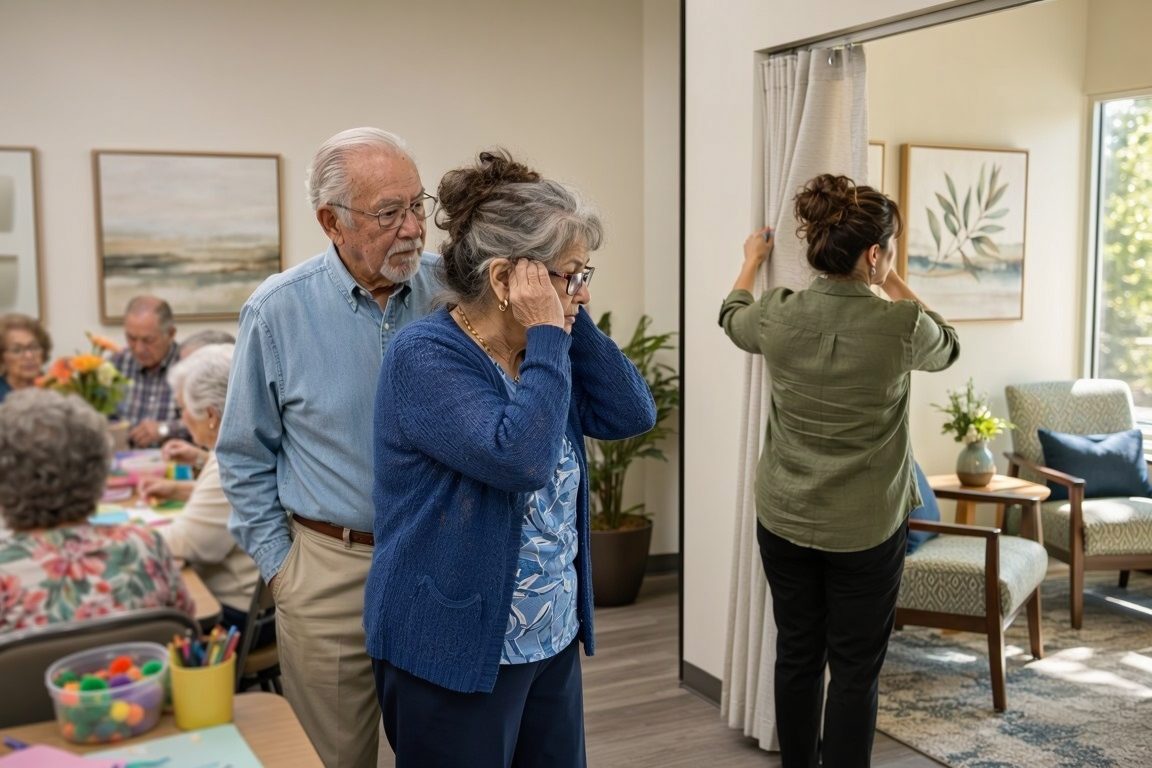
- Do not ignore the person’s attempts to communicate distress (like pacing, repeating words, or covering ears). These are signals, not misbehavior. Respond by reducing stimulation and offering reassurance.
- Do not assume what worked yesterday will work today. The person’s sensory threshold can change from moment to moment. Stay flexible and observe their current state.
Key points
- A low sensory threshold means the brain is overwhelmed by normal stimuli, reduce clutter, noise, and harsh lighting to help the person feel safe.
- Observe the person’s cues (pacing, covering ears, withdrawal) to identify specific triggers, and adapt in real time.
- Create a quiet zone with soft lighting, a comfortable chair, and calming objects like a weighted blanket or fleece square.
- Use predictable routines and visual schedules to reduce anxiety about what comes next.
- Test calming scents (lavender, chamomile) in small amounts, and avoid strong smells that may irritate.
- What works today may not work tomorrow, stay flexible and keep trying different adaptations.
Videos
 Posterior Cortical Atrophy Lecture Series with Karen HookstadtThis video covers visual adaptations for people with posterior cortical atrophy, which often involves low sensory threshold to visual stimuli like glare and clutter.
 Top 11 Things to Know about Alzheimer’s Disease PsychosisExplains how sensory triggers can lead to hallucinations and delusions, and how modifying the environment can reduce these episodes.
 Ep. 147: Seizures and Dementia, What Should We Be Aware of?Discusses how sensory overload can sometimes trigger seizures in vulnerable individuals, and the importance of a calm environment.
Background
What Is a Low Sensory Threshold?
A low sensory threshold means the person’s brain is easily overwhelmed by stimuli that most of us filter out automatically. In dementia, the brain’s ability to process and prioritize sensory input, sights, sounds, smells, textures, and even temperature, becomes impaired. What might seem like a normal level of activity in an adult day program (people talking, chairs scraping, a TV playing, bright lights) can feel chaotic, confusing, or even frightening to someone with a low threshold. Their brain may try to ‘connect the dots’ inaccurately, leading to hallucinations, delusions, or behaviors like pacing, yelling, or withdrawing.
Why This Happens in Adult Day Programs
Adult day programs are inherently stimulating: multiple people, varied activities, staff moving around, and often a mix of sounds and sights. For someone with a low sensory threshold, this environment can trigger a stress response. The person may not be able to tell you they feel overwhelmed, instead, they might become agitated, try to leave, or seem ‘checked out.’ The goal is not to eliminate all stimulation (some is good for engagement) but to reduce the intensity and unpredictability. As one expert notes, creating a calm, organized, and familiar space helps the person know what to do and feel safe. This is especially important during times of day when the person is more tired or when the program is busiest.
The Role of the Five Senses
Every sensory trigger, something too loud, too bright, too cold, or an unfamiliar texture, can set off a cascade of distress. For example, harsh echoes in a room can make water sounds or voices seem intense. Glare from windows or shiny floors can cause confusion, especially in late afternoon when shadows change. Even the smell of strong cleaning products or food can be unsettling. By systematically addressing each sense, you can create an environment that feels predictable and soothing. The key is to observe the person’s reactions moment to moment: what works this morning may not work this afternoon, and flexibility is essential.
Practical tools
6
Calm Corner Setup Checklist
A dedicated quiet area with:
Post a sign that says ‘Quiet Space’ with a picture of a peaceful scene.
Visual Schedule Board
Use a whiteboard or corkboard with simple pictures and labels for each part of the day (e.g., ‘Snack Time’ with a picture of a cup, ‘Music Time’ with a picture of headphones). Change activities one at a time. This reduces anxiety by making the day predictable.
Soft Lighting Kit
Tactile Comfort Items
Keep a basket of items with varied textures:
Handing one to the person can redirect focus and provide calming sensory input. Weighted lap blankets (2-5 pounds) can reduce anxiety.
Noise Management Tools
Scent Diffuser with Lavender
Different situations
Lewy body dementia or Parkinson’s disease dementia
These individuals often have extreme sensitivity to visual stimuli and may experience hallucinations. Cover reflective surfaces like mirrors, as seeing their own reflection can be frightening. Use very low, even lighting and avoid patterns on walls or floors. Be extra cautious with scents, as they may trigger adverse reactions.
Late-stage dementia
The person may have very limited ability to communicate. Focus on non-verbal cues: grimacing, turning away, or stiffening. Use gentle touch (holding hands, a soft blanket) to connect. Keep the environment very simple, one activity at a time, no background noise. Offer rest periods every 45-60 minutes.
Adult day program setting with multiple participants
You cannot control everyone’s behavior, but you can create zones. Designate one area as ‘low-stimulation’ with dimmer lighting and fewer chairs. Schedule high-energy activities (like music or exercise) in a separate room or at a different time. Use visual barriers (room dividers) to block sightlines to busy areas.
Spouse vs. adult child as caregiver
Spouses may feel guilty about reducing activities or changing the home environment. Reassure them that adapting the space is an act of love, not a loss. Adult children may need to advocate with program staff, provide them with a written list of the person’s triggers and calming strategies to share.
Person with a history of anxiety or PTSD
Be especially mindful of sudden loud noises or unexpected touches. Announce all actions before doing them (e.g., ‘I’m going to turn on the light now’). Use a calm, low voice. Avoid crowds, limit group size to 3-4 people if possible. Offer a familiar object from home (like a favorite pillow) for comfort.
For the doctor
4
- If the person’s sensory sensitivity is causing frequent agitation or aggression that does not improve with environmental changes, ask the doctor about whether medication adjustments might help.
- If the person has hallucinations or delusions that are distressing, discuss with a neurologist or psychiatrist whether antipsychotic medications are appropriate, and always weigh risks vs. benefits.
- If the person has a history of seizures, ask the doctor about whether sensory triggers (like flickering lights) could be a factor, and whether a seizure alert dog might be helpful.
- If the person has hearing or vision loss that is not corrected, ask about a hearing test or eye exam, unaddressed sensory loss can worsen confusion and trigger behaviors.