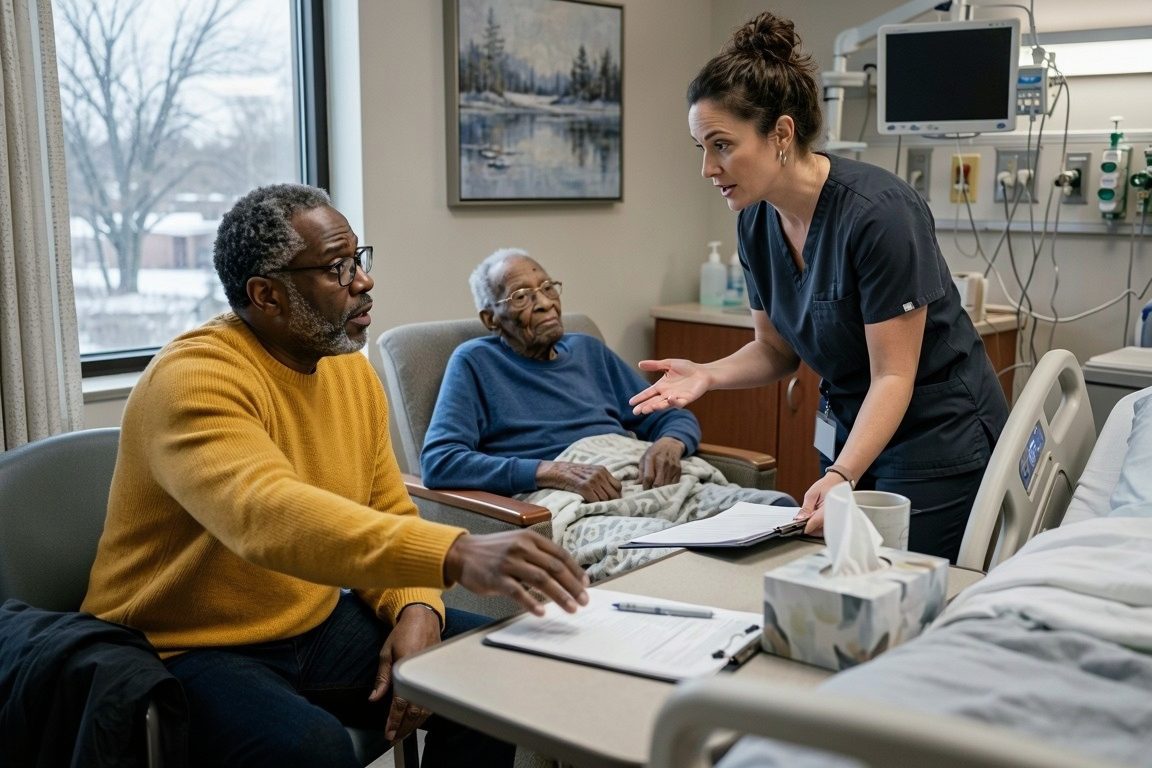
Step by step
What not to do
- Don't assume family status gives you decision-making authority in Wisconsin; spouses and adult children are treated as strangers until a valid POA-HC or guardianship is in place.
- Don't override your loved one's expressed wishes even when you personally disagree, your job is to carry out their values, not substitute your own.
- Don't rely on a non-durable or general Power of Attorney; Wisconsin requires a POA-HC that explicitly remains in effect after incapacity and includes language for end-of-life and facility decisions.
- Don't wait for a crisis to put legal documents in place, once capacity is gone, a POA-HC cannot be created and you must go to court for guardianship.
- Don't make high-stakes or end-of-life decisions alone, consult an elder law attorney or the Wisconsin Guardianship Support Center at (855) 409-9410 before you act.
- Don't assume incapacity is permanent; reassess whether your loved one can participate in each new decision and respect their input when they can.
Key points
- In Wisconsin, family members have no automatic legal authority to make decisions for an adult, you need a valid Power of Attorney for Health Care or a court-appointed guardianship.
- A health care agent can only make health care-related decisions, and only when the principal lacks legal capacity for that specific decision.
- End-of-life decisions and nursing home admission require explicit authorization in the POA-HC document.
- Guardianship is a court process that removes the person's rights and is supervised by the court; it should be a last resort.
- Capacity is a spectrum, respect your loved one's autonomy as long as they can participate, and document their wishes early.
- Always consult an elder law attorney for complex situations, and use the Wisconsin Guardianship Support Center helpline (855-409-9410) for free guidance.
Videos
 Elena Sallitto, Esq. Owner & Principal at Stavely & Sallitto Elder LawThis video provides expert legal perspective on powers of attorney and guardianship in Wisconsin, directly addressing the duties and limitations of agents and guardians.
 Does someone with dementia need a power of attorney and other legal questions answeredThis video answers common questions about when a POA is needed for someone with dementia, including capacity issues and how to avoid guardianship.
 Sue Ryan, The Founder & Inspirationalist of Sue Ryan SolutionsSue Ryan offers practical advice for family caregivers navigating legal roles, including how to communicate with loved ones about advance directives.
 Caring For Elderly Parents What Matters MostThis video focuses on the emotional and practical aspects of caregiving, including how to balance legal duties with compassion.
2 more videos
 Power of Attorney + Dementia 2024This updated video explains the latest considerations for POA in dementia care, including Wisconsin-specific nuances and common pitfalls.
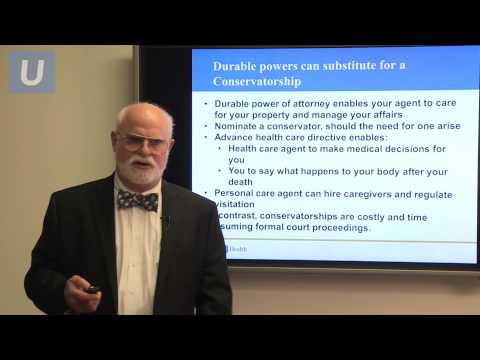 Elder Law: Protecting & Caring for Patients with Dementia | Marc B. Hankin | UCLAMDChatMarc Hankin discusses the legal tools available for dementia patients, including durable POA and guardianship, with a focus on protecting the patient's rights.
Background
Wisconsin is Not a Family Consent State
In Wisconsin, family members, including spouses, are treated as strangers when it comes to making health care or financial decisions for an adult. This means you cannot automatically step in to make decisions for your loved one, even if you are their closest relative. Legal authority must come either from the person themselves (through a signed document like a Power of Attorney) or from a court (through guardianship). This is a fundamental rule that surprises many caregivers, but understanding it is the first step to getting the right legal tools in place.
Agent vs. Guardian: Key Differences
An agent under a Power of Attorney for Health Care (POA-HC) is chosen by the person (called the principal) to make health care decisions alongside or for them. The principal stays in control as long as they have legal capacity, the ability to understand and make their own decisions. The agent's job is to act according to the principal's expressed wishes, or if those are unknown, in the principal's best interests. An agent can only make health care-related decisions, and only if the POA-HC specifically grants end-of-life or nursing home admission powers. In contrast, a guardian is appointed by a court and takes over nearly all decisions, where the person lives, what medical care they receive, who they see, and their daily needs for safety, food, and shelter. Guardianship is a more invasive and costly process, and it removes the person's legal rights entirely. The goal is to use POA-HC and other advance directives to avoid guardianship whenever possible.
Capacity is a Spectrum, Not a Switch
Dementia and Alzheimer's disease cause a gradual decline in decision-making ability. A person may be able to make some decisions (like what to eat or wear) but not others (like complex medical or financial choices). The agent's authority only kicks in when the principal no longer has legal capacity for the specific decision at hand. This is not a single moment, it changes over time. You must respect your loved one's autonomy for as long as they can participate. If you act too early, you may be overriding their rights. If you wait too long without a POA, you may need to go to court for guardianship. This is why having a durable POA-HC and a clear discussion about wishes is so important.
Practical tools
6
Wisconsin Guardianship Support Center helpline
(855) 409-9410, free, confidential guidance on POA-HC interpretation, guardianship questions, and provider disputes.
Elder law attorney
Drafts and reviews the POA-HC, handles guardianship filings, and advises on complex medical and end-of-life decisions.
Power of Attorney for Health Care (POA-HC) document
Must be
Living will or advance directive
Captures treatment preferences such as feeding tubes, life support, and pain management alongside the POA-HC.
Patient advocate or hospital social worker
Your in-hospital escalation point when a Wisconsin provider refuses to honor a valid POA-HC.
Shared written record of values and care preferences
A living document of conversations about what matters most, kept with the POA-HC and updated as wishes evolve.
Different situations
Early-stage dementia (still has capacity)
Focus on getting a durable POA-HC and advance directives signed while your loved one can still understand and consent. Use the 'Wishes Conversation' script to document their preferences. Do not act as agent yet, let them make their own decisions. Your role is to support and gather information. Revisit the conversation every 6 months as their cognition changes.
Late-stage dementia (no capacity)
Your role as agent becomes full-time. You must make all health care decisions based on their documented wishes. If you do not have a POA-HC, you will need to seek guardianship immediately. Focus on comfort care and quality of life. Use the 'Agent Introduction Card' with all providers. If you are a guardian, file annual reports with the court and get approval for major changes like moving to a nursing home.
Lewy body dementia (fluctuating capacity)
Capacity can vary day to day or even hour to hour. Use the 'Capacity Check' tool before each decision. If your loved one has a lucid moment, respect their input. Do not assume they are always incapacitated. Document their lucid statements and share with the doctor. The POA-HC should include language that the agent's authority is triggered only when the principal lacks capacity, which may need to be assessed by a doctor each time.
Spouse as agent vs. adult child as agent
If you are the spouse, you may have a deeper understanding of your partner's wishes, but you may also be emotionally overwhelmed. Seek support from a counselor or support group. If you are an adult child, you may need to coordinate with siblings. Use family meetings to align on decisions. If there is conflict, consider naming a neutral third party (like a professional fiduciary) as agent to avoid disputes. In Wisconsin, the agent must act in the principal's best interests, not their own.
Person is in a facility (nursing home or CBRF)
If your POA-HC specifically grants authority for nursing home admission, you can consent to placement. If not, you may need court approval. Once admitted, you retain the right to make medical decisions, but the facility will have its own policies. Stay in close contact with the social worker and nursing staff. If you are a guardian, you must ensure the facility meets the person's needs and report any concerns to the court. Wisconsin law requires that the person's preferences be honored whenever possible.
For the doctor
5
- Ask your loved one's doctor: 'At what point would you say my loved one lacks capacity to make their own health care decisions? Can you help me understand the specific criteria you use?'
- Ask the doctor: 'If my loved one has a living will that says no life support, but I am their agent, how do we handle a situation where the family disagrees with that choice?'
- Ask the doctor: 'Are there any medications or treatments that might temporarily improve my loved one's capacity so they can participate in a decision?'
- Ask the doctor: 'If I need to make a decision about stopping a treatment, what is the process for documenting that decision and getting a second opinion?'
- Ask the doctor: 'Can you provide a written statement about my loved one's capacity that I can keep with the POA-HC documents?'