Step by step
What not to do
- Do not raise your voice or speak faster if they don't respond, this feels like an attack. Lower your voice and slow your pace instead.
- Do not say 'I'm just trying to help you', it threatens their independence. Say 'Let's do this together' or 'I'll stay with you.'
- Do not argue or correct them, even if wrong. Validate the feeling: 'You miss home. That makes sense. Tell me about it.'
- Do not use a condescending or sing-song tone, they can detect insincerity.
Key points
- Tone registers before words in the dementia brain. A calm, warm tone signals safety; a tense tone signals danger.
- Your nervous system sets the tone for your loved one. Regulate yourself first, breathe, soften, slow down.
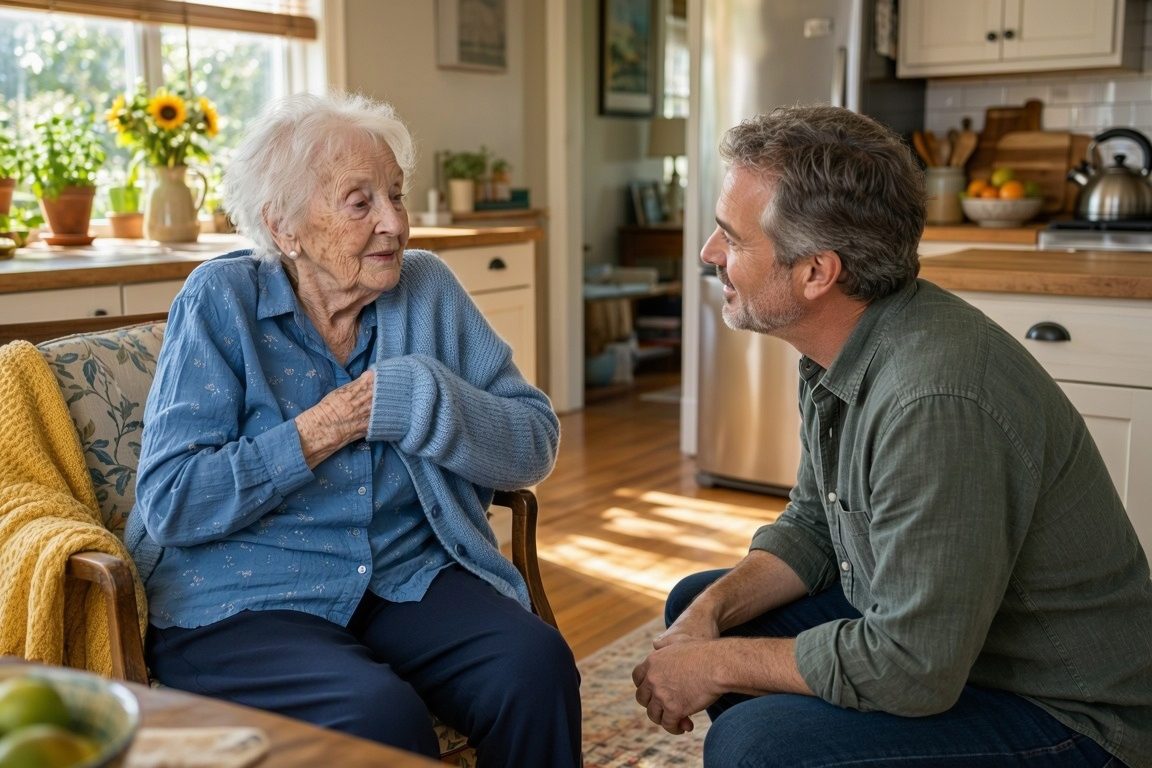
- Approach from the front, at eye level, with gentle eye contact and a soft smile. Use a distance of about 12 inches for intimacy.
- Validate feelings before tasks. Say, ‘I see you’re upset,’ before asking them to take medication or get dressed.
- Reduce environmental noise and clutter before speaking. A calm space supports a calm tone.
- You cannot pour from an empty cup. Take care of your own stress through breaks, deep breathing, and support. Your stability is their medicine.
Videos
 How to Talk to Someone with Dementia (without Arguing)This video demonstrates specific phrases and tone adjustments to avoid arguments, directly supporting the principle that tone matters more than words.
 Multimodal Comprehensive Care Communication Skills in Dementia CareThis video covers eye contact, distance, and touch, key nonverbal elements that influence how your tone is received.
 10 Things to NEVER Do as a Dementia CaregiverThis video lists common mistakes that trigger defensive reactions, such as arguing or using a condescending tone, and offers alternatives.
 5 TIPS FOR TALKING TO YOUR LOVED ONE WITH DEMENTIAThis video provides practical tips on tone, body language, and validation, reinforcing the idea that how you say something is more important than what you say.
2 more videos
 How To Handle A Person With Alzheimer's?This video offers real-world strategies for de-escalating agitation, including using a calm voice and giving space.
 5 simple ways to improve difficult dementia behaviors starting todayThis video gives actionable steps to reduce behavioral challenges, many of which start with adjusting your own tone and presence.
Background
The Brain Processes Tone Before Meaning
In dementia, the parts of the brain that handle language and logic are damaged, but the emotional centers often remain active longer. This means your loved one’s brain registers the emotional tone of your voice, the tension, the rush, the warmth, before it processes the actual words you are saying. If you say, ‘Mom, it’s time for your medication’ in a rushed or tense voice, her brain may interpret that tension as danger or threat, even if your words are perfectly polite. This can trigger a defensive reaction, like yelling, withdrawing, or refusing care. The emotion is the message, not the dictionary meaning of your words.
Your Nervous System Sets the Tone for Both of You
Caregivers often do not realize how much their own stress shows up in their voice, face, and body. When you are stressed, your voice may get higher or tighter, your shoulders tense, and your movements quick. Your loved one with dementia is highly attuned to these nonverbal cues, they are like a mirror. If you are anxious or irritated, they will likely reflect that back, becoming anxious or irritable themselves. This is called co-regulation: your nervous system literally sets the tone for theirs. When you take a moment to breathe, soften your voice, and slow down, you help their brain feel safe and calm. Your stability becomes their medicine.
Emotional Memory Overrides Logic
Even if your loved one cannot remember what you said five minutes ago, they will remember how you made them feel. Emotional memory, the feeling of being safe, respected, or dismissed, persists long after the specific words are forgotten. This is why a gentle tone and a warm face can prevent a meltdown, even if you have to repeat the same information. Conversely, a harsh tone can leave a residue of fear or anger that colors the rest of the day. You are not just communicating information; you are creating an emotional environment. Prioritizing the feeling over the fact is not being dishonest, it is being neurologically smart.
Different situations
Lewy body dementia (LBD)
People with LBD are especially sensitive to visual and auditory stimulation. They may have visual hallucinations or fluctuating attention. Keep the environment even quieter, no patterned wallpaper, no flickering lights. Use a very slow, gentle tone, and avoid sudden movements. If they seem confused or frightened, do not try to reason about the hallucination; instead, validate the feeling: ‘That looks scary. I’m here with you.’
Late-stage dementia (severe cognitive decline)
In late stages, your loved one may not understand words at all. Tone and touch become everything. Use a very soft, rhythmic voice, almost like humming or singing. Gentle touch on the hand or shoulder, combined with a calm tone, can be more effective than any sentence. Avoid any complex instructions; just say simple, loving words like ‘I’m here’ or ‘You’re safe.’
Spouse vs. adult child caregiver
Spouses often have a longer history of communication patterns, which can include old habits like teasing or sarcasm. These can be misinterpreted by the dementia brain. Spouses may need to consciously shift to a more patient, validating tone. Adult children may struggle with role reversal, feeling like they are ‘parenting’ their parent. This can cause tension in the voice. Practice saying, ‘I’m here to help, not to boss you,’ and use a collaborative tone, not a commanding one.
In a facility or with hired caregivers
When care is shared, consistency of tone matters. Ask all caregivers to use the same calm, warm approach. Post a simple sign in the room: ‘Please approach from the front, use a soft voice, and validate feelings before tasks.’ If your loved one is agitated after a visit from a caregiver, ask that caregiver to practice the pre-interaction reset. You can also request that caregivers avoid multitasking during interactions.
Frontotemporal dementia (FTD)
FTD often affects the frontal lobes early, leading to changes in empathy, impulse control, and social awareness. Your loved one may not respond to a warm tone in the same way as someone with Alzheimer’s. They may be more prone to agitation or apathy. Use a very direct, simple tone, not cold, but not overly emotional. Keep sentences short: ‘Time to eat.’ ‘Let’s go.’ Avoid emotional appeals like ‘This would make me happy.’ Instead, use concrete, neutral statements.
For the doctor
4
- If your loved one’s defensiveness or agitation is new, worsening, or accompanied by physical aggression, discuss with a doctor to rule out pain, infection (like UTI), or medication side effects.
- If you find yourself unable to regulate your own tone despite trying these techniques, consider asking your clinician about caregiver support groups, counseling, or respite care. Your emotional health directly affects your loved one’s well-being.
- If your loved one has a history of aggression or violence, or if you feel unsafe at any time, discuss a safety plan with a healthcare provider or social worker. Your safety comes first.
- If you are considering using medications to manage agitation, ask your clinician about non-pharmacological approaches first, and discuss potential side effects, especially in Lewy body dementia where some medications can worsen symptoms.