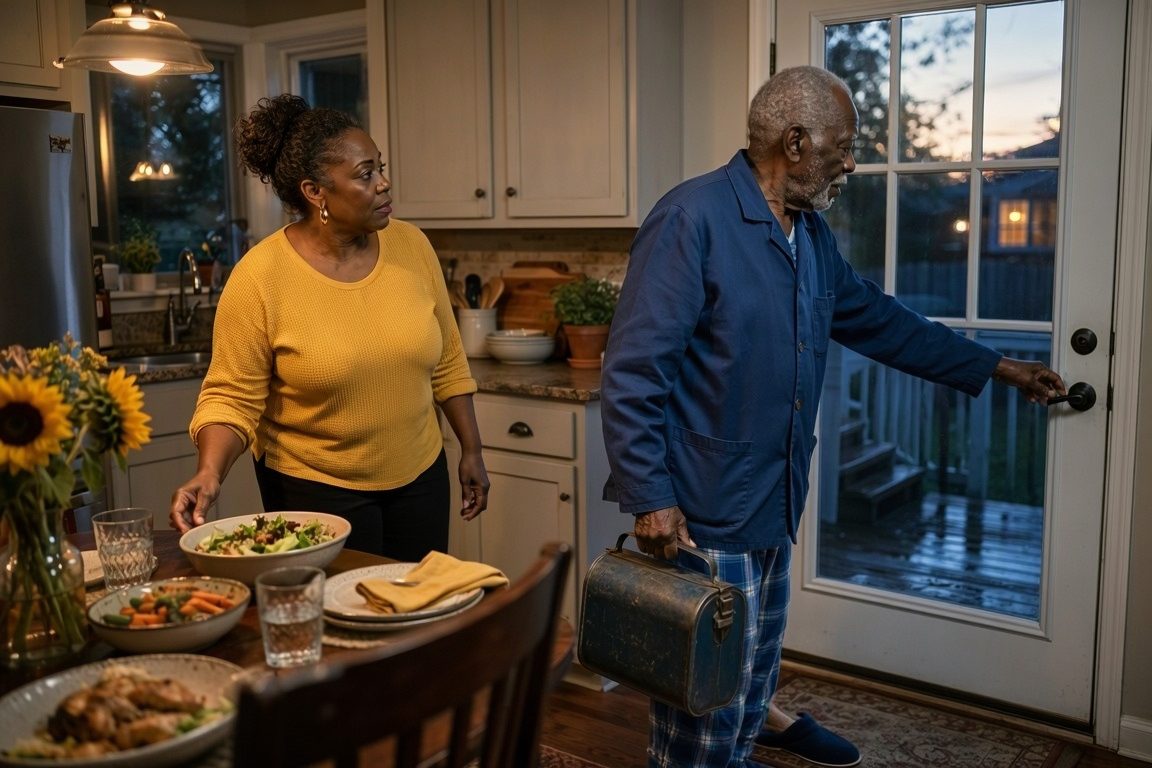
Step by step
What not to do
- Do NOT argue or try to reason with them. Saying 'You are home, this is your house' will only increase their confusion and frustration. They cannot access that memory, so you are essentially telling them their reality is wrong.Instead, validate the feeling.
- Do NOT use long explanations or multiple reasons why they can't leave. A person with dementia has trouble processing complex information. Too many words can overwhelm them and lead to more anxiety and agitation. Keep your responses short and simple.
- Do NOT physically block the door or grab them. If they are determined to leave, a physical struggle can escalate into aggression or injury.Instead, step aside and use a gentle verbal redirection, or go with them if it's safe.
- Do NOT leave keys, coats, or bags in plain sight near the door. These are powerful visual cues that can trigger an automatic 'I need to leave' response. Store them in a locked drawer or a closet in a different room.
- Do NOT assume the behavior is 'just the dementia' and ignore it. Always check for a physical need first: hunger, thirst, pain, bathroom, or discomfort. One caregiver discovered her mother-in-law needed to see the eye doctor – a simple fix that stopped the wandering.
- Do NOT punish or scold them for trying to leave. They are not being willful or naughty – they are responding to a deep, genuine need. Punishment will only increase their fear and make the behavior worse.
Key points
- Exit-seeking is almost never about wanting to leave you – it's about searching for a feeling of safety, comfort, or purpose.
- Always check for a physical need first: hunger, thirst, pain, bathroom, or restlessness.
- Validate the emotion, not the logic. Say 'You miss home' instead of 'You ARE home.'
- Remove visual triggers like keys, coats, and bags near the door.
- Use simple, short responses – too many words cause confusion and agitation.
- If they are insistent, go with them on a short walk or drive – it often satisfies the urge.
- Therapeutic fibbing is a compassionate tool, not a lie – it eases anxiety without harm.
- You are not failing – this is a symptom of the disease, not a reflection of your care.
Videos
 When someone with dementia wants to leave the houseThis video offers practical, real-life strategies for handling exit-seeking in the moment, including how to redirect and what to say.
 How To Respond When Someone With Dementia Constantly Asks To Go HomeFocuses specifically on the 'I want to go home' phrase, explaining the emotional need behind it and giving scripted responses you can use immediately.
 Dementia Wandering: Prevention + What to Do If They Go Missing | Dr. Khushboo VermaCovers both prevention strategies and emergency steps if wandering occurs, including how to create a 'layered' safety plan.
 Why Do Dementia Patients Want To Go Home?Explains the neuroscience behind why 'home' is a feeling, not a place, and why arguing doesn't work.
2 more videos
 Live on TikTok | Tips on Driving and Dementia, Decoding Messages, Adapting Situations, and MoreIncludes a segment on decoding the hidden messages in exit-seeking behavior and adapting your approach in real time.
 The Baffled Brain Demystifying Dementia Episode 31 July 17 2021Covers the concept of 'home' as a memory construct and offers creative ways to create a sense of home in the current environment.
Background
It’s Not About Running Away – It’s About Searching for ‘Home’
When your loved one says 'I want to go home' or tries to walk out the door, they aren't trying to escape you or be difficult. They are feeling a powerful emotional pull toward a place that represents safety, comfort, and familiarity. For a person with dementia, 'home' is not the physical house they live in – it's a feeling. It might be their childhood home, a place where they felt loved and secure, or simply a state of being where they don't feel lost or afraid. As one expert explains, 'Home is our safe haven. Home is where we let it all hang out. Home is our sanctuary.' So when they say they need to leave, they are really saying: 'I don't feel safe or comfortable here right now.'
The Brain Is Erasing the Present and Revisiting the Past
Dementia, especially Alzheimer's disease, affects memory in a specific way: newer memories are lost first, while older, deeply ingrained memories remain. So your loved one may not recognize the house you share, even if they've lived there for years. In their mind, they might be 25 years old, looking for their parents or their childhood home. As one source puts it, 'If in their mind they are in their late teens or early 20s, are they going to recognize their spouse? Probably not, because that spouse looks like an older person.' This disorientation is deeply unsettling. They feel lost, and the only way they know to fix that feeling is to 'go home' – to the place their brain still remembers.
The Urge to Leave Often Has a Valid, Practical Reason
Sometimes exit-seeking is not about memory at all – it's about a real, unmet need. Your loved one might need to use the bathroom, feel hungry or thirsty, be in pain, or have unspent energy. They might be looking for a specific person (a spouse, a child, a parent) or trying to complete a task they believe is urgent, like going to a doctor's appointment. One caregiver shared that her mother-in-law left the house because she thought she had an eye doctor appointment – and after the caregiver actually took her to the eye doctor, the wandering stopped. So before assuming it's 'just the dementia,' ask yourself: Is there a physical or practical need I'm missing?
Fear, Anxiety, and Discomfort Are the Real Drivers
At its core, exit-seeking is often a response to fear, anxiety, frustration, or discomfort. The person with dementia feels something is wrong – they don't recognize their surroundings, they miss someone, they feel they should be doing something important. They can't articulate that feeling, so they try to leave the situation. As one expert notes, 'They are feeling something that they don't want to be feeling. So, they want to leave to find the comforting feeling of home.' Your job is not to argue them out of that feeling, but to help them find comfort and safety where they are.
Practical tools
6
The 'What About Home' Question
When your loved one says 'I want to go home,' instead of arguing, ask gently: 'What about home do you need?' This opens the door for them to tell you they're tired, hungry, lonely, or scared. Then you can address that specific need directly. Example: 'I need to go home because I'm tired.' Response: 'Let's go sit in the cozy chair and rest for a bit.'
The Therapeutic Fib Script
Have a few pre-planned, harmless white lies ready. For example: 'The car is in the shop today, so we can't go anywhere right now.' Or 'Your sister called and said she'll come by later – let's wait for her here.' Or 'The doctor said you need to rest today before we can go out.' These are not cruel lies – they are compassionate tools to ease anxiety without confrontation.
The 'Go With' Strategy
If your loved one is determined to leave, and it's safe to do so, go with them. Take a short walk around the block or a 10-minute drive. Say something like: 'Let's go together. I'll come with you.' Often, the act of moving satisfies the urge, and they will be willing to return home. This avoids a power struggle and meets their need for movement or purpose.
The Visual Trigger Audit
Walk through your home and remove anything that signals 'leaving.' This includes:
Replace with calming items: a family photo, a plant, a soft blanket. Consider painting the door the same color as the wall to make it less noticeable.
The 'Safe Wandering' Loop
Create a clear, obstacle-free path through your home that forms a loop (e.g., living room → hallway → kitchen → back to living room). Place a comfortable chair at one or two points along the loop. This allows your loved one to walk and pace safely indoors, meeting their need for movement without the risk of exiting. Add a small table with a simple activity (like a puzzle or a basket of socks to fold) at one of the chairs.
The 'I'm Right Here' Mantra
When your loved one is anxious and fixated on leaving, use a calm, repetitive phrase: 'I know you want to go, but I'm right here with you. You're safe.' Repeat this in a soothing tone, matching their pace. This can help ground them when they feel lost or scared. Pair it with gentle touch (if they accept it) like holding their hand or rubbing their back.
Different situations
Early-stage dementia (still living at home with you)
In early stages, your loved one may still have some insight into their memory loss. They might feel embarrassed or frustrated by their own exit-seeking. Use a collaborative approach: 'I notice you've been wanting to leave a lot lately. Let's figure out together what would help you feel more comfortable here.' You can also involve them in creating a 'comfort corner' with familiar photos and objects. Remove car keys and disable the car if driving is a risk – discuss this with their clinician first.
Late-stage dementia (in a facility or needing 24/7 care)
In late stages, the person may not recognize the facility as 'home' at all. They may be more prone to agitation and physical attempts to leave. Focus on environmental safety: secure doors with alarms or locks that are out of sight, use a wander management system (like a bracelet that alerts staff), and create a calming sensory space with soft lighting and familiar music. Staff should use the same validation and redirection techniques. If the person is in a wheelchair, ensure brakes are locked when not moving. The goal is safety, not reasoning.
Lewy body dementia (LBD)
People with LBD often have visual hallucinations and fluctuating cognition. Their exit-seeking may be triggered by something they 'see' – like a person calling them from outside or a perceived threat. Do not argue about what they see. Instead, say: 'I see that too. Let's go check it out together' and then redirect to a different room. Also, LBD can cause severe sensitivity to medications, so discuss any new behaviors with their neurologist – sometimes a medication adjustment can reduce agitation. Be extra cautious with physical restraint, as LBD patients may have parkinsonism and fall risk.
Spouse vs. adult child caregiver
If you are the spouse, your loved one may be more likely to see you as a partner in their reality. Use 'we' language: 'We can't go right now, but let's sit together.' If you are an adult child, your loved one may see you as a child or a stranger – they may not trust your reassurances. In that case, use a 'third-party' approach: 'Your husband said he'll be home soon, let's wait for him here.' Or ask a neighbor or friend they trust to stop by and help redirect. Also, adult children often feel guilt about 'lying' – remind yourself that therapeutic fibbing is a compassionate tool, not deception.
Living in a facility (nursing home or assisted living)
In a facility, exit-seeking is common and often more intense because the environment is unfamiliar. Work with staff to create a consistent routine and a 'welcome' area with personal items. Use the same phrases as at home: 'You miss your home. I know it's hard.' If your loved one asks to go home with you after a visit, avoid saying 'I have to leave.' Instead, say: 'I'll be back soon. Let's walk to the dining room together first.' Also, ask the facility about their wander-prevention system (alarms, door codes, etc.) and ensure your loved one wears an ID bracelet at all times.
For the doctor
4
- If your loved one's exit-seeking is accompanied by new aggression, hallucinations, or a sudden change in behavior, discuss with their doctor – it could indicate an infection (like a UTI), medication side effect, or pain.
- If you are considering using door locks, alarms, or GPS tracking devices, ask the clinician or an occupational therapist for recommendations on the safest, least restrictive options.
- If your loved one is still driving and exit-seeking involves the car, discuss driving cessation with their doctor. Do not rely on reasoning – the doctor can provide a formal assessment and recommendation.
- If the behavior is causing you significant stress or sleep deprivation, ask your clinician about respite care options or support groups. Your health matters too.