Step by step
What not to do
- Do not argue or correct their reality: Saying 'You are not going to work, you are retired' will only increase their confusion and distress.Instead, validate the feeling and redirect to a safe activity.
- Do not use physical restraint or scold: Grabbing their arm or yelling 'Stop!' can frighten them and escalate the situation. Approach from the front, speak softly, and use a gentle touch on the arm to guide them.
- Do not leave them unsupervised in a new or confusing place: Even a familiar store can become disorienting. Always accompany them in unfamiliar settings, and avoid crowded, noisy places that can trigger anxiety and the urge to leave.
- Do not assume a locked door is enough: People with dementia can be surprisingly resourceful. They may figure out simple locks or even climb out a window. Use a combination of visual cues, high locks, and alarms.
- Do not wait to call for help: If you cannot find them within 15 minutes, call 911. Time is critical. Many wandering incidents end safely, but the sooner you involve others, the better.
Key points
- Wandering is a symptom of unmet needs, confusion, or reliving past memories, not a behavior problem.
- Never argue or correct their reality; validate the feeling and redirect to a safe activity.
- Use a combination of environmental changes (locks, alarms, safe paths) and a daily routine to reduce risk.
- Prepare an emergency kit with a photo, medical info, and a list of likely destinations.
- Inform neighbors and local police about your loved one's condition.
- If they go missing, search nearby first and call 911 within 15 minutes. Do not wait.
Videos
 Dementia Wandering: Prevention + What to Do If They Go Missing | Dr. Khushboo VermaThis video explains the root causes of wandering and gives practical steps for prevention and emergency response.
 Caregiver Training: Wandering | UCLA Alzheimer's and Dementia Care ProgramA short, clear demonstration of how to approach and redirect a person who is trying to leave, with real-world examples.
 How Does Dementia Wandering Increase Caregiver Stress? - Dementia Help HubAddresses the emotional toll on caregivers and offers strategies to manage that stress while keeping your loved one safe.
 Alzheimer's and Wandering - Professional Caregiver WebinarA deeper dive into the five common triggers for wandering, as identified by the Alzheimer's Association, and how to address each one.
2 more videos
 How Do You Keep Someone With Dementia Safe From Wandering? - Dementia Help HubFocuses on environmental modifications, alarms, and creating a safe walking path at home.
- HOW TO MANAGE Wandering, Pacing, Eloping ~ Smart Tricks When You Are DesperateOffers creative, low-cost solutions for when standard approaches aren't working, including visual cues and distraction techniques.
Background
Wandering is a symptom, not a choice
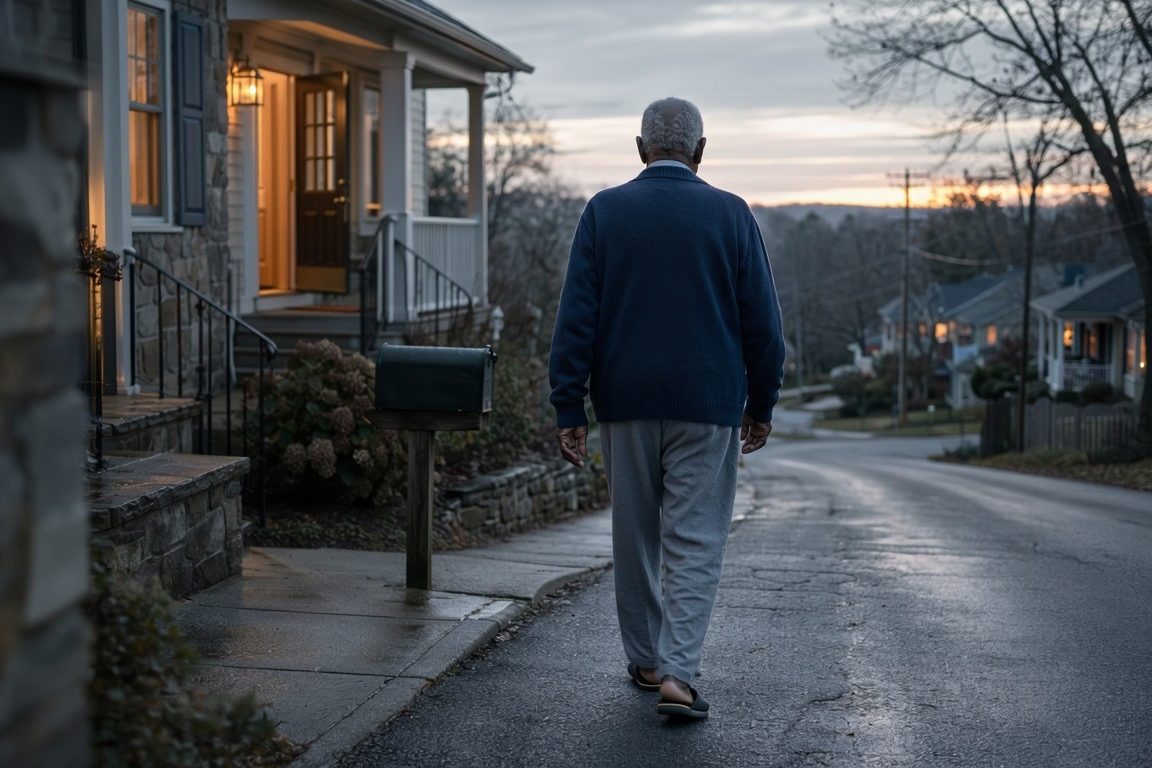
When your loved one with Alzheimer's wanders, it is almost never a deliberate act of misbehavior. Instead, it is a reflection of a need they can no longer put into words. The disease damages the parts of the brain that handle communication, memory, and spatial awareness, so a person may feel a strong urge to go somewhere, like 'home' or 'work', without being able to explain why or even recognize that they are already home. This is why a person might try to leave the house saying they need to pick up their children from school, even if those children are now adults. The wandering is goal-directed, not aimless roaming.
Common triggers: unmet needs, memory reliving, and disorientation
Wandering is often sparked by one of several common triggers. Physical discomfort, such as needing to use the bathroom, being hungry or thirsty, or feeling too hot or cold, can create a restless energy that the person cannot articulate. Anxiety or nervous energy also plays a big role; when someone cannot express their worry verbally, it may come out as pacing or trying to leave. Another major trigger is a memory from long ago. The person may be reliving a past routine, like going to a former job or visiting a childhood home, and they act on that memory as if it is the present. Finally, visual-spatial problems cause disorientation: they may not recognize their own living room or hallway, so they walk out the door looking for a place that feels familiar.
The difference between pacing, wandering, and eloping
It helps to know the subtle differences. Pacing is usually not goal-driven; it is a repetitive, restless movement often linked to boredom, anxiety, or a need for physical activity. Wandering, on the other hand, is purposeful, the person has a destination in mind, even if that destination is imaginary or from the past. Eloping is the act of actually leaving the safe space (home or facility) and becoming lost. All three behaviors stem from the same unmet needs, but the approach to each is slightly different. For pacing, you might offer a safe walking path or a simple activity. For wandering, you need to redirect the person's goal. For eloping, you need immediate safety measures and a plan to find them quickly.
Practical tools
6
The 'Redirect and Validate' Script
When your loved one says they need to go home, do not argue. Instead, say: 'I hear you. Tell me about your home. What did you love there?' Then, after they talk for a moment, say: 'Let's go look at some photos of that house together. I have some in the living room.' This validates their emotion and gently moves them to a safe activity.
The Wandering Safety Kit
Prepare a small bag or folder with:
Keep this by the door or in your car for emergencies.
Door and Window Alarms
Simple, battery-operated alarms that chime when a door or window is opened. Place them on all exterior doors and any windows that are easily accessible. You can find these at any hardware store or online. They give you a few seconds' warning to intervene.
GPS Tracking Device
Consider a small GPS tracker that can be worn as a watch, clipped to a belt, or placed in a shoe. Many are designed for people with dementia and have a simple interface. Some models allow you to set a 'safe zone' and alert you if they leave that area. Discuss with your clinician if this is appropriate for your loved one's stage.
The 'Safe Walking Path' Setup
Create a loop in your home that is free of obstacles and has interesting things to see. Place
This gives them a safe place to walk without trying to exit.
Neighbor Notification Card
Print a small card with
Give copies to your immediate neighbors and ask them to call you if they see your loved one outside alone. This simple step can prevent a crisis.
Different situations
Early-stage Alzheimer's
In early stages, wandering is less common but can happen as disorientation while driving or walking familiar routes. Focus on establishing a daily check-in routine. If they still drive, discuss alternative transportation options with your clinician. Use a GPS tracker in the car or a simple phone check-in. Do not leave them alone in unfamiliar places.
Middle-stage Alzheimer's (most common for wandering)
This is when wandering is most frequent. Use all the environmental strategies: locks, alarms, safe walking paths. The 'Redirect and Validate' script is essential. Keep a photo and medical info ready. Inform neighbors and police. Consider a GPS tracker. Do not leave them alone at home, even for a short errand.
Late-stage Alzheimer's
In late stages, mobility often declines, so wandering may decrease. However, if they are still mobile, the same safety measures apply. Focus on comfort and pain management, as physical discomfort can still trigger restlessness. Use pressure-sensitive mats to alert you if they get out of bed. Ensure the bed is low to the ground to prevent falls.
If you live in a rural or high-risk area
If you live near water, cliffs, busy roads, or in extreme weather, wandering is even more dangerous. Use the highest level of security: deadbolts, alarms, and a GPS tracker. Have a detailed emergency plan that includes notifying local authorities immediately. Consider a locked memory care unit if wandering becomes uncontrollable.
If you are caring for a spouse vs. an adult child
Spouses may feel a stronger emotional pull to keep their loved one at home and may be more reluctant to use locks or alarms. It is important to frame these as safety measures, not imprisonment. Adult children may need to gently insist on safety measures and involve the person's doctor to reinforce the need. Both roles benefit from respite care to reduce caregiver stress.
For the doctor
3
- Ask your doctor: 'Are there any medications that might help reduce anxiety or agitation that could be contributing to wandering?' Never start or stop medications without medical guidance.
- Ask your doctor: 'Given my loved one's history of falls or blood thinners, what is the safest way to use door alarms and motion sensors without startling them or causing a fall?'
- Ask your doctor: 'If wandering becomes frequent and dangerous despite all precautions, what are the options for a memory care unit or locked facility? Can you help me evaluate them?'