Step by step
What not to do
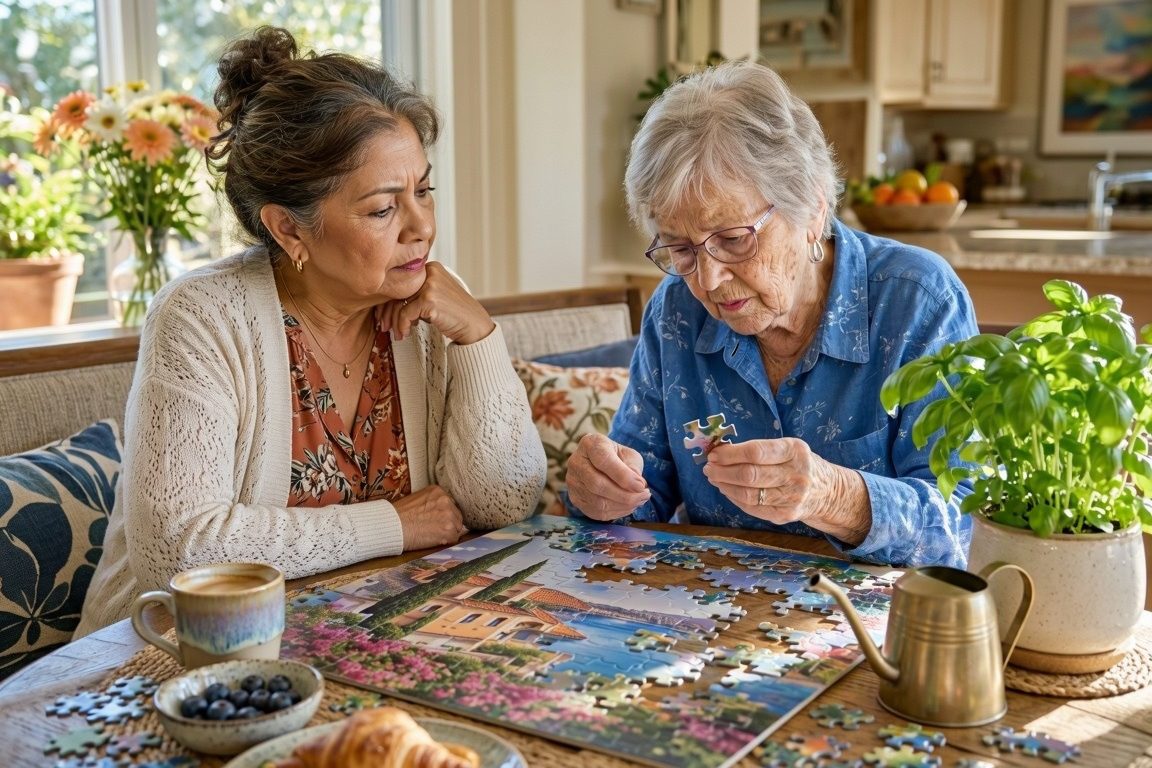
- Do not push your loved one to complete a brain game or puzzle if they are struggling. This can lead to agitation, tears, or a sense of failure.Instead, simplify the task or switch to something they can do successfully, like sorting objects or listening to music.
- Do not use brain games as a way to 'test' memory or cognitive function. This can feel like a quiz and may cause anxiety or defensiveness. The goal is connection and enjoyment, not assessment. If you need to track changes, do so through observation, not direct questioning.
- Do not assume that a loved one who loved crosswords or Sudoku in the past will enjoy them now. Dementia changes abilities. A former crossword enthusiast may now find even simple word games impossible. Offer activities that match their current level, not their former one.
- Do not leave your loved alone with a brain game app or program. They may become confused, frustrated, or accidentally exit the app. Use technology together, as a shared activity, and be ready to guide or stop at any moment.
- Do not rely on brain games as a substitute for social interaction, physical activity, or meaningful daily tasks. Human connection, movement, and a sense of purpose are far more powerful for brain health than any screen-based game. Use games as a small part of a varied day, not the main event.
- Do not feel guilty if your loved one does not engage with brain games. Many people with dementia simply do not enjoy them, and that is okay. Your job is to find what brings them joy and a sense of accomplishment, not to force a particular activity.
Key points
- Brain games have weak scientific support for improving real-life function in dementia. Use them cautiously, if at all.
- The primary goal of any activity is success, enjoyment, and connection, not cognitive exercise.
- Tailor activities to current abilities, not past ones. A former crossword lover may now find sorting cards by suit more rewarding.
- Use a warm, collaborative approach: ask for help rather than issuing a challenge. Say, 'Can you help me sort these?'
- Watch for signs of frustration in your loved one and in yourself. Stop any activity that causes distress.
- Meaningful daily tasks, music, gentle movement, and social interaction are far more powerful for brain health than any app or game.
Videos
 Do brain games help with dementia?This video directly addresses the question of whether brain games work, summarizing the mixed research and offering a balanced perspective on when they might be helpful.
 How to make a daily dementia routine for homeThis video provides practical guidance on building a daily routine that includes pleasant, success-oriented activities, helping you see where brain games might (or might not) fit.
 Ep. 347: Workplace Violence Isn't Part of the Job - It's a Training GapTeepa Snow explains why flexibility is crucial in dementia care and how rigid expectations (like forcing brain games) can lead to burnout and behavioral challenges.
 Discover Gleam in Your Eye - A Dementia Activity and Support ResourceThis resource showcases creative, engaging activities for people with dementia, offering alternatives to traditional brain games that focus on joy and connection.
2 more videos
 Cognitive Activities for Dementia and Older AdultsThis video explores a range of cognitive activities beyond brain games, including music, art, and simple games, with tips for adapting them to different ability levels.
 How Does Respite Care Fit Into A Dementia Care Plan? - Dementia Help HubRespite care gives you a break, which is essential for your own well-being. When you are rested, you can better choose and facilitate activities that truly help your loved one.
Background
The Promise vs. The Reality of Brain Games
Many companies sell programs that claim to improve memory, concentration, and even slow dementia progression. The idea is appealing: if you exercise the brain like a muscle, you can keep it strong. However, the scientific evidence for these claims is weak. Studies are small, use different games for different lengths of time, and it is unclear whether any improvements in test scores translate to real-life benefits like better attention, memory, or daily functioning. One 2018 small study did show some improvement in cognitive test scores, but the overall picture is that the evidence is not solid or strong enough to recommend brain games as a core treatment. As one dementia specialist explains, it is very hard to make generalizations because the research is so varied.
Why Brain Games Can Backfire for People with Dementia
The biggest risk with brain games is that they can create a sense of failure and frustration. A person with dementia may have been a crossword champion or a skilled card player in the past. When they can no longer complete those tasks, they may feel embarrassed, angry, or defeated. This can lead to agitation, withdrawal, or even behavioral challenges. Caregivers may also become frustrated, trying to coax or correct their loved one, which strains the relationship. The goal of any activity in a dementia care plan should be to set the person up for success and to prevent extra stress on both of you. As Teepa Snow emphasizes, flexibility is key, rigid routines or expectations can lead to burnout and an 'us versus them' dynamic. Brain games, if used at all, must be chosen and presented with great care.
What Truly Supports Brain Health: Purpose, Connection, and Joy
Instead of focusing on brain games as a cognitive workout, think about activities that make your loved one feel productive, connected, and happy. Research and expert guidelines highlight that meaningful activities, those tied to past interests, hobbies, and a sense of purpose, are far more beneficial than generic brain training. For example, sorting cards by suit, folding laundry, or helping to set the table can provide cognitive stimulation and a feeling of accomplishment. Music, art, gentle exercise, and outdoor activities also engage the brain in a holistic way. The key is to tailor activities to the person's current abilities, not their past ones, and to prioritize enjoyment over 'mental exercise.' As one care expert notes, even a simple task like sorting colored chips can be a success if it matches the person's skill level and gives them a role to play.
Practical tools
6
The 'Help Me' Script
A simple phrase to turn any task into a collaborative, success-oriented activity. Say: 'I could really use your help with this. Can you [sort these by color / fold these napkins / match these socks]?' This frames the activity as a favor, not a test, and gives the person a valued role.
Sorting Trays or Bins
Use small trays, muffin tins, or divided containers for sorting tasks. For example, put a handful of mixed buttons, coins, or colored chips on the table and ask your loved one to sort them by color or size. This is a low-frustration, repetitive activity that provides cognitive stimulation without pressure.
Simple Card or Domino Games
Instead of complex games, use cards or dominoes for matching or sorting. For example, ask your loved one to sort a deck of cards by suit, or to match dominoes by the number of dots. These tasks tap into preserved skills and can be done in short sessions. Avoid competitive games that require strategy or memory.
Music Playlist for Calm and Engagement
Create a playlist of songs from your loved one's young adult years (ages 15–25). Music activates many parts of the brain and can improve mood, reduce agitation, and even spark memories. Use it as a background during other activities or as a standalone calming tool. Discuss with a clinician if you have concerns about overstimulation.
Daily Activity Log
Keep a simple notebook or use a notes app to track what activities you tried, how your loved one responded, and how long they engaged. Note the time of day, their mood before and after, and any challenges. Over a week, patterns will emerge that help you plan better. This tool also helps you communicate with healthcare providers.
The 'One-Step' Rule
For any activity, break it down into a single, clear step. Instead of saying, 'Let's do this puzzle,' say, 'Can you pick up the blue piece?' After they do that, say, 'Great, now let's find where it goes.' This reduces overwhelm and sets them up for success at every step.
Different situations
Early-stage dementia (mild cognitive impairment or early Alzheimer's)
In early stages, your loved one may still enjoy and benefit from more complex games, like word searches, simple crossword puzzles, or matching games. However, watch for signs of frustration. If they start to struggle, simplify or switch to a different activity. The key is to keep it enjoyable, not challenging. Also, consider using brain games as a social activity, play together or with a small group to maintain connection.
Middle-stage dementia (moderate Alzheimer's, vascular dementia, Lewy body dementia)
At this stage, most complex games will be too difficult. Focus on sensory and repetitive activities: sorting objects, listening to music, looking at photo albums, or doing simple crafts. For Lewy body dementia, be especially cautious with visual-spatial tasks, as they may be particularly challenging. Keep activities short (5–10 minutes) and be ready to pivot. The goal is comfort and calm, not cognitive exercise.
Late-stage dementia (severe Alzheimer's, advanced frontotemporal dementia)
In late stages, brain games are not appropriate. Focus on sensory stimulation: gentle touch, familiar music, aromatherapy (like lavender), or looking at bright, simple images. Even a few minutes of shared attention to a colorful scarf or a soft blanket can be meaningful. The priority is comfort, dignity, and connection, not cognitive engagement.
For adult children vs. spouses
Adult children may feel pressure to 'fix' or stimulate their parent, leading to overuse of brain games. Spouses may feel a loss of companionship and try to recreate past shared activities (like card games). Both need to adjust expectations. Adult children should focus on connection and presence, not performance. Spouses should find new, simpler ways to be together, like listening to music or looking at old photos, rather than trying to play the games they once enjoyed.
In a facility or adult day program
Facilities often have structured activity programs that include brain games. Ask the staff how they adapt activities for different ability levels. If your loved one seems distressed after a group activity, talk to the staff about offering a quieter alternative. You can also bring in personalized activities (like a sorting tray or a favorite music playlist) to ensure your loved one has options that match their interests and abilities.
For the doctor
4
- Ask your doctor or neurologist: 'Are there any specific brain training programs or cognitive therapies that are recommended for my loved one's type and stage of dementia?'
- Discuss any sudden changes in mood or behavior after starting a brain game or activity. This could indicate that the activity is too challenging or that there is an underlying medical issue.
- If your loved one has a history of anxiety, depression, or agitation, ask whether competitive or timed games might be counterproductive. A clinician can help you weigh risks and benefits.
- For people with Lewy body dementia or Parkinson's disease dementia, ask about visual-spatial challenges and whether certain types of puzzles or games might increase fall risk or frustration.